Table of Contents
Table of Contents
Introduction
Winter often feels like a time when the garden rests, but pests don’t hibernate the way we wish they did. Beneath the soil, inside mulch, and tucked away in raised beds, insects and larvae quietly overwinter, waiting for spring to re-emerge. If left unchecked, these hidden invaders can damage roots, weaken soil health, and lay the groundwork for infestations as temperatures rise. That’s why winter garden pest control is not just a seasonal chore—it’s a proactive strategy to protect your plants and ensure a healthier garden year-round.
In this comprehensive guide, we’ll explore which pests hide in soil during winter, how to safeguard raised beds, the best DIY organic sprays, and how mulching and soil warming can prevent pest survival. We’ll also highlight common mistakes gardeners make in winter, so you can avoid them and keep your garden thriving.
Winter garden pest control is often overlooked because many assume pests die off in freezing temperatures. In reality, the cold months act as a survival test, and only the strongest pests endure—making them even more destructive when spring arrives. By understanding these hidden dynamics, gardeners can shift from reactive measures to proactive strategies. This guide is not just about protecting plants; it’s about reshaping how we think of winter as a critical season for pest management.
👉 For more seasonal resilience strategies, see our fast-growing winter cover crops guide. For integrated pest management strategies, see the USDA’s IPM gardening advice.
Common Winter Garden Pests
Pests Hiding in Soil
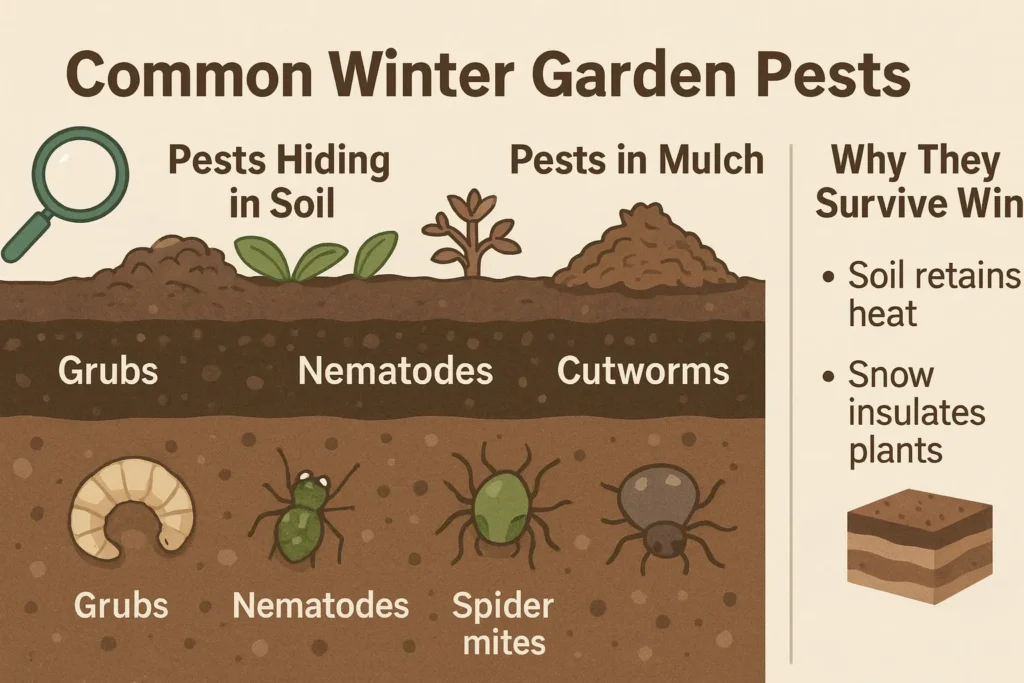
Even when frost covers the ground, many pests remain active beneath the surface. Grubs, beetle larvae, and nematodes burrow deep into soil layers, feeding on plant roots and organic matter. These pests are particularly dangerous because they go unnoticed until spring, when plants suddenly show signs of stress.
For effective winter garden pest control, it’s crucial to recognize that soil is both a shelter and a battlefield. While pests like grubs and nematodes thrive underground, beneficial organisms such as earthworms also remain active. The challenge lies in protecting the good while suppressing the harmful. Gardeners who rotate crops or introduce cover crops during winter often find fewer pest outbreaks later (For soil enrichment tips, check our Make Leaf Mold Fast Guide. For pest and disease identification, consult Penn State Extension’s home garden pests and diseases guide), because these practices disrupt pest life cycles.
- Grubs: Beetle larvae that feed on the grassroots, weakening turf and garden beds.
- Nematodes: Microscopic worms that attack plant roots, reducing nutrient uptake.
- Wireworms: Larvae of click beetles, notorious for damaging root crops like carrots and potatoes.
Insects Overwintering in Mulch or Debris
Mulch and leaf litter provide cozy shelters for pests like aphids, spider mites, and caterpillars. These insects lay eggs in protected areas, ensuring survival through cold months. By spring, populations explode, leading to infestations.
Raised bed winter protection becomes even more important when mulch is involved. While mulch insulates soil, it can also act as a pest hotel if not managed properly. A twist many gardeners don’t expect is that certain pests, like cutworms, prefer damp mulch layers, while others, such as spider mites, thrive in dry, sheltered pockets. Balancing mulch thickness and moisture is therefore a subtle but powerful tactic in winter garden pest control.
👉 For compost-powered soil health, see our Learn How To Turn Your Scraps Into Soil Gold Guide.
- Aphids: Overwinter as eggs in plant debris.
- Spider mites: Hide under mulch, ready to attack foliage in spring.
- Cutworms: Caterpillars that overwinter in soil and mulch, damaging seedlings later.
Protecting Raised Beds During Cold Months
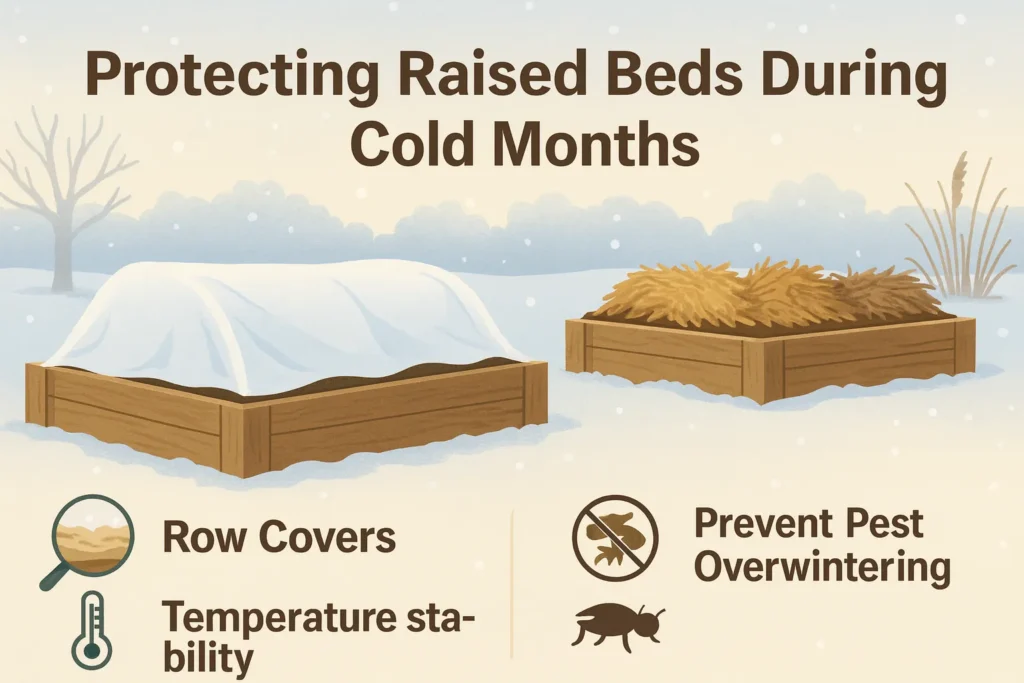
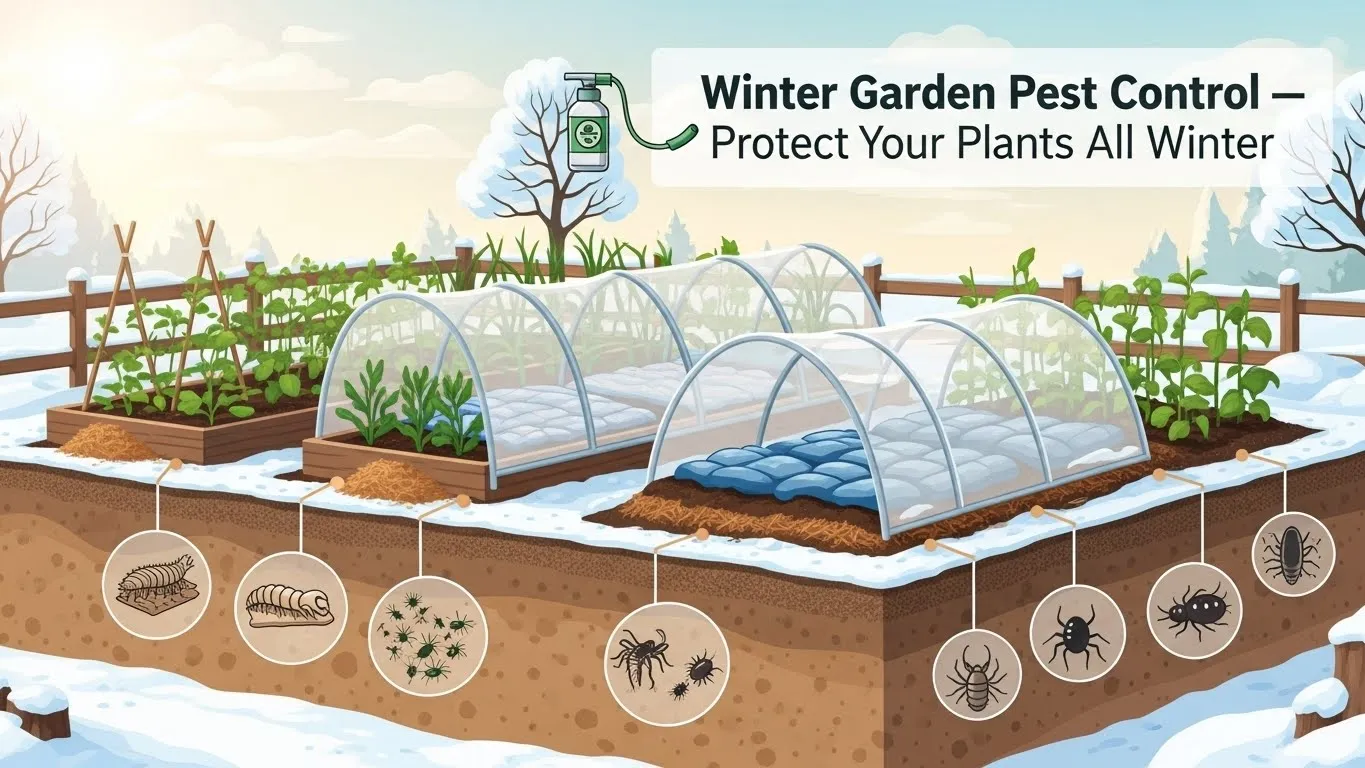
Raised beds are particularly vulnerable because their soil cools faster, and pests find easy shelter. Effective raised bed winter protection involves both insulation and sanitation.
Covering Beds with Row Covers
Row covers act as a physical barrier, preventing pests from accessing soil and plants. Lightweight fabrics allow air circulation while keeping pests out.
- Use breathable frost blankets for insulation.
- Anchor covers tightly to prevent gaps where insects can enter.
Gardeners often underestimate how persistent winter garden insects can be. Even small openings in row covers can allow pests to sneak in and overwinter comfortably. A practical trick is to combine row covers with raised bed insulation, creating a double barrier. This not only keeps pests out but also stabilizes soil temperature, reducing stress on dormant plants.
👉 For raised bed inspiration, explore our beginner’s guide to DIY raised garden beds. For eco‑friendly pest control practices, check the US EPA’s lawn and garden resources.
Insulating Soil with Straw or Leaves
Organic insulation like straw, shredded leaves, or pine needles helps regulate soil temperature. This discourages pests from thriving while protecting beneficial organisms.
- Apply a 2–3 inch layer of straw or leaves.
- Avoid overly thick mulch, which can trap moisture and encourage pests.
Winter garden pest control thrives on balance. Straw and leaves are excellent insulators, but they must be paired with good airflow. Experienced gardeners sometimes layer straw beneath a breathable fabric cover, ensuring insulation without excess dampness. This method prevents pests hiding in soil from finding favorable conditions, while still protecting delicate roots from frost.
👉 For frost safety tips, see our frost protection for plants DIY guide.
DIY Organic Winter Sprays
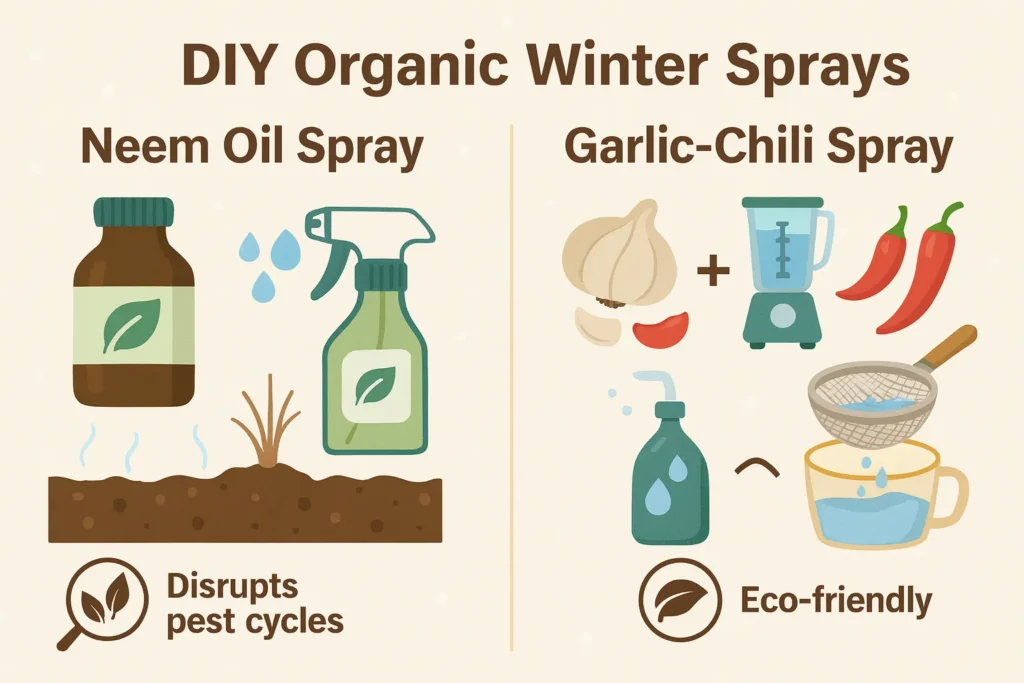
Chemical pesticides are less effective in winter and can harm soil health. Instead, DIY organic sprays for winter offer eco-friendly solutions to deter pests.
Neem Oil Applications
Neem oil is a natural insecticide that disrupts pest life cycles. It’s safe for beneficial insects and can be applied to soil and dormant plants.
- Mix 2 tablespoons of neem oil with 1 gallon of water.
- Spray soil surfaces and plant bases monthly.
Neem oil is particularly effective in winter because pests are less mobile, making them easier targets. For gardeners committed to organic practices, neem oil also doubles as a soil conditioner, subtly improving microbial activity. Incorporating neem into your winter garden pest control routine ensures that overwintering pests like aphids and mites are disrupted before they can reproduce in spring.
👉 For natural pest prevention strategies, check our iron chlorosis diagnosis guide.
Garlic and Chili Sprays
Garlic and chili sprays repel pests with strong odors and compounds. They are especially effective against aphids and mites.
- Blend garlic cloves and chili peppers with water.
- Strain and spray directly on soil and mulch.
DIY organic sprays for winter are not only cost-effective but also customizable. Some gardeners add a splash of vinegar or soap to enhance effectiveness, creating a multi-layered deterrent. The beauty of these sprays lies in their adaptability—different combinations target different pests. This experimentation keeps winter gardening engaging and ensures pests hiding in soil or mulch never feel secure.
Mulching & Soil Warming Techniques
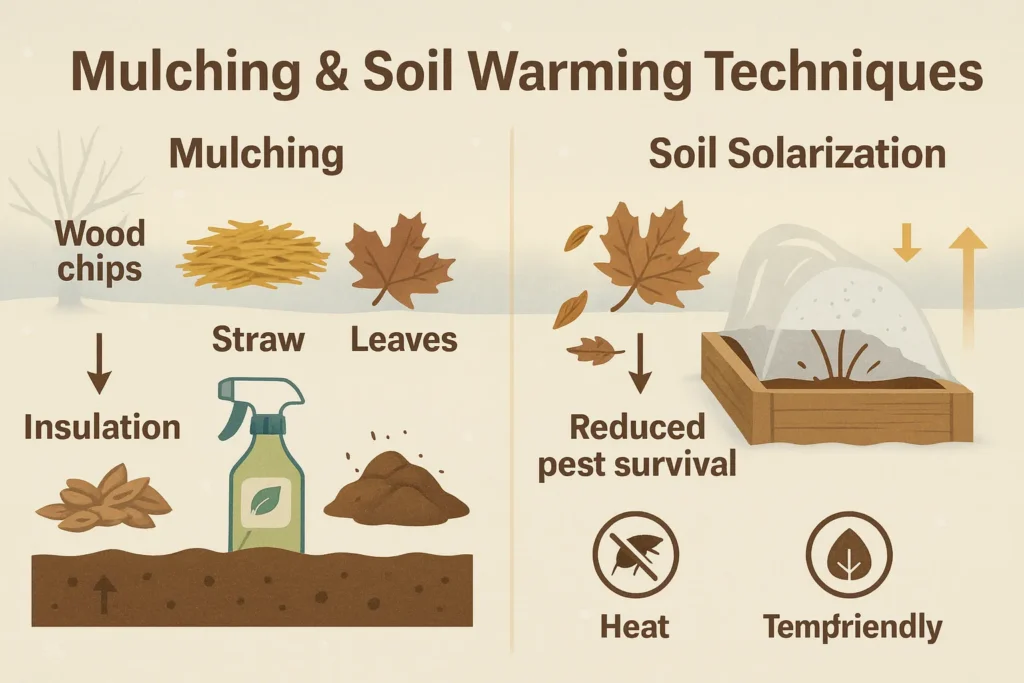
Mulching is more than insulation—it’s a pest management tool. Proper mulching prevents pest survival while maintaining soil health.
Mulching also plays a vital role in Winter Garden Pest Control, since it not only shields the soil from harsh weather but also disrupts the habitats where insects and larvae might otherwise overwinter. By carefully choosing the right mulch type and applying it in balanced layers, gardeners can reduce pest pressure while supporting beneficial organisms. This simple practice becomes a powerful defense strategy, ensuring that plants emerge healthier and stronger when spring arrives.
How Mulch Prevents Pest Survival
Mulch regulates soil temperature, making it less hospitable for overwintering pests. It also reduces moisture levels that pests rely on.
- Use coarse mulch like wood chips to discourage nesting.
- Avoid thick, damp mulch layers that shelter insects.
Mulching is a double-edged sword in winter garden pest control. While it protects soil, it can also harbor pests if mismanaged. A clever twist is to use mulch types that pests dislike, such as cedar chips, which naturally repel insects. By choosing the right mulch, gardeners can transform a potential pest shelter into a protective shield.
👉 For container-friendly soil solutions, see our container cover crops guide. For seasonal pest control insights, explore Homes & Gardens’ guide to winter garden pests.
Solarization and Soil Warming Tips
Soil solarization uses sunlight to heat soil, killing pests and pathogens. Though less common in winter, it can be applied in late fall or early spring.
- Cover the soil with clear plastic sheets.
- Leave for 4–6 weeks to raise soil temperature.
Soil warming techniques are often overlooked in colder climates, but even partial solarization can reduce pest populations. Some gardeners combine solarization with raised bed winter protection, covering beds with plastic during sunny winter days and insulating them at night. This hybrid approach not only suppresses pests but also accelerates soil readiness for early planting.
Mistakes Gardeners Make in Winter
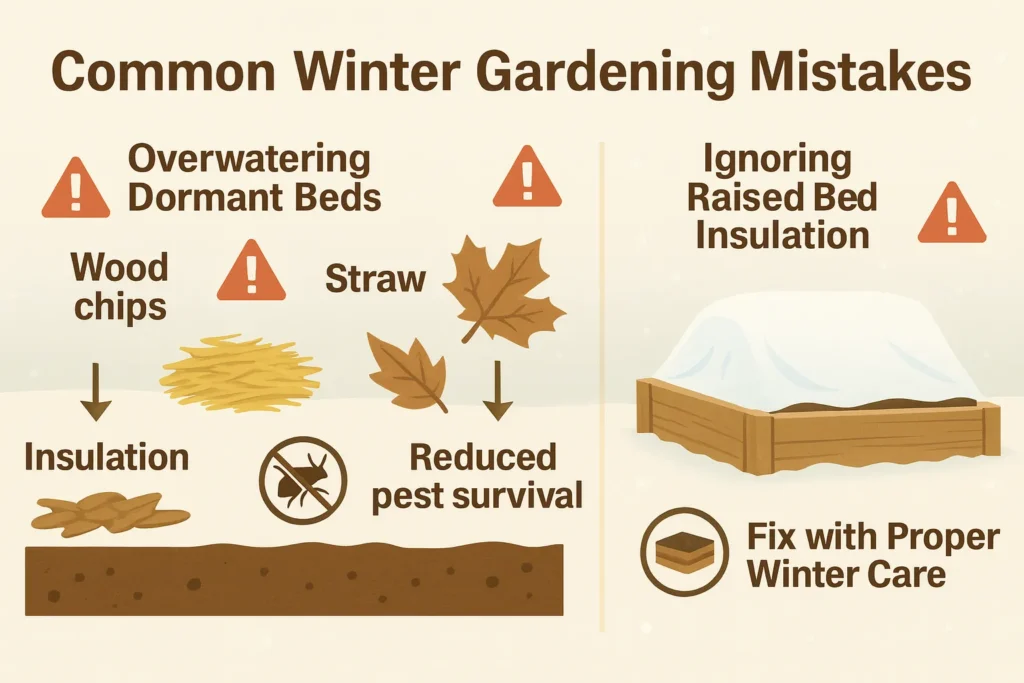
Even experienced gardeners make errors that invite pests. Avoiding these winter gardening mistakes ensures healthier plants.
Overwatering Dormant Beds
Excess moisture creates ideal conditions for fungal growth and the survival of pests—water sparingly during winter.
Overwatering is one of the most common winter gardening mistakes because it feels counterintuitive—gardeners worry about dryness. Yet, excess water creates soggy soil where pests hiding in the soil thrive. A better approach is to monitor soil moisture with a simple probe, ensuring hydration without saturation. This small adjustment can dramatically improve winter garden pest control outcomes.
👉 For more seasonal plant care, explore our overwintering houseplants checklist. For practical winter pest tips, see Garden and Allotment’s December pest control guide.
Leaving Debris That Shelters Pests
Uncleared leaves and plant debris provide hiding spots for insects. Always clean beds before winter.
Debris management is more than tidying up—it’s pest prevention. Aphids and cutworms often lay eggs in leftover stems and leaves, making debris removal a critical step. Some gardeners compost debris separately, away from raised beds, ensuring pests don’t find their way back. This twist—turning waste into controlled compost—adds sustainability to winter garden pest control.
Ignoring Raised Bed Insulation
Failing to insulate raised beds leaves soil vulnerable to pests and frost damage.
Insulation is not just about warmth—it’s about pest deterrence. Raised beds without insulation cool rapidly, creating microclimates where pests overwinter. By combining straw insulation with row covers, gardeners create a fortress against winter garden insects. This layered defense is simple yet highly effective, proving that small adjustments can yield big results.
Conclusion
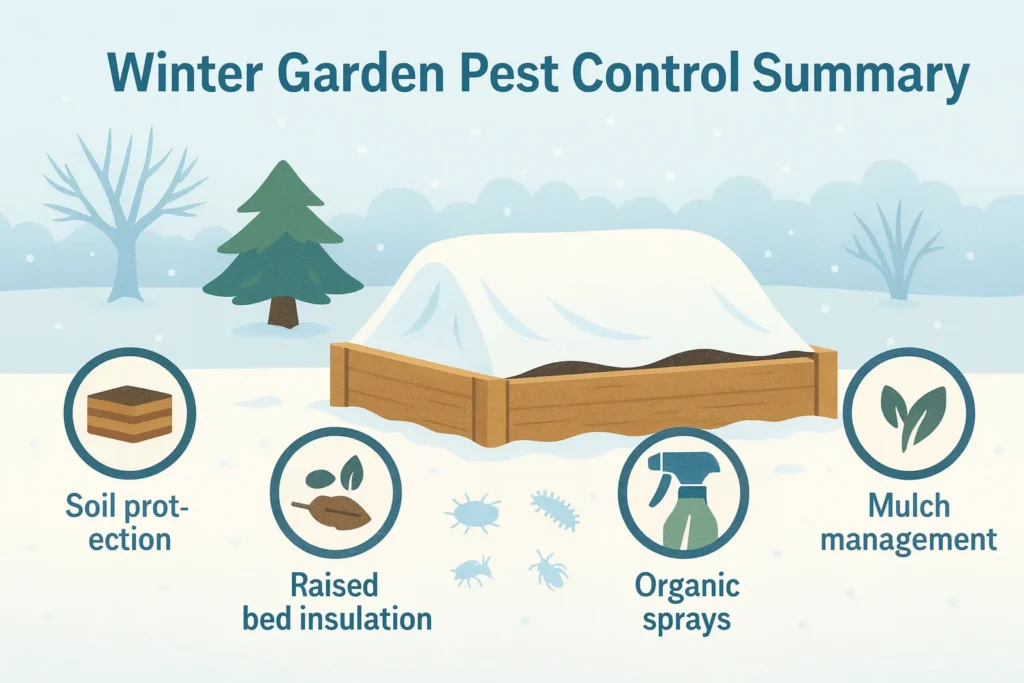
Winter is not a time to ignore your garden—it’s the season when pests quietly prepare for spring. By practicing winter garden pest control, you protect your plants from hidden threats and set the stage for a healthier growing season. From insulating raised beds and applying DIY organic sprays to mulching and avoiding common mistakes, every step you take now pays off in stronger, pest-free plants later.
Gardening is about foresight, and winter pest management is one of the most important investments you can make. With these strategies, your garden will not only survive the cold months but thrive when warmth returns.
Ultimately, winter garden pest control is about foresight and discipline. Each technique—whether mulching, spraying, or insulating—adds a layer of protection that compounds over time. The twist is that winter, often seen as a dormant season, is actually the most strategic period for pest management. By acting now, gardeners set themselves up for a flourishing spring, free from the setbacks of hidden winter pests.
👉 For more resilient planting inspiration, see our plant for extreme weather guide.
📌 FAQ Section
❓ What is winter garden pest control, and why is it important?
Winter garden pest control refers to strategies that protect plants from insects and larvae that overwinter in soil, mulch, and raised beds. It’s important because pests that survive the cold months emerge stronger in spring, causing damage to roots, seedlings, and overall plant health.
❓ Which pests hide in soil during winter?
Common pests hiding in soil include grubs, nematodes, and wireworms. These pests feed on plant roots and organic matter, weakening plants before spring growth begins.
❓ How can I protect raised beds from winter pests?
Raised bed winter protection involves covering beds with row covers, insulating soil with straw or leaves, and keeping the area free of debris. These steps reduce pest sheltering and stabilize soil temperature.
❓ Are DIY organic sprays effective for winter garden pest control?
Yes. Neem oil, garlic sprays, and chili sprays are eco‑friendly options that disrupt pest life cycles and repel insects. They are especially effective against aphids, spider mites, and cutworms.
❓ Does mulching help prevent winter garden insects?
Mulching regulates soil temperature and moisture, making conditions less favorable for pests. Using coarse mulch like wood chips or cedar chips discourages nesting, while proper thickness prevents dampness that attracts pests.
❓ What mistakes do gardeners make in winter pest control?
Common mistakes include overwatering dormant beds, leaving plant debris that shelters pests, and failing to insulate raised beds. Avoiding these errors ensures healthier plants in spring.