
Table of Contents
Table of Contents
🌱 Introduction
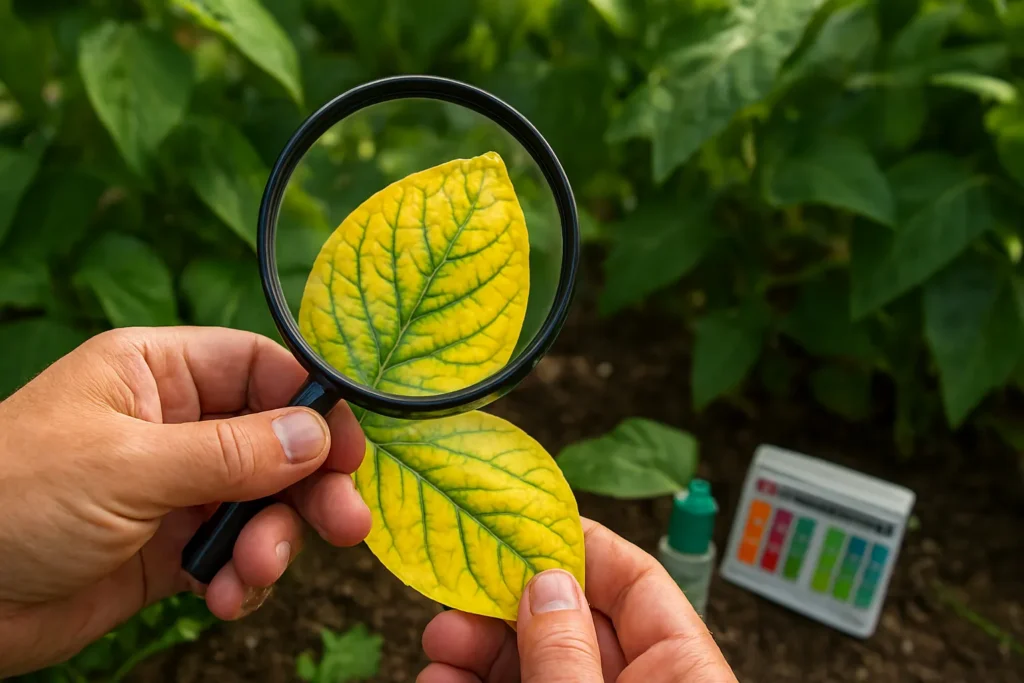
Few things worry gardeners more than walking into the garden and seeing once-vibrant green leaves turning pale yellow. The first thought is often: What’s wrong with my plant? Is it a disease? Is it a nutrient deficiency? Or is it simply stress from the environment?
Among the many causes of yellowing leaves, iron chlorosis is one of the most common yet misunderstood. It can mimic the symptoms of fungal infections, bacterial diseases, or even overwatering. That’s why so many gardeners misdiagnose it, treating the wrong problem and watching their plants continue to decline.
This guide is designed to help you diagnose iron chlorosis yellow leaves with confidence. Many gardeners are surprised to learn that Iron Chlorosis Yellow Leaves can appear even in soils that test high in iron. The twist lies in the plant’s ability to actually use that iron. Environmental conditions, soil chemistry, and even watering habits can lock nutrients away, leaving plants starved despite abundance. This paradox is what makes yellow leaves diagnosis so tricky — the problem isn’t always about what’s missing, but about what’s inaccessible.
👉 For more soil health strategies, explore our guide on making leaf mold fast to improve nutrient availability.
👉 For more background, see Utah State University Extension’s guide on preventing and treating iron chlorosis in trees and shrubs.
Using clear explanations, photo-based comparisons, and practical treatment strategies, you’ll learn how to distinguish iron deficiency from plant diseases — and how to restore your plants to health.
🌿 What is Iron Chlorosis?
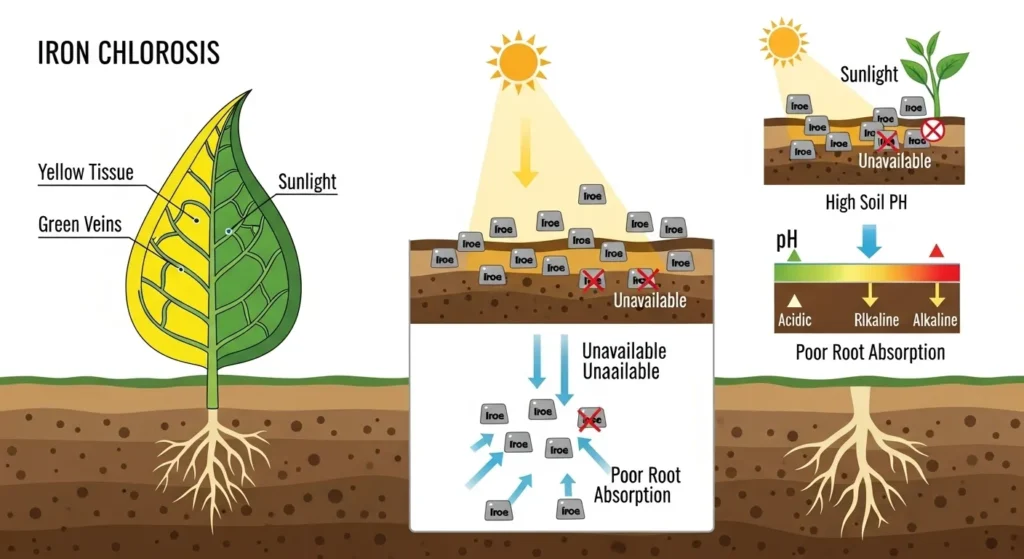
Iron chlorosis is a condition where plants cannot access enough iron, even if the soil technically contains it. Iron is a micronutrient essential for chlorophyll production, the pigment that makes leaves green and powers photosynthesis. Without sufficient iron, plants cannot produce enough chlorophyll, leading to yellowing between the veins of leaves.
Why Iron Matters
- Iron is vital for enzyme function and energy transfer in plants.
- It plays a direct role in chlorophyll synthesis, which is why deficiency shows up as yellow leaves.
- Unlike nitrogen or potassium, iron is immobile in plants. This means deficiency symptoms appear first on new leaves, not old ones.
When gardeners first encounter Iron Chlorosis Yellow Leaves, they often confuse it with nitrogen deficiency because both conditions cause pale foliage. But the key difference is that iron deficiency in plants strikes the youngest leaves first, while nitrogen deficiency begins with the oldest. This subtle distinction is critical for accurate yellow leaves diagnosis, and overlooking it can lead to wasted treatments that never solve the underlying issue.
👉 To compare with other nutrient issues, see our container cover crops guide for natural soil enrichment.
🍃 Symptoms of Iron Chlorosis (Photo Diagnosis Guide)
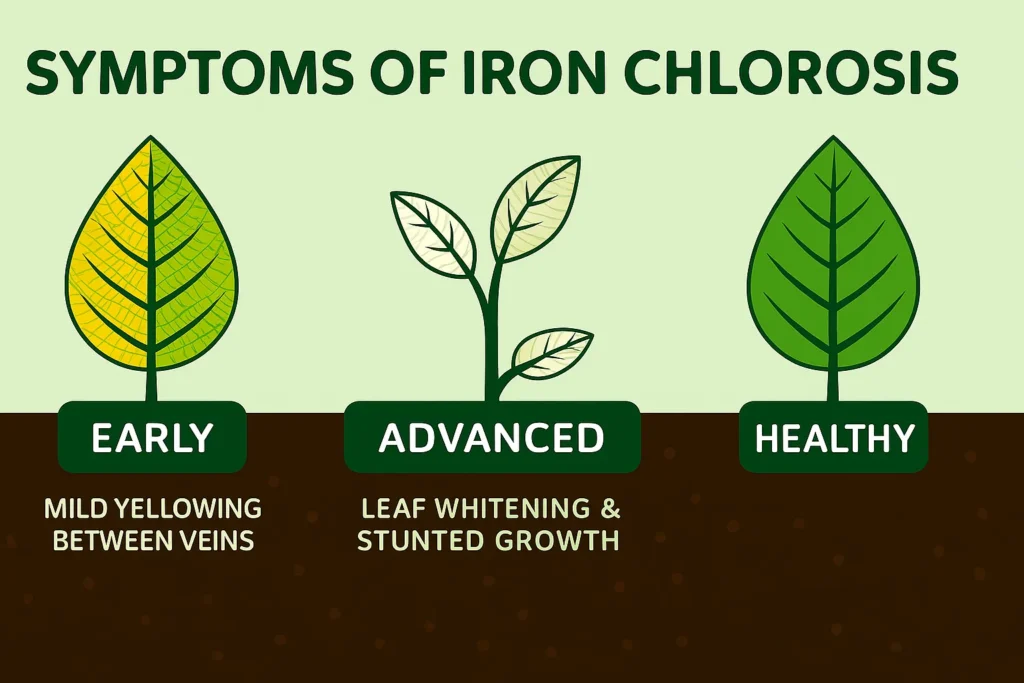
When diagnosing iron chlorosis yellow leaves, it’s important to look for specific patterns rather than just general yellowing.
Early Signs
- Interveinal chlorosis: Leaves turn yellow, but the veins remain dark green.
- New growth affected first: Unlike nitrogen deficiency, which starts on older leaves, iron deficiency shows up on the youngest leaves.
Advanced Symptoms
- Leaves may turn almost white with green veins.
- Growth becomes stunted.
- Severe cases can lead to leaf drop and reduced flowering or fruiting.
Pro tip: Always compare new leaves with older ones. If the youngest leaves are yellowing first, iron deficiency is the likely culprit.
Another twist worth noting is that Iron Chlorosis Yellow Leaves can sometimes appear alongside other stress symptoms, such as curling or marginal browning, which may mislead gardeners into suspecting disease. This is why photo-based comparisons are so valuable: they allow you to separate plant leaves turning yellow iron deficiency from fungal leaf spot or bacterial blight. By training your eye to recognize the clean, vein-based yellowing pattern, you’ll avoid the common trap of misdiagnosis.
👉 For more plant protection strategies, check our frost protection for plants guide.
🦠 Iron Chlorosis vs Plant Diseases
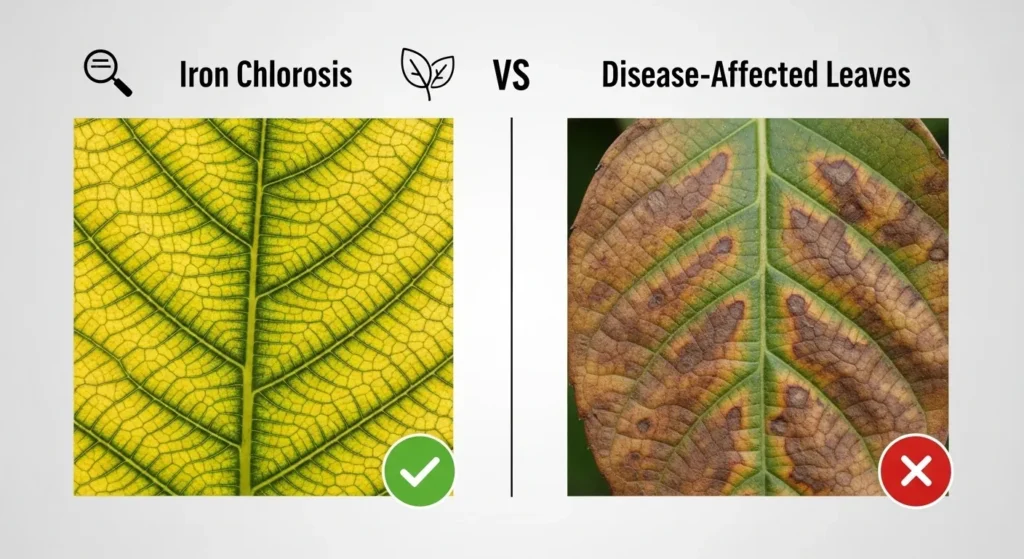
One of the biggest challenges is telling iron chlorosis yellow leaves apart from disease-related yellowing.
Nutrient Deficiency vs Disease
- Iron Chlorosis:
- Yellowing between veins (interveinal chlorosis).
- New leaves are affected first.
- No spots, lesions, or irregular patches.
- Fungal/Bacterial Diseases:
- Yellowing is often irregular, with brown spots, lesions, or mold growth.
- It can affect leaves randomly, not just new growth.
- It may spread quickly in humid conditions.
Visual Diagnosis with Photos
- Iron chlorosis photos show clean, vein-based yellowing.
- Disease photos show patchy, uneven discoloration with visible damage.
The real challenge in iron chlorosis vs disease diagnosis is that both can appear suddenly, especially in spring when growth is rapid. A gardener might panic at the sight of Iron Chlorosis Yellow Leaves and assume a contagious disease is spreading. But unlike pathogens, chlorosis does not “spread” from leaf to leaf — it reflects a systemic nutrient imbalance. Recognizing this difference not only saves time but also prevents unnecessary fungicide use, which does nothing to correct iron deficiency in plants.
👉 For further clarity, explore Utah State University Extension’s overview of iron chlorosis causes.
🌍 Causes of Iron Deficiency in Plants
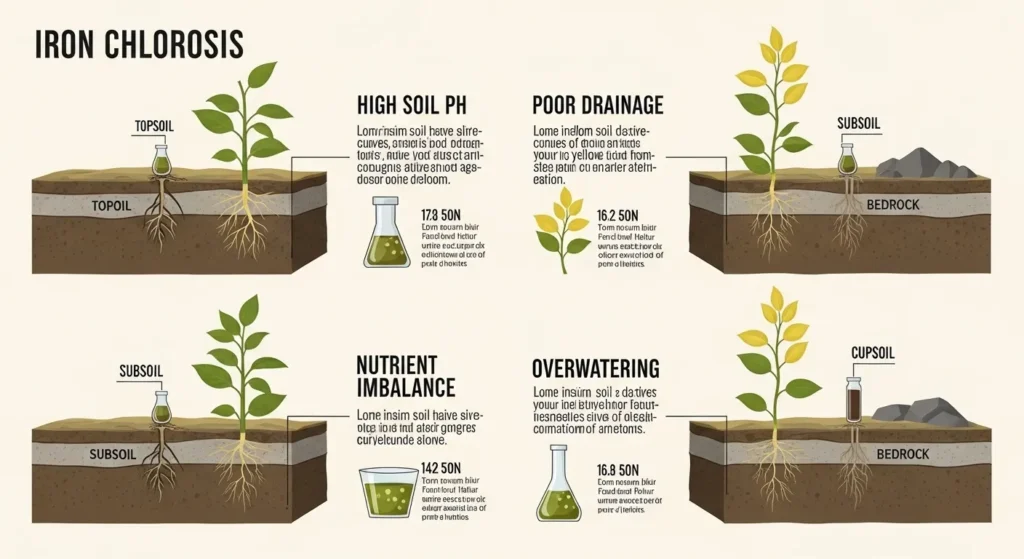
Even if your soil contains iron, plants may still suffer from iron chlorosis, yellow leaves, because they cannot absorb it.
Common Causes
- High Soil pH (Alkaline Soil)
- Iron becomes insoluble in alkaline soils (pH above 7.5).
- Common in calcareous soils.
- Poor Drainage or Compacted Soil
- Roots suffocate and cannot take up nutrients.
- Excess Phosphorus or Other Nutrients
- Over-fertilization can block iron absorption.
- Cold or Wet Conditions
- Temporarily reduce root activity, leading to deficiency symptoms.
It’s also worth remembering that Iron Chlorosis Yellow Leaves can be seasonal. For example, in early spring, when soils are still cold, roots may struggle to absorb iron even if the soil is rich in it. This temporary form of plant leaves turning yellow iron deficiency, often corrects itself as temperatures rise. However, if symptoms persist into summer, it’s a sign of a deeper soil chemistry issue that requires intervention.
👉 For soil chemistry insights, see Plant Grower World’s explanation of iron chlorosis causes.
🌱 How to Treat Iron Chlorosis
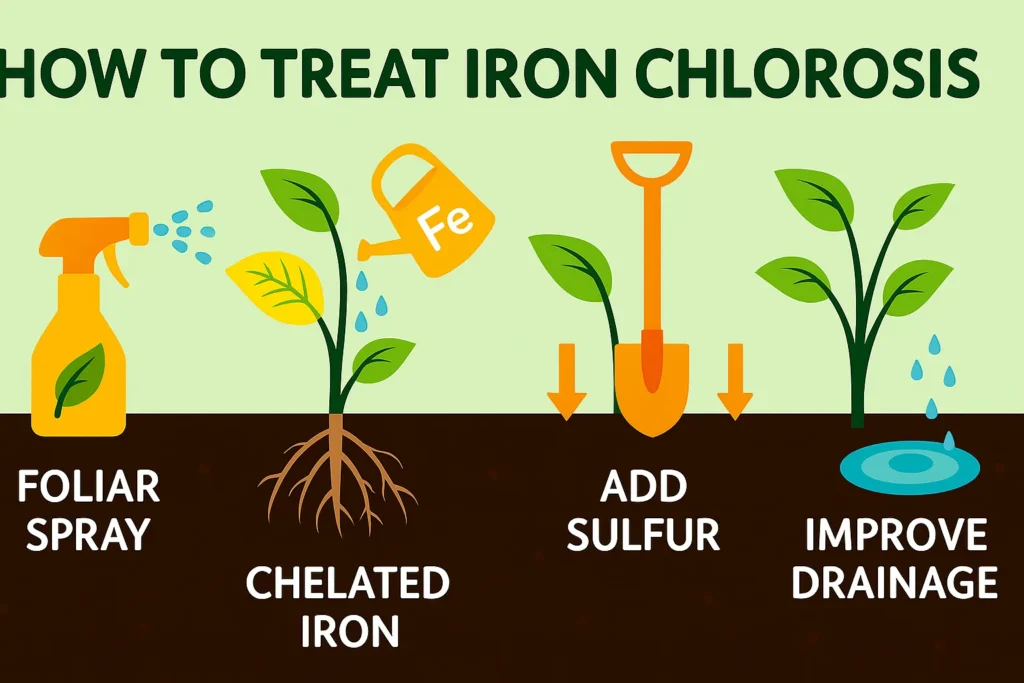
The good news is that iron chlorosis yellow leaves can often be corrected with the right treatment.
Quick Fixes
- Foliar Sprays: Apply chelated iron directly to leaves for fast results.
- Liquid Iron Supplements: Provide immediate relief but may need repeated applications.
Long-Term Solutions
- Soil Amendments: Add sulfur or organic matter to lower soil pH.
- Chelated Iron in Soil: Use EDDHA chelates for alkaline soils (they remain available at higher pH).
- Improve Drainage: Aerate compacted soil and avoid overwatering.
Experienced gardeners often combine quick fixes with long-term strategies for the best results. For instance, applying a foliar spray can green up Iron Chlorosis Yellow Leaves within days, but unless the soil pH is corrected, the problem will return. This is why chlorosis treatment plants should always be approached as a two-step process: immediate relief for the plant, followed by soil correction for lasting health.
👉 For treatment strategies, check Planting Guys’ nutrient deficiency troubleshooting guide.
🌾 Preventing Yellow Leaves in the Future
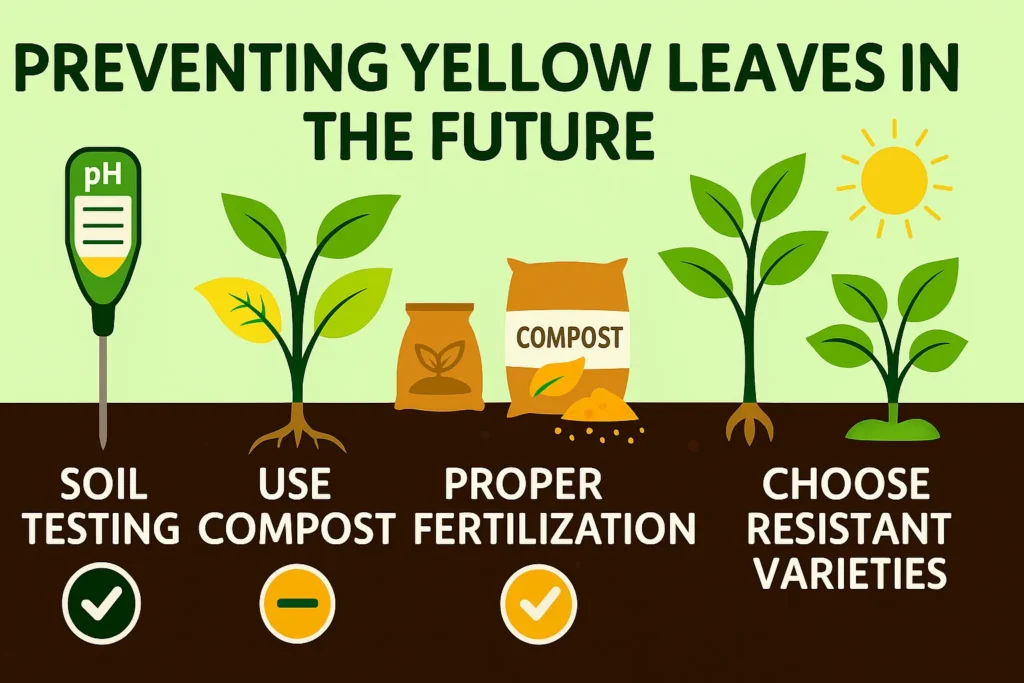
Prevention is always better than a cure. To avoid recurring iron chlorosis yellow leaves, focus on long-term soil and plant health.
Best Practices
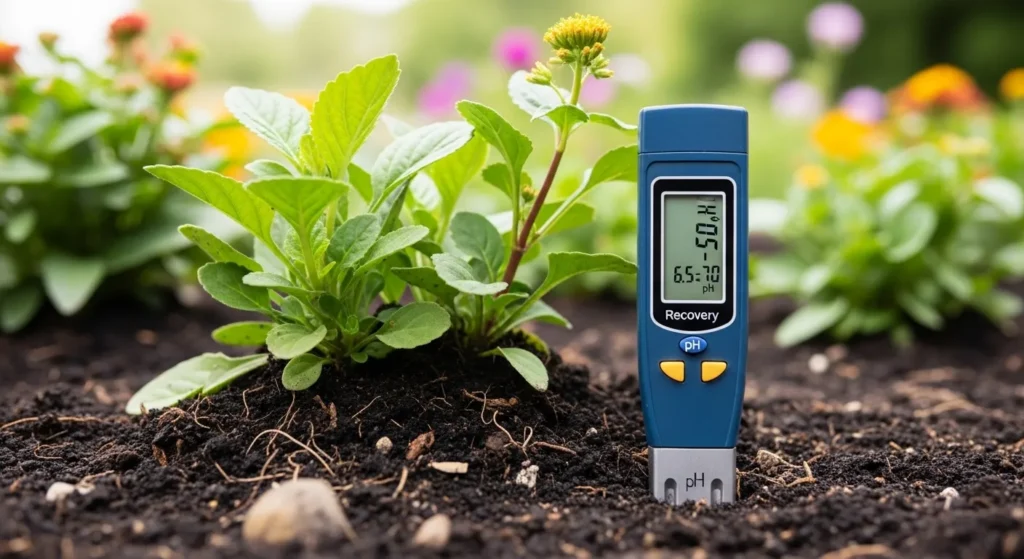
- Test Your Soil: Regular soil testing helps you monitor pH and nutrient levels.
- Balanced Fertilization: Avoid overloading phosphorus, which blocks iron uptake.
- Organic Matter: Compost improves soil structure and nutrient availability.
- Choose Resistant Varieties: Some plant cultivars are less prone to iron chlorosis.
Prevention also means observing your plants closely throughout the growing season. Subtle changes in leaf color can be early warnings of Iron Chlorosis Yellow Leaves, giving you time to act before the condition worsens. By combining soil testing with visual observation, you’ll develop a gardener’s intuition for yellow leaves diagnosis, catching problems before they spiral into full-blown nutrient deficiencies.
👉 For more seasonal planting strategies, explore our plants to plant in winter guide.
📸 Photo Diagnosis Tips for Gardeners
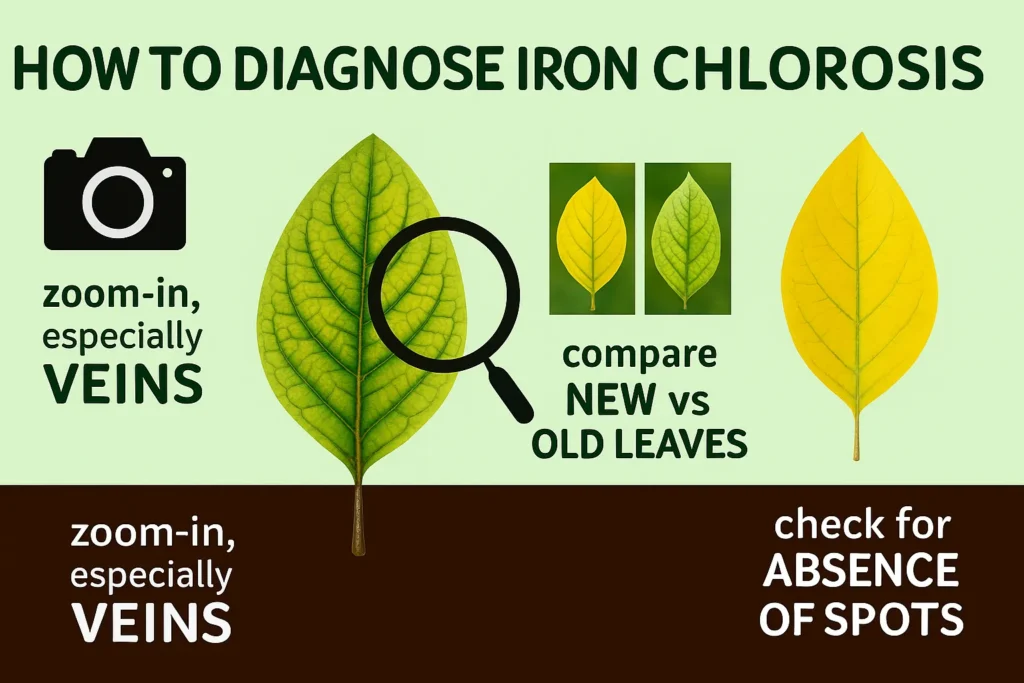
Since this is a photo diagnosis guide, here are practical tips for using visuals to confirm iron chlorosis:
- Zoom in on veins: Look for the classic green-vein/yellow-background pattern.
- Compare old vs new leaves: Iron deficiency = new leaves yellow first.
- Check for spots or lesions: If present, it’s likely a disease, not chlorosis.
- Take seasonal context into account: Cold, wet springs often trigger temporary chlorosis.
One trick many seasoned gardeners use is to keep a “leaf diary” — photographing Iron Chlorosis Yellow Leaves at different stages and comparing them year to year. This not only sharpens your eye for iron chlorosis vs disease but also helps you track whether your soil amendments are working. Over time, these visual records become a powerful tool for mastering plant leaves turning yellow iron deficiency.
🧑🌾 Common Plants Affected by Iron Chlorosis
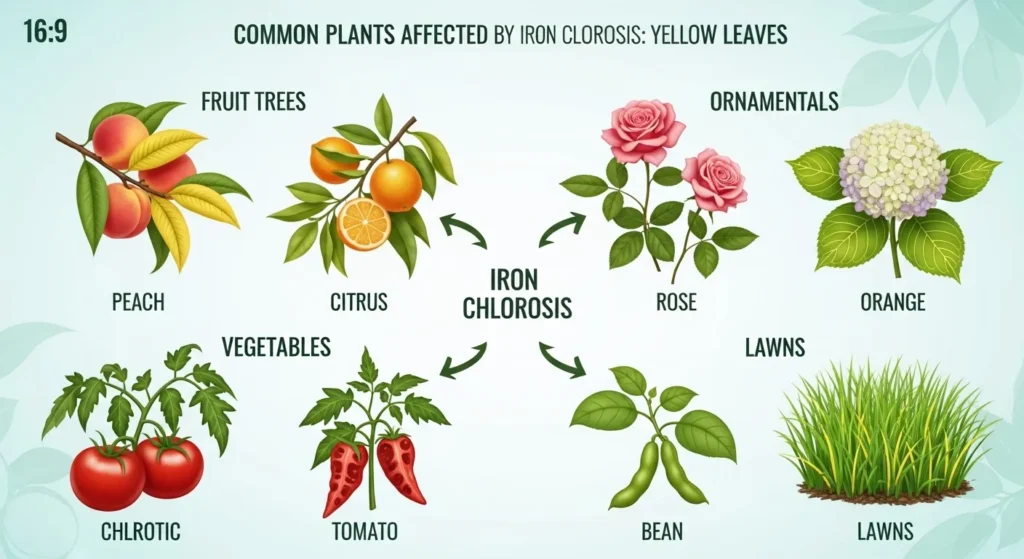
Some plants are more prone to iron chlorosis yellow leaves than others, especially those grown in alkaline soils.
- Fruit Trees: Pears, apples, peaches, citrus.
- Ornamentals: Roses, hydrangeas, azaleas.
- Vegetables: Tomatoes, beans, spinach.
- Lawns: Kentucky bluegrass and other turfgrasses.
Interestingly, some plants show Iron Chlorosis Yellow Leaves more dramatically than others. Hydrangeas, for example, may display striking lime-yellow foliage with deep green veins, while tomatoes often show stunted, pale growth. This variability can make yellow leaves diagnosis even more challenging, since the same deficiency manifests differently across species. Recognizing these plant-specific patterns is part of becoming a truly skilled gardener.
👉 For more flower-specific inspiration, see our unique yellow flowers guide.
🌟 Conclusion
Yellowing leaves can be alarming, but not all yellowing is the same. By learning to recognize the distinctive signs of iron chlorosis yellow leaves, you can avoid misdiagnosis and wasted treatments. Unlike diseases that leave spots, lesions, or irregular patches, iron chlorosis creates a clean, vein-based yellowing pattern that starts on new leaves.
The key to solving the problem lies in understanding your soil. High pH, poor drainage, or nutrient imbalances often prevent plants from absorbing iron. With the right combination of quick fixes (like foliar sprays) and long-term strategies (like soil amendments and pH correction), you can restore your plants’ health and prevent future outbreaks.
Think of this guide as your visual checklist:
- If new leaves are yellow with green veins → suspect iron chlorosis.
- If yellowing is patchy with spots → suspect disease.
- If older leaves yellow first → suspect another nutrient deficiency.
By combining careful observation with targeted action, you’ll not only save your plants but also grow as a more confident, knowledgeable gardener.
Ultimately, the journey of diagnosing Iron Chlorosis Yellow Leaves is as much about learning to read your plants as it is about applying treatments. Each case of iron deficiency in plants tells a story about soil, water, and environment — and the more you listen, the better you’ll become at preventing problems before they start. Think of this guide not as the end, but as the beginning of your deeper relationship with plant health and chlorosis treatment plants.
👉 To stay ahead of seasonal design trends, discover why faded petal pink is set to dominate gardens.
❓ Frequently Asked Questions (FAQ) on Iron Chlorosis Yellow Leaves
1. What are Iron Chlorosis Yellow Leaves?
Iron Chlorosis Yellow Leaves are a symptom of iron deficiency in plants, where the tissue between the veins turns yellow while the veins remain green. This happens because the plant cannot produce enough chlorophyll due to limited iron availability, even if the soil contains iron.
2. How can I tell if yellow leaves are caused by iron deficiency or disease?
The key to yellow leaves diagnosis is looking at the pattern:
Iron chlorosis: New leaves turn yellow first, with green veins (interveinal chlorosis).
Disease: Yellowing is irregular, often with brown spots, lesions, or mold. This distinction is crucial in accurately identifying iron chlorosis versus disease.
3. Why do plants get Iron Chlorosis Yellow Leaves if the soil already has iron?
The issue is not always the absence of iron but the plant’s inability to absorb it. High soil pH, poor drainage, compacted soil, or excess phosphorus can block uptake. This is why iron deficiency in plants often occurs in alkaline soils, even when iron is present.
4. Which plants are most affected by Iron Chlorosis Yellow Leaves?
Many species are vulnerable, but it’s especially common in:
Fruit trees (pears, apples, peaches, citrus)
Ornamentals (roses, hydrangeas, azaleas)
Vegetables (tomatoes, beans, spinach)
Lawns (Kentucky bluegrass). Some plants show more dramatic symptoms than others, making plant leaves turning yellow iron deficiency easier to spot iron deficiency in certain species.
5. How do I treat Iron Chlorosis Yellow Leaves quickly?
For fast results, apply foliar sprays or liquid iron supplements directly to the leaves. These treatments green up plants within days. However, they are temporary fixes. For lasting results, you’ll need to correct soil pH, improve drainage, or add chelated iron — a complete chlorosis treatment plants approach.
6. Can Iron Chlorosis Yellow Leaves be prevented?
Yes. Regular soil testing, balanced fertilization, and adding organic matter can prevent recurring problems. Choosing resistant plant varieties also reduces risk. Observing your plants closely throughout the season helps you catch early signs of Iron Chlorosis Yellow Leaves before they worsen.
7. Do Iron Chlorosis Yellow Leaves spread like a disease?
No. Unlike fungal or bacterial infections, Iron Chlorosis Yellow Leaves are not contagious. They reflect a nutrient imbalance in the soil or root environment. Correcting the underlying cause restores plant health.


One comment on “Iron Chlorosis Yellow Leaves — A Photo Diagnosis Guide (How to Tell Iron Deficiency from Disease)”