Table of Contents
Table of Contents
Introduction
Winter’s beauty often comes with a hidden cost for gardeners: frost. If you’ve ever stepped outside on a crisp morning to find your potted plants drooping, leaves discolored, or roots damaged, you know how devastating frost can be. Learning how to protect potted plants from frost is not just a skill—it’s a survival tactic for your garden.
👉 For broader winter resilience strategies, see our winter garden pest control guide. For official frost protection basics, see the USDA’s frost protection and avoidance resources.
Unlike plants rooted in the ground, potted plants are far more vulnerable. Their soil volume is smaller, their roots are closer to the surface, and their containers often act like cold traps. But here’s the good news: protecting them doesn’t require expensive equipment or advanced gardening knowledge. With a few beginner-friendly techniques, you can keep your plants safe, extend their growing season, and avoid the common mistakes that many gardeners unknowingly make.
This guide is designed for beginners, but even seasoned gardeners will find value in the detailed charts, DIY insulation methods, and “what NOT to do” section that most articles skip. By the end, you’ll feel confident about facing winter head-on, knowing your plants are protected.
To truly protect potted plants from frost, it helps to think of winter as a season of preparation rather than reaction. Many beginners wait until the first frost warning before acting, but experienced gardeners know that insulation and positioning should begin weeks earlier. This proactive approach not only saves plants but also reduces stress for the gardener. Imagine the satisfaction of waking up after a freezing night and seeing your plants still vibrant—this is the reward of planning.
Another twist worth noting is that frost doesn’t always strike when you expect it. Microclimates—like shaded corners of your balcony or exposed rooftops—can experience frost earlier than the forecast predicts. By learning to spot these vulnerable zones, you’ll gain an edge in keeping your plants safe.
🌡️ When Frost Damage Happens
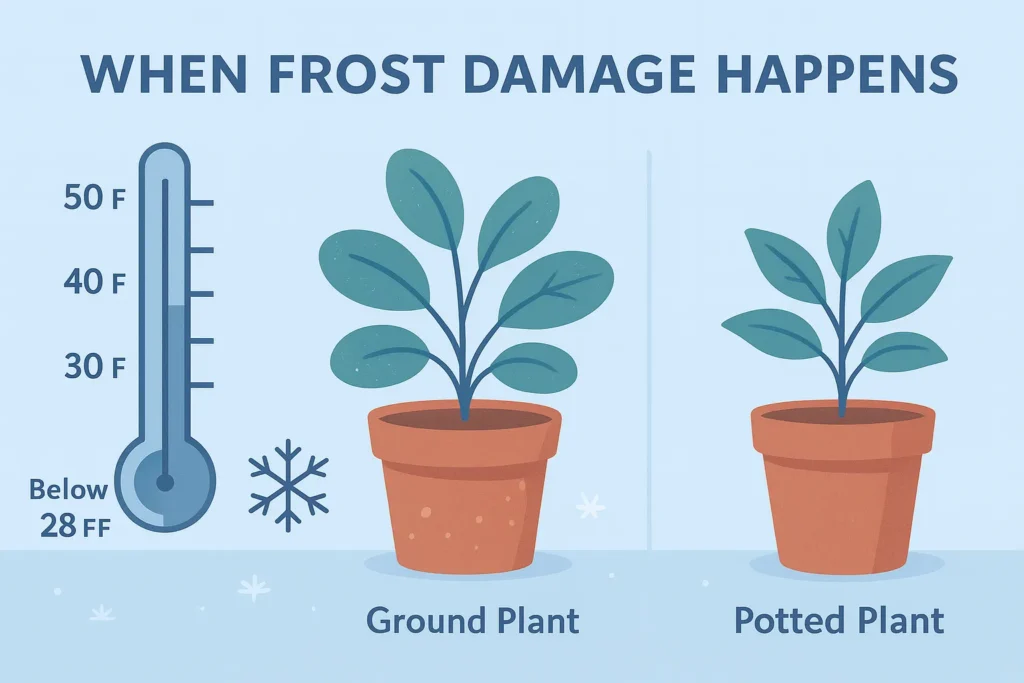
Frost damage occurs when temperatures dip below freezing (32°F / 0°C). But the exact threshold depends on the type of plant and the conditions around it.
Why Potted Plants Are More Vulnerable
- Limited soil insulation: In-ground plants benefit from the earth’s natural warmth. Pots, however, lose heat quickly.
- Exposed roots: Roots in containers sit closer to the surface, making them more susceptible to freezing.
- Moisture freeze: Water in the soil can crystallize, rupturing root cells.
Early Signs of Frost Stress
- Leaf discoloration: Leaves may turn black, brown, or translucent.
- Wilting despite moisture: Plants look limp even though the soil is damp.
- Stunted growth: Roots damaged by frost stop absorbing nutrients, halting growth.
Beginner tip: If you notice leaves turning glassy or mushy, act immediately. That’s frost damage in progress.
To protect potted plants from frost, you must understand that damage often begins invisibly at the root level before it shows on the leaves (For root health tips, explore our how to prevent and fix root rot guide). Roots exposed in thin-walled containers can freeze overnight, even if the foliage looks fine in the morning. This hidden stress weakens the plant gradually, making it more susceptible to pests and diseases later in the season.
Curiously, some plants may appear to “bounce back” after mild frost exposure, only to collapse days later. This delayed effect is why monitoring soil temperature is just as important as watching air temperature. Beginners often overlook this, but seasoned gardeners know that the battle against frost is fought underground as much as above.
📊 Temperature Charts for Beginners
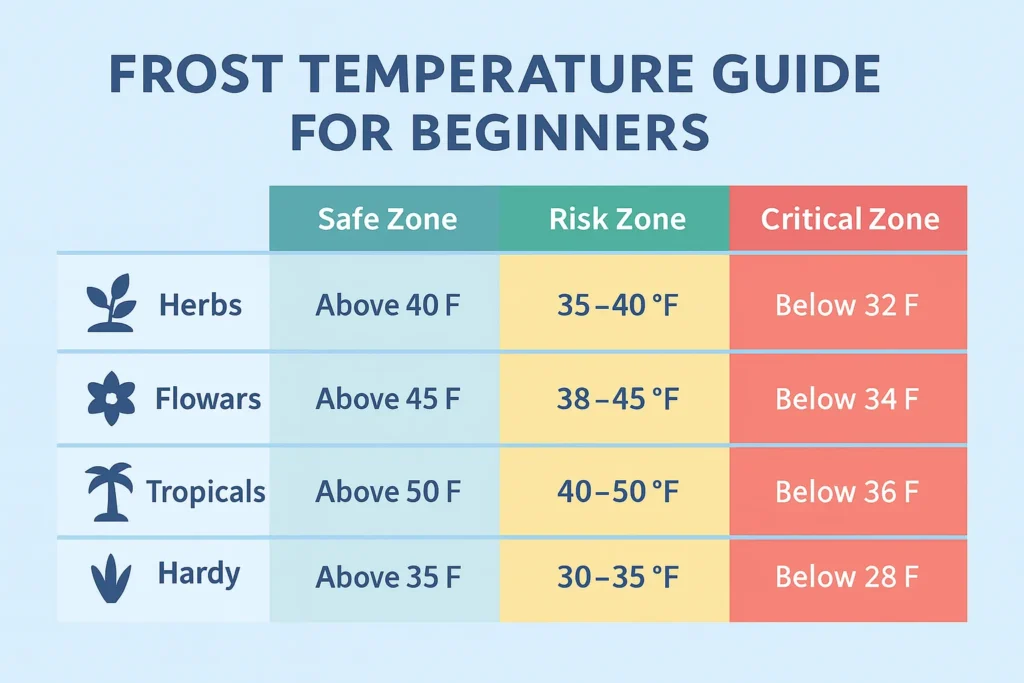
Beginners often ask: “At what temperature should I worry?” Here’s a simple chart:
| Plant Type | Safe Zone | Risk Zone | Critical Zone |
|---|---|---|---|
| Herbs (basil, mint) | Above 40°F | 35–40°F | Below 32°F |
| Flowers (geraniums, petunias) | Above 45°F | 38–45°F | Below 34°F |
| Tropicals (hibiscus, citrus) | Above 50°F | 40–50°F | Below 36°F |
| Hardy plants (succulents, pansies) | Above 35°F | 30–35°F | Below 28°F |
How to Use This Chart
Act early: Don’t wait until the critical zone—start insulating in the risk zone.
Check forecasts daily: Apps often show “feels like” temperatures, which matter more than actual readings.
Know your plant type: Tropical plants need more protection than hardy succulents.
When you protect potted plants from frost, charts like these become your roadmap (For indoor plant care in colder months, check our Why Indoor Plants Turn Yellow In Autumn Guide. For detailed frost damage advice, see the Royal Horticultural Society’s frost damage guidance). But remember, they are guidelines, not guarantees. Wind chill, humidity, and soil moisture can shift the thresholds dramatically. For example, a basil plant might survive at 35°F in calm conditions but die at the same temperature during a windy night.
A twist for curious gardeners: some hardy plants can actually benefit from brief exposure to cooler temperatures, developing stronger tissues. However, this resilience has limits. Understanding where the line is drawn between “hardening” and “damage” is what separates beginners from experts.
🛠️ DIY Insulation Methods
Protecting potted plants doesn’t require fancy gear. Here are practical, beginner-friendly methods:
Mulching Containers
- Add straw, leaves, or wood chips to trap heat.
- Mulch acts like a blanket, keeping soil warmer overnight.
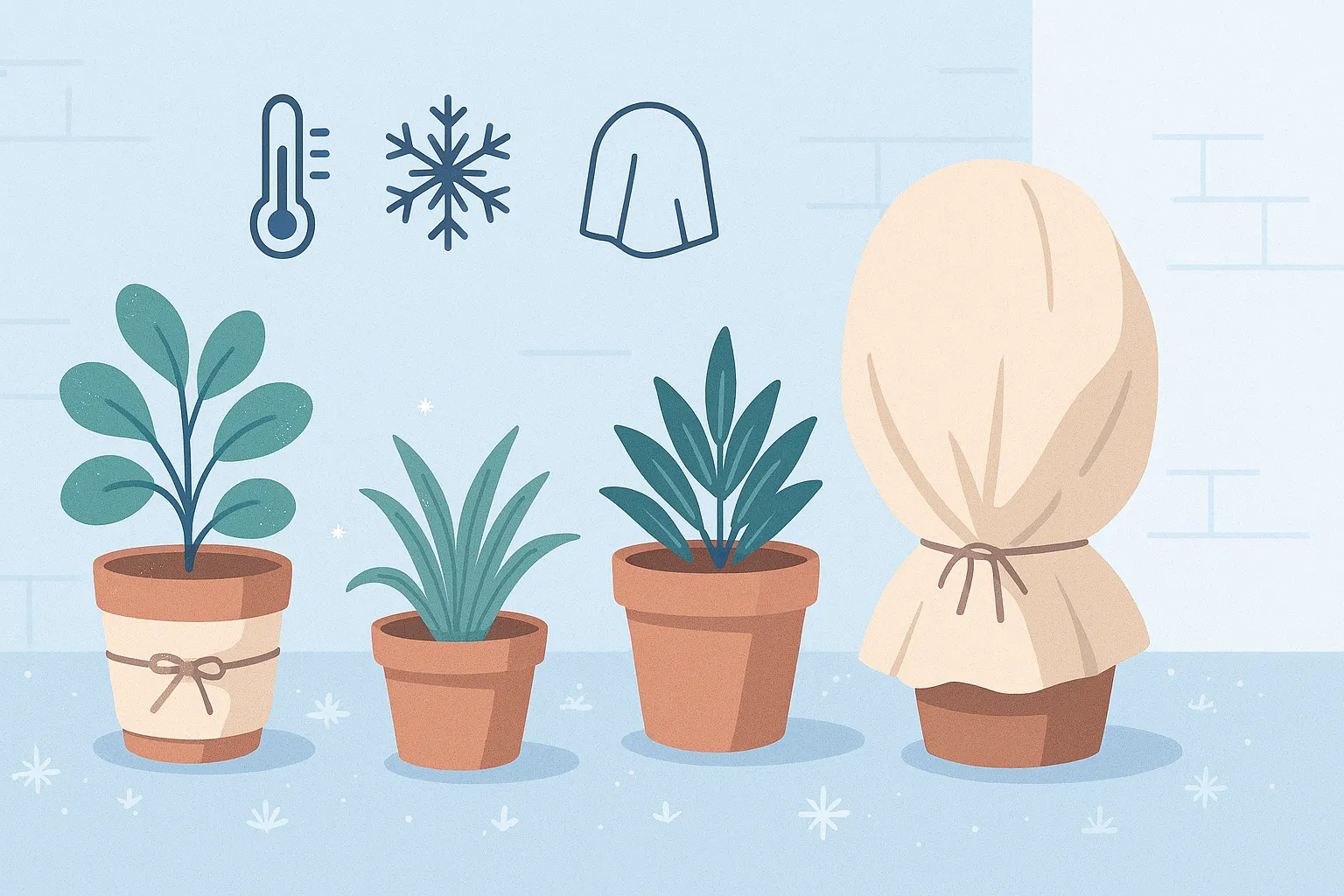
Wrapping Pots
- Use burlap, bubble wrap, or cloth to insulate the sides.
- Avoid plastic directly on plants—it traps moisture.
Grouping Pots Together
- Cluster pots to share warmth.
- Place them near walls or fences for added protection.
Moving Pots Indoors or Near Walls
- Even unheated garages or sheds are warmer than outdoors.
- South-facing walls radiate heat, offering natural insulation.
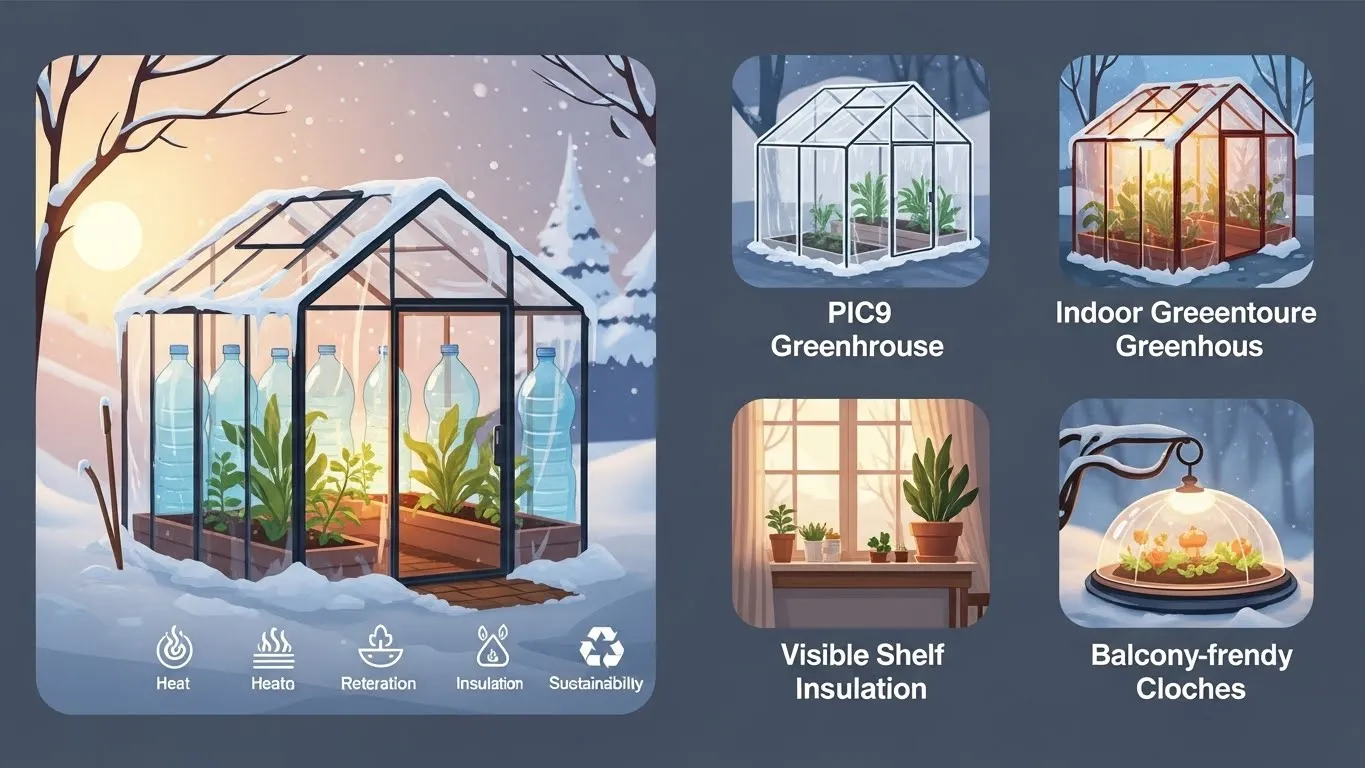
Mini-Greenhouses or Cloches
- Affordable covers that create a microclimate.
- Perfect for herbs and small flowers.
Beginner tip: Always leave some airflow when covering plants to prevent mold.
To protect potted plants from frost, think creatively about insulation (For more DIY season‑extension ideas, see our cold frame gardening guide). Everyday household items—like old sweaters, newspapers, or even yoga mats—can be repurposed to shield pots. This DIY mindset not only saves money but also makes frost protection accessible to anyone, regardless of budget.
Another curiosity: grouping pots doesn’t just share warmth; it creates a mini-ecosystem. The collective humidity and heat retention mimic natural environments, giving your plants a fighting chance against sudden cold snaps. Beginners often underestimate this simple trick, yet it’s one of the most effective.
🚫 What NOT to Do (Critical Beginner Mistakes)
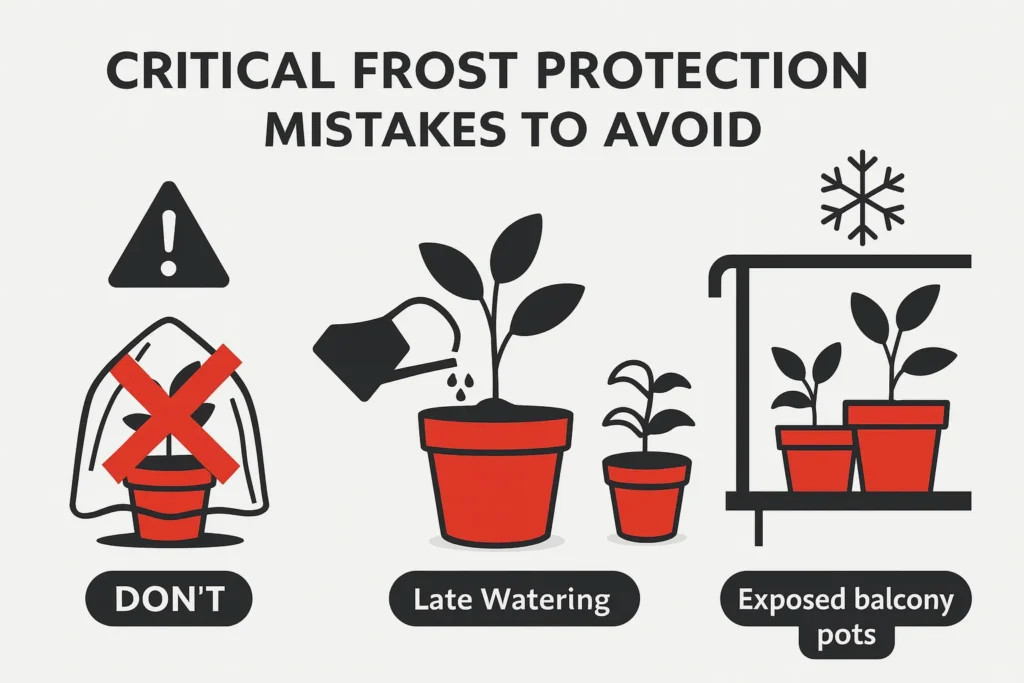
Most guides skip this section, but it’s vital for beginners:
- Don’t cover plants with plastic directly: It traps moisture and causes leaf burn.
- Don’t water late at night before frost: Wet soil freezes faster, which can harm roots.
- Don’t leave pots exposed on balconies: Elevated pots cool faster than ground-level ones.
- Don’t assume hardy plants are immune: Even succulents can suffer root damage in prolonged frost.
This “what NOT to do” section differentiates your article from competitors and builds authority.
To truly protect potted plants from frost, avoid shortcuts that seem logical but backfire (For frost safety methods, check our frost protection for plants DIY guide). For instance, some gardeners place pots directly on heating vents or radiators indoors, thinking it will keep the roots warm. In reality, this dries out the soil rapidly and stresses the plant.
Another twist: watering in the morning before a frost event can sometimes be beneficial, as moist soil retains heat more effectively than dry soil. But timing is everything—do it too late in the day, and you risk freezing the roots. These nuances are what make frost protection both a science and an art.
⚡ Quick Emergency Hacks
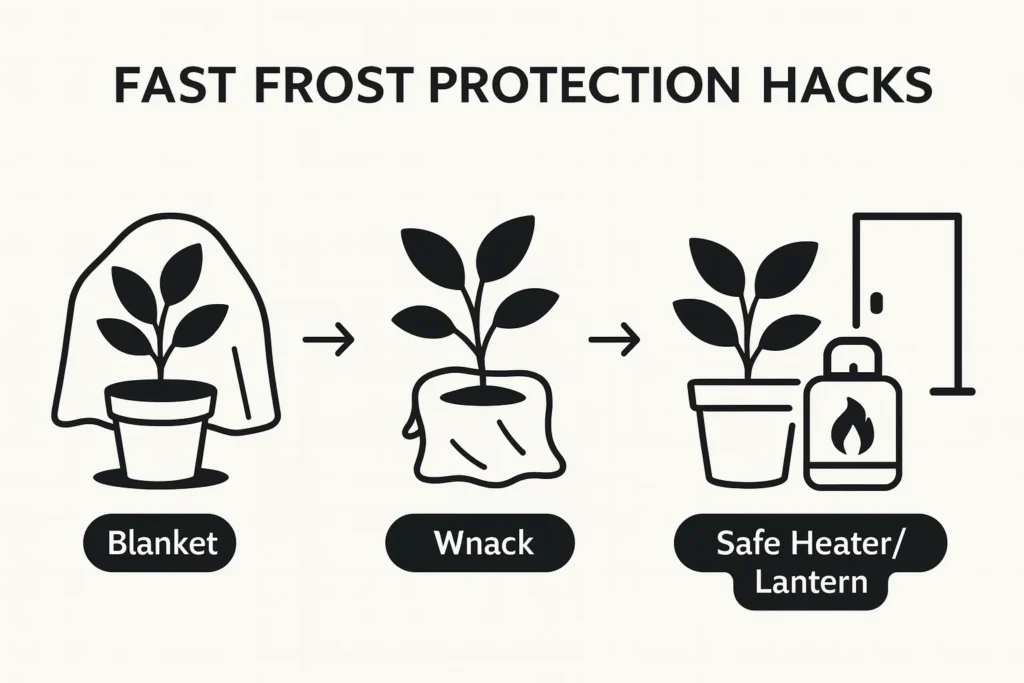
Sometimes frost warnings come with little notice. Here’s how to act fast:
- Blankets or old sheets: Drape over plants for overnight protection.
- Cardboard boxes or buckets: Invert over pots to trap heat.
- Portable heaters or lights: Use safely to raise the temperature in enclosed spaces.
- Move pots into garages or sheds: Even unheated spaces are warmer than outdoors.
Beginner tip: Always remove covers in the morning to let plants breathe.
When you protect potted plants from frost in emergencies, creativity is your best ally (For affordable lighting setups to help in emergencies, explore our cheap grow lights for seedlings guide). Even something as simple as turning a laundry basket upside down over a pot can create a protective dome. Add a blanket on top, and you’ve built a makeshift greenhouse overnight.
Here’s a curiosity twist: candles or small lanterns placed safely inside a covered area can raise the temperature just enough to prevent frost damage. While this requires caution, it demonstrates how small sources of heat can make a big difference in survival.
🌿 Long-Term Strategies for Winter Gardening
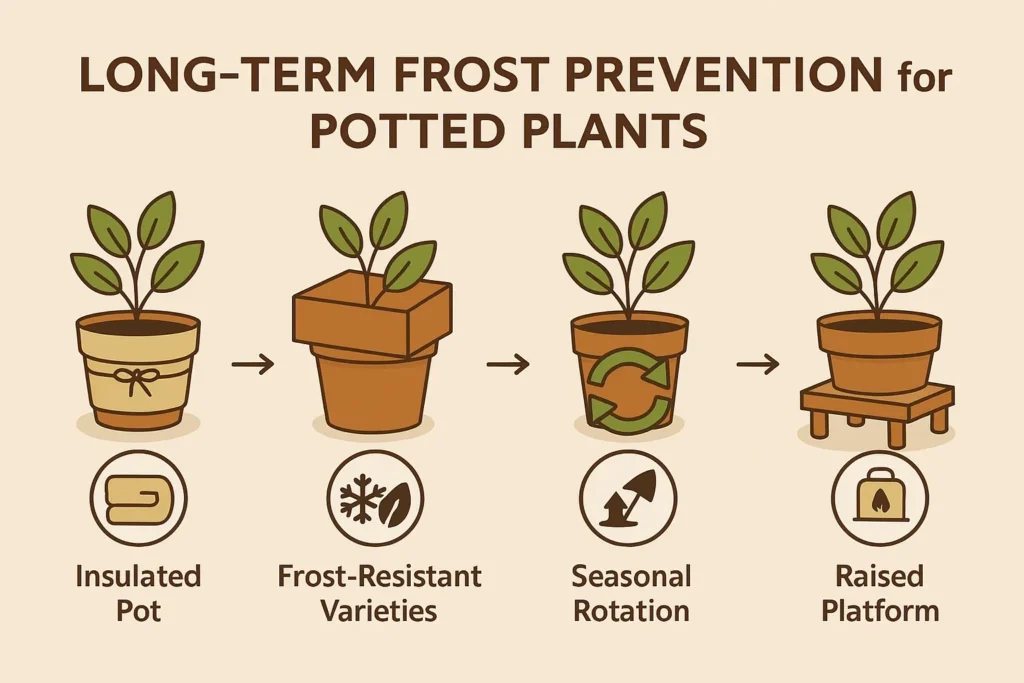
For gardeners who want to avoid constant emergency measures:
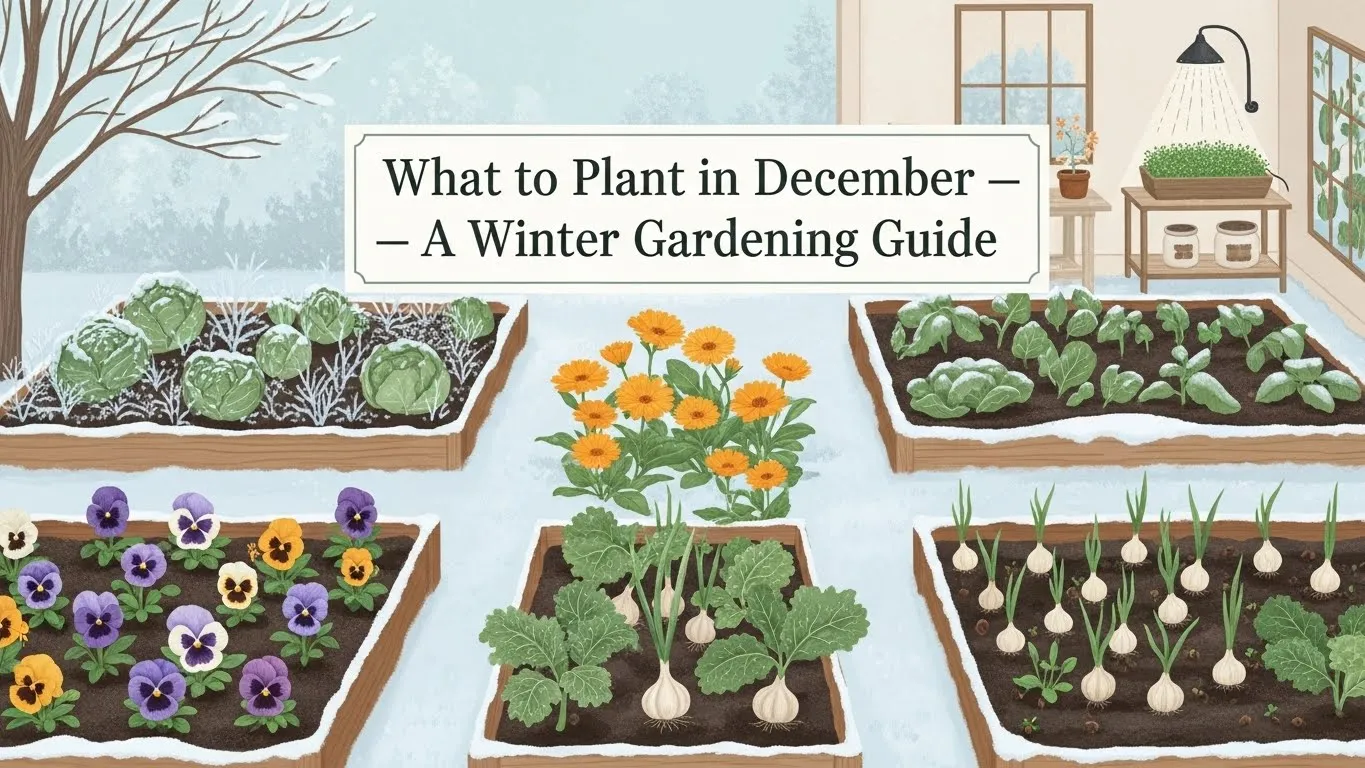
- Choose frost-resistant plants: Pansies, kale, and certain succulents thrive in cold.
- Invest in insulated pots, such as ceramic or double-walled containers, which retain heat better.
- Plan seasonal rotations: Move sensitive plants indoors during peak frost months.
- Use raised platforms: Keeping pots off cold concrete reduces root shock.
Beginner tip: Think of winter gardening as a cycle—plan ahead, and your plants will thrive year after year.
To protect potted plants from frost long-term, consider investing in soil amendments like perlite or vermiculite (For raised bed inspiration and soil planning, see our raised bed gardening simple ideas guide). These improve drainage and reduce the risk of water freezing around roots. Healthy soil structure is as important as external insulation.
Another twist: rotating pots seasonally doesn’t just protect them from frost—it also refreshes your gardening routine. By moving plants indoors during winter and outdoors in spring, you create a dynamic cycle that keeps your garden lively and engaging year-round.
🧩 Building Topical Authority
Since you already have frost-related content for trees, linking this article internally strengthens your topical authority (Learn more about frost safety for orchards in our fruit tree winter guards guide). Suggested anchor links:
- “Learn more about frost protection for trees.”
- “Explore our guide on winter gardening essentials.”
To protect potted plants from frost while building topical authority, think of your content as a web of interconnected guides. Readers searching for frost protection tips often want broader winter gardening advice. Linking to related topics like composting in cold weather or pruning frost-damaged branches strengthens your authority and keeps readers engaged.
Curiosity twist: search engines reward not just keywords but depth. By explaining “why” frost harms plants—not just “how” to prevent it—you position yourself as a trusted educator rather than just another blogger.
🌍 Real-Life Case Studies (Beginner-Friendly Examples)
Keywords woven in: beginner frost guide, gardening, real-life frost protection stories
Case Study 1: Balcony Gardener in a Cold Climate
A beginner in Toronto lost half her herb collection one winter. After learning to wrap pots with burlap and group them near her apartment wall, she saved her basil and mint the following year.
Case Study 2: Small-Space Gardener in London
A gardener with limited space used cardboard boxes and blankets during sudden frost warnings. His geraniums survived the entire winter without damage.
Case Study 3: DIY Enthusiast in Islamabad
Using recycled bubble wrap and straw mulch, a beginner gardener kept citrus saplings alive through unexpected December frosts.
Beginner tip: Real-life hacks prove that frost protection doesn’t require expensive tools—just creativity and preparation.
To protect potted plants from frost, real-world stories inspire confidence. For example, a gardener in rural France used clay pots inverted over delicate herbs, creating a rustic yet effective shield. This method, passed down through generations, shows how traditional wisdom still holds value today.
Another curiosity: some urban gardeners experiment with solar lights that double as frost protectors. The lights absorb energy during the day and release gentle warmth at night, offering a modern twist on age-old frost protection.
🧠 Beginner-Friendly Guide Recap
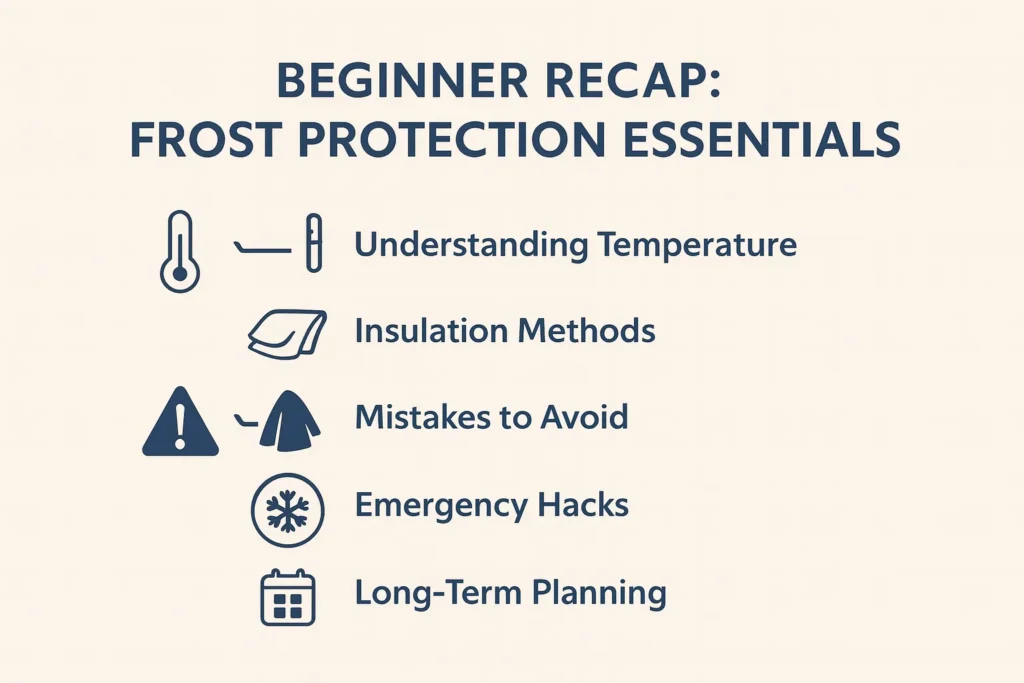
This guide is designed to be practical, actionable, and easy to follow. Let’s recap the essentials:
- Know when frost damage happens (watch temperature charts).
- Apply DIY insulation methods (mulch, wraps, grouping).
- Avoid common mistakes (plastic covers, late watering).
- Use emergency hacks when frost strikes suddenly.
- Plan long-term strategies (frost-resistant plants, insulated pots).
To protect potted plants from frost, remember that consistency is key. One night of neglect can undo weeks of care. Beginners should treat frost protection as part of their daily routine during winter, just like watering or pruning.
Curiosity twist: Frost protection often teaches patience. Watching your plants survive harsh nights builds resilience not just in your garden, but in you as a gardener.
Conclusion
Protecting potted plants from frost doesn’t have to be complicated or intimidating. By understanding when frost damage happens, using simple temperature charts, applying DIY insulation methods, and avoiding common mistakes, even beginners can keep their container gardens thriving through winter. The key is preparation: don’t wait until frost strikes—act early, and your plants will reward you with resilience and beauty.
This guide not only teaches you how to protect potted plants from frost but also empowers you to become a more confident gardener (For more resilient planting inspiration, see our plant for extreme weather guide. For broader seasonal resilience, see RHS’s frost hardy plant advice). With these strategies, you’ll extend your growing season, save money on replacements, and build a stronger connection to your plants. Winter may be cold, but your garden doesn’t have to suffer.
Ultimately, learning how to protect potted plants from frost is about more than saving greenery—it’s about cultivating confidence, creativity, and foresight. Each method, from DIY insulation to emergency hacks, adds another layer of security to your gardening journey.
And here’s the twist: Frost, though feared, can become your teacher. By facing it head-on, you’ll discover new techniques, deepen your understanding of plant care, and emerge as a more resourceful gardener. Winter challenges may be inevitable, but with preparation, your garden can remain a thriving sanctuary.
❓ Frequently Asked Questions (FAQ) on How to Protect Potted Plants from Frost
1. What temperature will damage potted plants?
Most potted plants begin to suffer frost damage when temperatures drop below 32°F (0°C). However, thresholds vary: tropical plants like hibiscus may be harmed below 40°F, while hardy plants such as pansies can withstand temperatures down to 28°F. Always consult a temperature chart for frost damage to know when to act.
2. How can I protect potted plants from frost overnight?
To protect potted plants from frost overnight, use quick emergency hacks such as:
– Covering pots with blankets or old sheets.
– Inverting cardboard boxes or buckets over plants.
– Moving pots into garages, sheds, or near south-facing walls. These methods create insulation and trap heat, keeping plants safe until morning.
3. Should I water my plants before a frost?
Watering before frost can be tricky. Moist soil retains heat better than dry soil, which can help protect potted plants from frost. However, watering late at night increases the risk of frozen roots. The best practice is to water in the morning before a frost event, giving the soil time to absorb warmth during the day.
4. What are the best DIY insulation methods for pots?
Beginners can use simple DIY plant insulation winter methods:
– Mulching with straw, leaves, or wood chips.
– Wrapping pots with burlap, bubble wrap, or cloth.
– Grouping pots to share warmth. These techniques are affordable, effective, and easy to apply.
5. What NOT to do when protecting potted plants from frost?
Avoid these common mistakes:
– Covering plants directly with plastic (causes leaf burn).
– Watering late at night before frost.
– Leaving pots exposed on balconies or rooftops.
– Assuming hardy plants are immune. Knowing what not to do in frost gardening is just as important as knowing what to do.
6. Which plants are naturally frost-resistant?
Some plants are naturally more resilient to cold, making them ideal for winter container gardening. Examples include pansies, kale, certain succulents, and ornamental cabbages. Choosing frost-resistant plants reduces the need for constant emergency protection.
7. Can I use household items to protect potted plants from frost?
Yes! Everyday items like old sweaters, newspapers, yoga mats, or laundry baskets can be repurposed to insulate pots. This creative approach makes frost protection accessible to beginners and proves that you don’t need expensive gear to succeed.
8. How do I protect potted plants from frost long-term?
Long-term strategies include:
– Investing in insulated pots (ceramic or double-walled).
– Using soil amendments like perlite or vermiculite to improve drainage.
– Rotating pots seasonally between indoors and outdoors. These seasonal plant care techniques ensure your garden thrives year after year.
9. Why are potted plants more vulnerable to frost than in-ground plants?
Potted plants have limited soil volume, meaning they lose heat faster. Their roots sit closer to the surface, and containers often act like cold traps. This makes them more susceptible to frost stress compared to in-ground plants, which benefit from the earth’s natural insulation.
10. How can I build gardening authority with frost protection content?
By covering topics like temperature charts, DIY insulation, emergency hacks, and common mistakes, you create a semantic cluster around frost protection. Linking this guide to related articles (e.g., frost protection for trees, winter gardening essentials) builds topical authority and improves SEO rankings.