
Table of Contents
Table of Contents
🌱 Introduction: Why Winter Protection Matters
Every gardener knows the heartbreak of nurturing young fruit trees and shrubs all year, only to see them damaged by rodents and pests during the harsh winter months. Mice, voles, rabbits, and even deer can strip bark, chew roots, and weaken trees just when they’re most vulnerable. That’s why learning how to protect fruit trees from rodents is one of the most important winter gardening skills.
The good news? You don’t need expensive equipment or toxic chemicals. With a mix of cheap barriers, winter tree guards, and organic rodent repellents, you can safeguard your orchard or backyard garden naturally. This guide will walk you through practical, budget-friendly methods that work for both beginners and seasoned gardeners.
Beyond just saving your harvest, learning to protect fruit trees from rodents is about building resilience in your garden. Think of it as an investment in the future: every tree you safeguard this winter will reward you with stronger growth and more abundant fruit in the years ahead. And here’s the twist—many gardeners don’t realize that rodents can cause hidden damage underground, chewing roots silently while the snow conceals their activity. By combining winter tree guards with organic rodent repellents garden solutions, you’ll be tackling both visible and invisible threats.
👉 For more seasonal soil enrichment, see our make leaf mold fast guide.
Why Winter Protection Matters for Fruit Trees
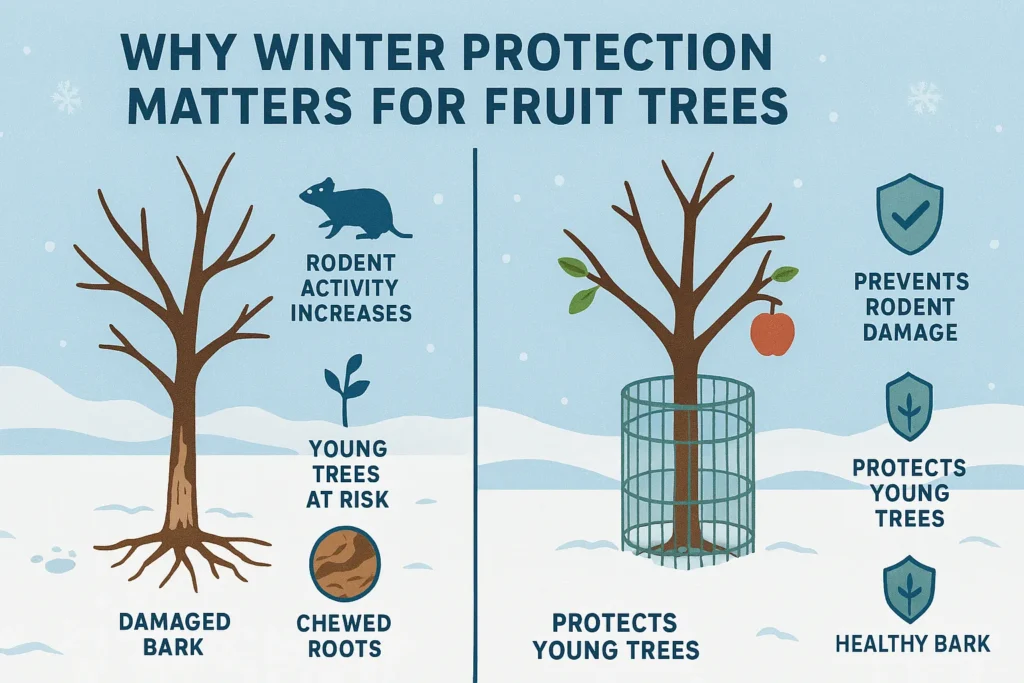
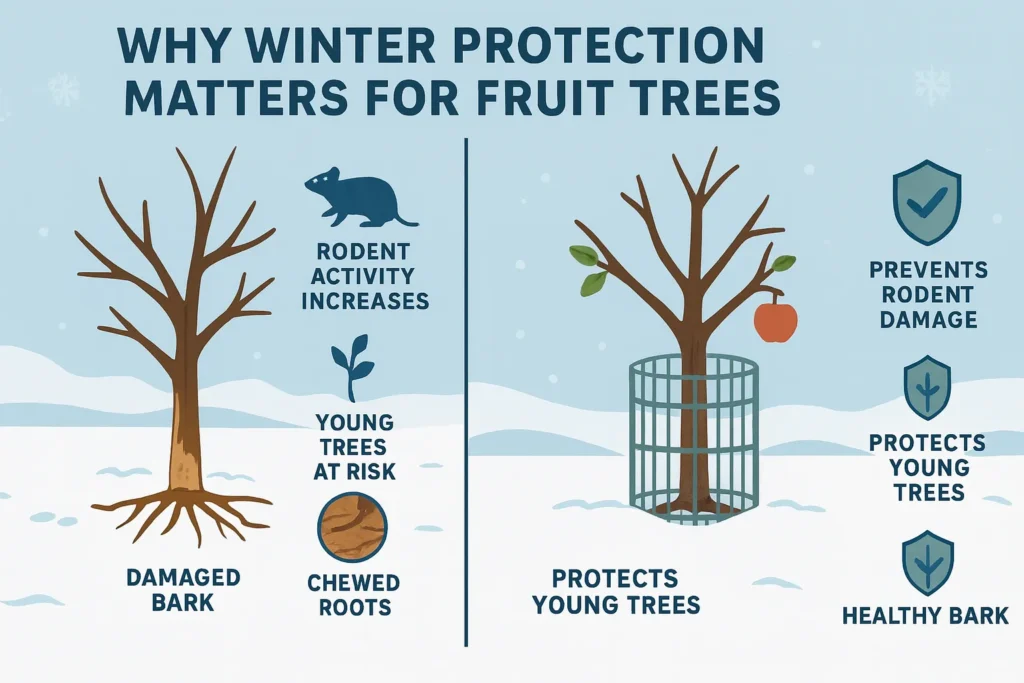
- Rodent activity increases in winter: Food sources are scarce, so bark and roots become easy targets.
- Young trees are most at risk: Their thin bark and shallow roots are easier to damage.
- Damage is often invisible until spring: By the time you notice girdled bark or chewed roots, it may be too late.
Fruit tree protection in winter is not just about saving a season’s harvest — it’s about ensuring the long-term survival of your orchard.
When you protect fruit trees from rodents, you’re also protecting the ecosystem around them. A single damaged tree can invite disease, weaken soil stability, and even reduce pollinator activity in spring. Gardeners who ignore winter protection often face a domino effect: weakened trees attract more pests, which then spread to healthier plants. By using DIY tree protection methods early, you break this cycle before it begins. (👉 For resilient raised bed strategies, explore our fast-growing winter cover crops for no-dig gardening guide.) The curiosity here lies in how small, inexpensive steps—like adjusting mulch or installing a simple guard—can have a surprisingly large impact on orchard health.
Understanding the Enemy: Common Winter Rodents and Pests
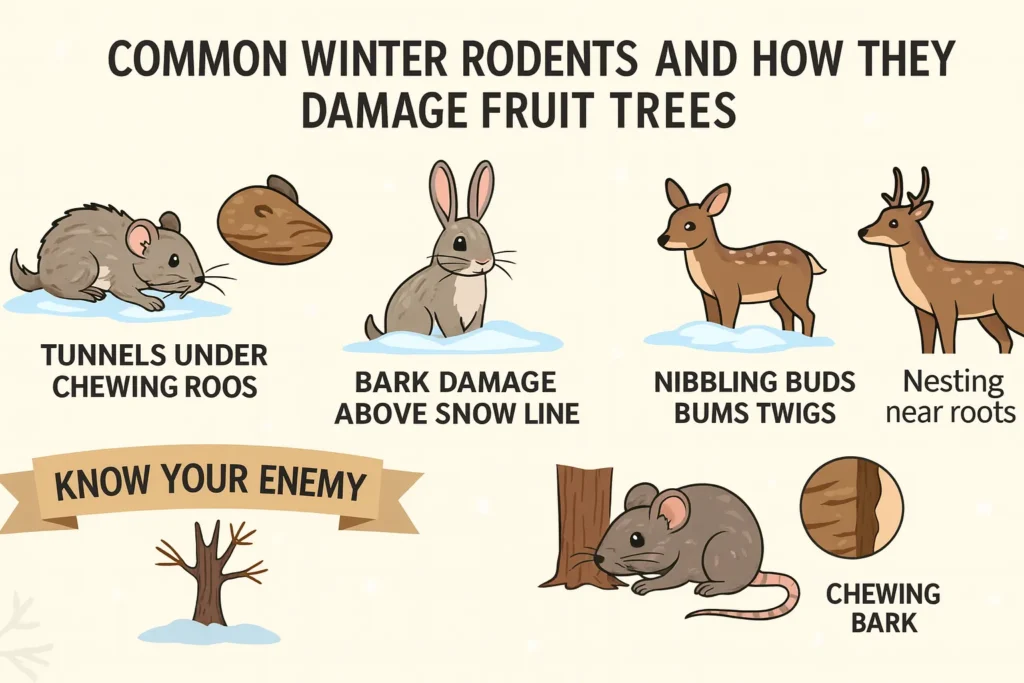
Before choosing the right barrier or repellent, it helps to know what you’re up against.
- Voles (field mice): They tunnel under snow and chew bark at the base of trees.
- Rabbits: They gnaw bark above the snow line, often stripping entire sections.
- Deer: They browse on twigs and buds, stunting growth.
- Mice: They nest near roots and chew through bark at ground level.
Knowing the habits of these pests helps you choose the right DIY tree protection strategy.
To truly protect fruit trees from rodents, it helps to think like the enemy. Voles, for example, prefer areas with thick ground cover, so clearing weeds and grass around trunks can make your orchard less inviting. Rabbits, on the other hand, are opportunists—they’ll chew bark above the snow line, which means taller winter tree guards are essential in heavy snowfall regions. The twist? Deer damage often looks like pruning, but it’s actually destructive browsing that stunts growth. Recognizing these subtle differences ensures your gardening tips are tailored to the specific pests in your area.
👉 For winter sowing tips, see our 8 plants to plant in winter for a head start. For detailed pest profiles, see University of Minnesota Extension’s vole and rabbit management guide.
Cheap Barriers: Physical Protection That Works
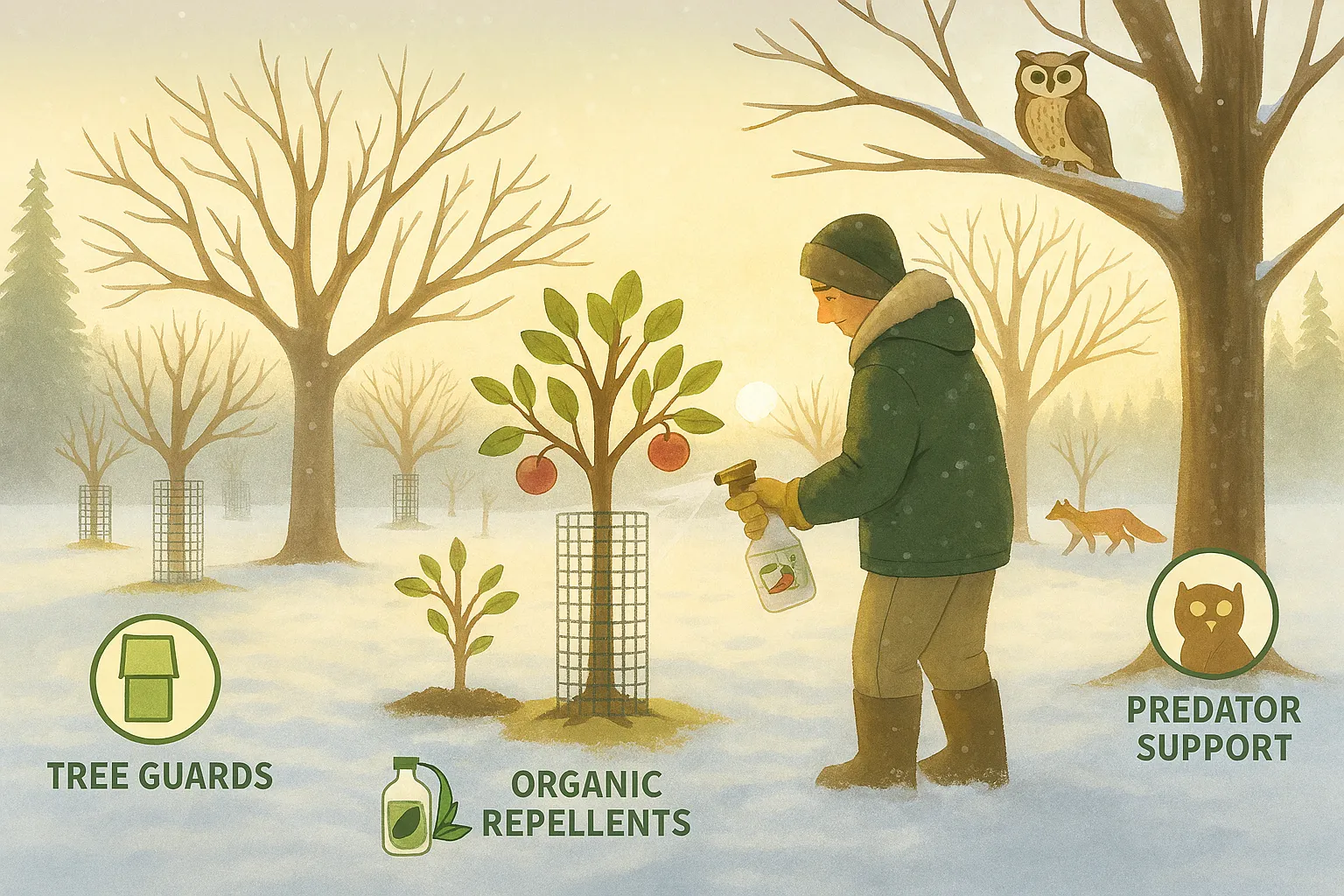
1. Winter Tree Guards
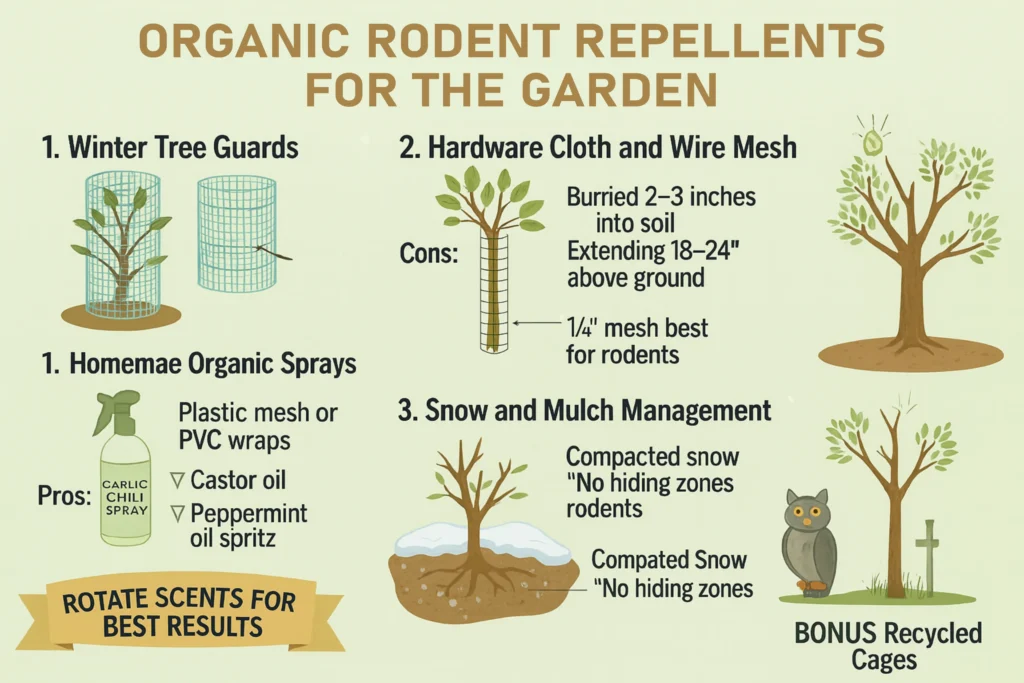
Using winter tree guards is one of the simplest and most effective ways to stop rodents. These are plastic or mesh tubes that wrap around the trunk.
- Pros: Affordable, reusable, easy to install.
- Cons: Must be checked regularly to avoid moisture buildup or insect hiding spots.
- DIY Tip: Cut sections of PVC pipe or repurpose plastic bottles as homemade guards.
2. Hardware Cloth and Wire Mesh
For long-term fruit tree protection in winter, hardware cloth (galvanized wire mesh) is unbeatable.
- Bury it 2–3 inches into the soil to stop burrowing rodents.
- Extend it 18–24 inches above ground to block rabbits.
- Use ¼-inch mesh for maximum effectiveness.
3. Snow and Mulch Management
Rodents love hiding under deep snow or thick mulch.
- Keep mulch pulled back 3–4 inches from the trunk.
- Compact snow around the base of trees to reduce rodent tunnels.
Another overlooked barrier is the use of DIY tree protection cages made from recycled materials. Old fencing, bamboo stakes, or even repurposed chicken wire can create effective enclosures around shrubs and saplings. These barriers not only block rodents but also discourage deer from nibbling tender shoots. The curiosity factor here is that sometimes the cheapest solutions—like a simple wire mesh—outperform expensive commercial guards. By experimenting with different barrier heights and materials, you’ll discover which method works best for your climate and pest pressure.
👉 For frost safety methods, check our frost protection for plants DIY guide.
Organic Rodent Repellents for the Garden
1. Homemade Organic Sprays
If you prefer natural solutions, organic rodent repellents for the garden can be made from common household ingredients:
- Garlic and chili spray: Strong odors deter chewing.
- Castor oil mix: Repels voles and moles when applied to soil.
- Peppermint oil spray: Works against mice and rabbits.
2. Commercial Organic Repellents
Look for OMRI-certified products that use natural ingredients like:
- Dried blood meal
- Putrescent egg solids
- Essential oils
These are safe for pets, children, and pollinators.
3. Predator Scents and Decoys
- Coyote or fox urine granules can scare off rabbits and deer.
- Owl decoys or motion-activated sprinklers add an extra layer of deterrence.
To protect fruit trees from rodents organically, consistency is key. Repellents must be reapplied after rain or snow, and alternating between scents prevents rodents from adapting. For example, pairing organic rodent repellent garden sprays with predator urine granules creates a multi-sensory deterrent that keeps pests guessing. The twist here is psychological: rodents rely heavily on smell, so confusing their senses with layered repellents can be more effective than a single strong odor. This strategy not only protects your orchard but also aligns with eco-friendly gardening tips that avoid synthetic chemicals.
👉 For composting insights, see our ultimate guide to making compost at home. For organic deterrent methods, see Organic Materials Review Institute (OMRI).
DIY Tree Protection: Budget-Friendly Ideas
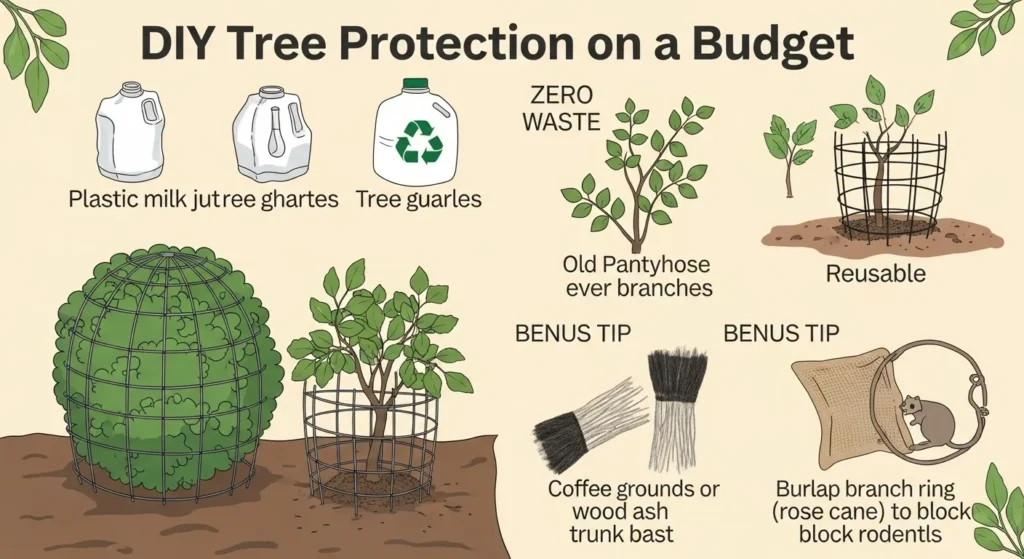
Not every gardener wants to buy commercial products. Luckily, DIY tree protection methods are easy and effective.
- Plastic milk jugs: Cut and wrap around trunks as makeshift guards.
- Chicken wire cages: Surround shrubs or small trees.
- Old pantyhose: Slip over branches to prevent nibbling.
- Coffee grounds or wood ash: Spread around the base to deter rodents naturally.
These methods are not only cheap but also sustainable, making them perfect for eco-conscious gardeners.
One creative twist to DIY tree protection is using biodegradable wraps made from burlap or hemp. These materials shield trunks from gnawing while allowing airflow, reducing the risk of fungal buildup. Another trick is to scatter thorny branches (like rose or raspberry canes) around the base of trees—rodents dislike navigating sharp obstacles. By combining these unconventional methods with traditional winter tree guards, you create layered defenses that make your orchard nearly impenetrable. The beauty of DIY solutions is that they evolve with your creativity, ensuring you always stay one step ahead of pests.
👉 For container-friendly soil solutions, explore our container cover crops guide.
Gardening Tips for Long-Term Pest Prevention
1. Keep the Area Clean
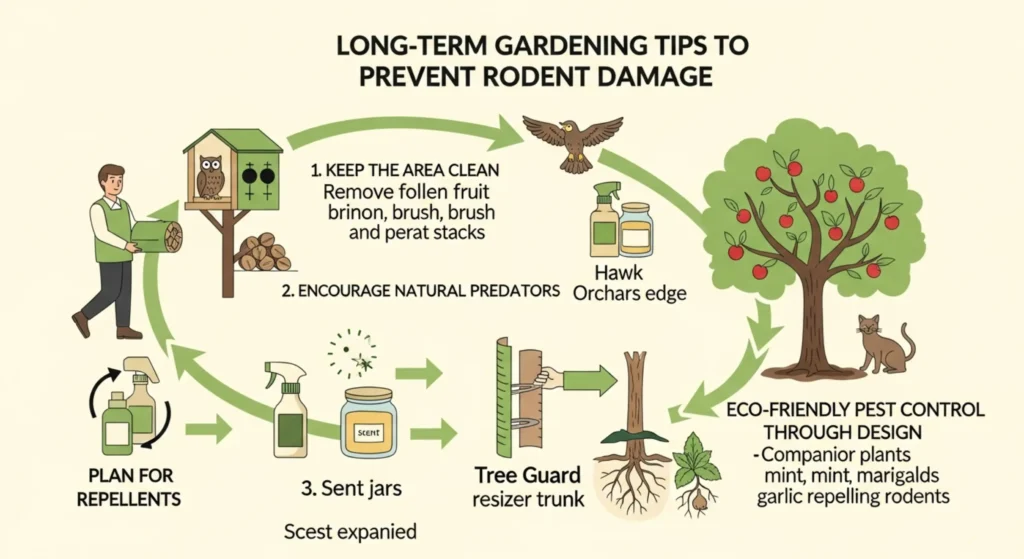
- Remove fallen fruit, weeds, and brush piles that attract rodents.
- Store firewood away from the orchard.
2. Encourage Natural Predators
- Install owl boxes or perches for hawks.
- Keep a cat or terrier dog if appropriate for your property.
3. Rotate Repellents
Rodents adapt quickly. Alternate between barriers, sprays, and predator scents for best results.
4. Plan for Growth
As trees mature, adjust your winter tree guards and barriers to fit larger trunks.
To protect fruit trees from rodents year after year, think beyond immediate fixes. Incorporating crop rotation and companion planting can naturally deter pests—garlic, marigolds, and mint planted near trees act as living repellents. Another advanced gardening tip is to design your orchard layout with open spacing, reducing hiding spots for rodents. The twist? Sometimes prevention isn’t about barriers at all, but about creating an environment where pests simply don’t thrive. By blending ecological design with DIY tree protection, you’ll build a resilient orchard that requires less intervention over time.
👉 For companion planting advice, see our companion planting mistakes guide.
Case Study: Protecting a Backyard Orchard on a Budget
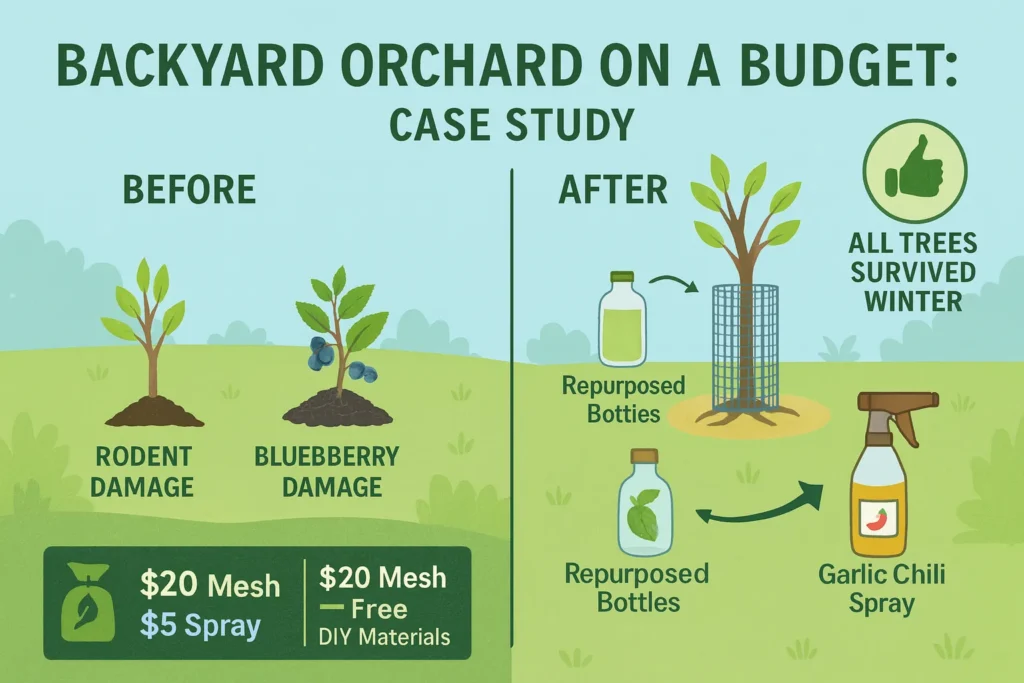
Imagine a gardener with five young apple trees and two blueberry shrubs. Instead of spending hundreds on commercial guards, they:
- Used hardware cloth for the apple trees ($20 total).
- Made DIY tree guards from old plastic bottles (free).
- Sprayed a garlic-chili organic repellent every two weeks ($5 for ingredients).
- Cleared snow tunnels and compacted soil around trunks (free labor).
By spring, all trees survived without rodent damage — proving that cheap barriers and organic repellents can be just as effective as expensive solutions.
This case study highlights how small investments can yield big results when you protect fruit trees from rodents. The gardener not only saved money but also gained confidence in their ability to manage pests naturally. The twist here is that success wasn’t just about barriers—it was about vigilance. Regular inspections, adjusting mulch, and reapplying repellents made the difference. For anyone hesitant to try DIY tree protection, this example proves that even beginners can achieve professional-level results with creativity and consistency.
👉 For raised bed inspiration, check our raised bed gardening DIY ideas.
Conclusion
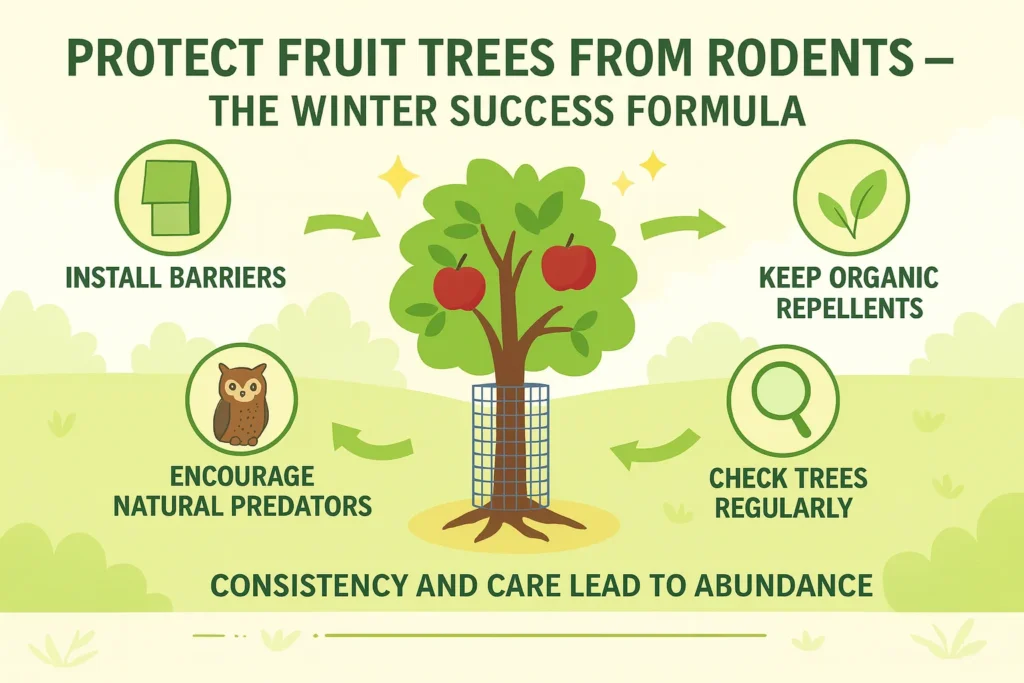
Winter can be brutal on young fruit trees and shrubs, but with the right strategies, you can protect fruit trees from rodents without breaking the bank. From winter tree guards and wire mesh to organic rodent repellents and clever DIY tree protection, the options are affordable, eco-friendly, and effective.
The key is consistency: check your trees regularly, rotate repellents, and keep the area clean. By combining physical barriers with natural deterrents, you’ll not only save your trees this winter but also set them up for healthy growth and abundant harvests in the years to come.
Ultimately, the mission to protect fruit trees from rodents is about more than survival—it’s about stewardship. Each tree you safeguard contributes to a healthier, more sustainable garden ecosystem. The curiosity lies in discovering which mix of winter tree guards, organic rodent repellents garden solutions, and DIY tree protection works best for your unique space. With patience and experimentation, you’ll not only outsmart rodents but also deepen your connection to the rhythms of nature.
Your orchard deserves protection — and with these gardening tips, you’ll be ready to face the cold season with confidence.
❓ FAQ: How to Protect Fruit Trees from Rodents in Winter
1. What are the most effective ways to protect fruit trees from rodents during winter?
The best protection combines physical barriers like winter tree guards and wire mesh with organic repellents. DIY tree protection methods—such as recycled plastic guards or thorny branches—can also be highly effective. Layering these strategies ensures rodents are blocked, repelled, and discouraged from nesting near your trees.
2. Which rodents cause the most damage to fruit trees in cold months?
Voles, mice, rabbits, and deer are the most common winter pests. Voles tunnel under snow and chew bark at the base, while rabbits and deer target exposed bark and buds above the snow line. Understanding their habits helps you choose the right protection method.
3. Are winter tree guards enough to prevent rodent damage?
Winter tree guards are a great first line of defense, especially for young trees. However, they work best when combined with other strategies like mulch management, predator decoys, and organic rodent repellents for the garden. Guards should be tall enough to account for snow depth and checked regularly for moisture buildup.
4. Can I make my own rodent repellents at home?
Yes! Homemade organic sprays using garlic, chili, peppermint oil, or castor oil can deter rodents naturally. These DIY solutions are safe, affordable, and align with eco-friendly gardening tips. Reapply after rain or snow for consistent protection.
5. How do I protect fruit trees from rodents without using chemicals?
Use physical barriers like hardware cloth, DIY cages, and biodegradable wraps. Pair these with natural repellents and predator scents (like fox urine granules). Keeping the area clean and encouraging natural predators like owls also helps reduce rodent activity without chemicals.
6. What’s the best mulch strategy for winter rodent control?
Keep mulch pulled back 3–4 inches from the trunk to prevent nesting. Compact snow around the base of trees to reduce tunneling. Avoid deep, fluffy mulch layers that create cozy hiding spots for rodents.
7. How often should I check my tree protection setup?
Inspect your trees every 1–2 weeks during winter. Look for signs of chewing, burrowing, or guard displacement. Reapply repellents and adjust barriers as needed. Consistency is key to protect fruit trees from rodents effectively.
8. Are there any budget-friendly ways to protect fruit trees from rodents?
Absolutely. DIY tree protection methods like repurposed plastic bottles, chicken wire cages, and homemade sprays cost very little. Even simple tricks like scattering thorny branches or using coffee grounds can make a big difference.
9. Do organic rodent repellents work in snowy conditions?
Yes, but they must be reapplied frequently. Snow and rain dilute their effectiveness, so use them alongside physical barriers. Combining organic rodent repellents garden solutions with winter tree guards offers the best results.
10. What’s the biggest mistake gardeners make when trying to protect fruit trees from rodents?
Waiting too long. Many gardeners don’t act until damage is visible, which is often too late. Start protection early in the season, before the first snowfall, and maintain it consistently. Prevention is always easier than repair.




4 Comments on “Protect Fruit Trees from Rodents: Cheap Barriers and Organic Repellents for Winter”