
Table of Contents
Table of Contents
Introduction
In today’s changing climate, gardeners and homeowners are increasingly asking how to plant for extreme weather. Whether it’s scorching summers, unexpected frosts, or prolonged droughts, the right choice of plants can make the difference between a thriving garden and one that struggles to survive. By selecting resilient species that adapt to heat, cold, wind, and water scarcity, you not only protect your landscape but also create a sustainable, low‑maintenance environment. This guide explores the best resilient plants, strategies for climate‑smart gardening, and how to weave them into your outdoor spaces for beauty and durability.
👉 For more inspiration on resilient planting, see our fast-growing winter cover crops guide.
🌞 Drought Tolerant Plants: Thriving With Less Water
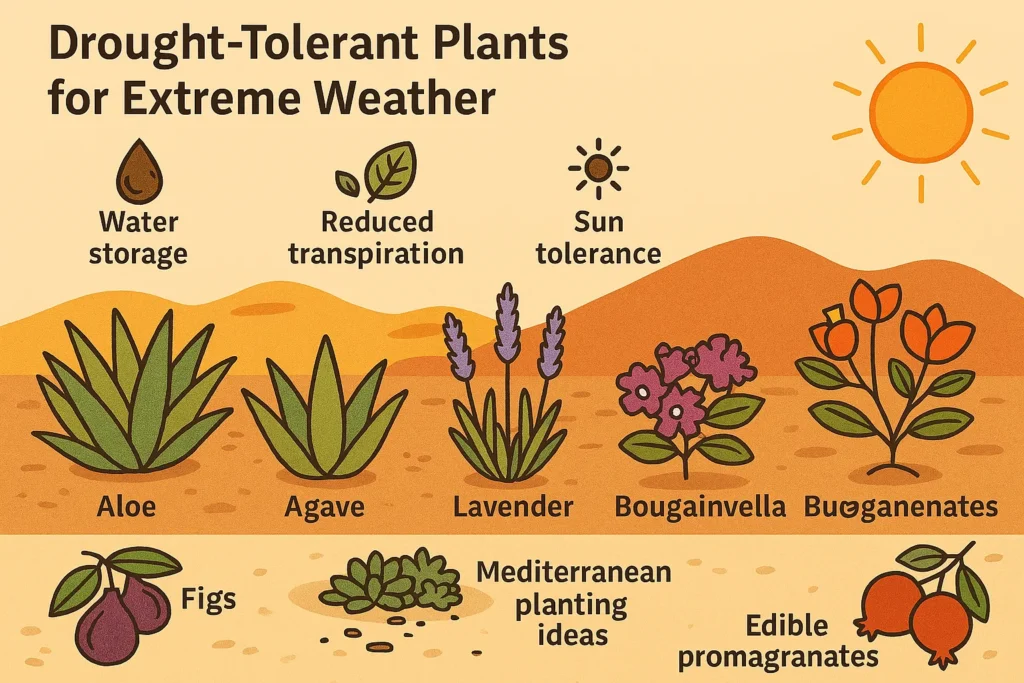
When rainfall becomes unpredictable, drought tolerant plants are the backbone of a resilient garden. These species have evolved to store water, reduce transpiration, and survive long dry spells.
- Succulents (Aloe, Agave, Sedum): Store water in fleshy leaves, perfect for arid zones.
- Lavender: Aromatic, hardy, and thrives in poor soil with minimal water.
- Bougainvillea: Vibrant blooms even in hot, dry conditions.
When you plant for extreme weather, drought tolerant species become more than just survival tools—they transform into design elements that bring color and structure to your garden. Consider mixing succulents with gravel pathways or pairing lavender with ornamental grasses to create a Mediterranean feel that thrives under the sun. These combinations not only conserve water but also keep your garden visually engaging during long dry spells.
Another twist worth exploring is the use of drought tolerant edibles such as figs or pomegranates. These fruiting plants reward you with harvests while teaching resilience in the face of water scarcity. By weaving edibles into your landscape, you create a garden that is both practical and beautiful, proving that planting for extreme weather can also be delicious (For more drought‑resilient species, consult University of Minnesota Extension’s climate resilience resources).
🔥 Heat Resistant Plants: Standing Strong in Scorching Summers
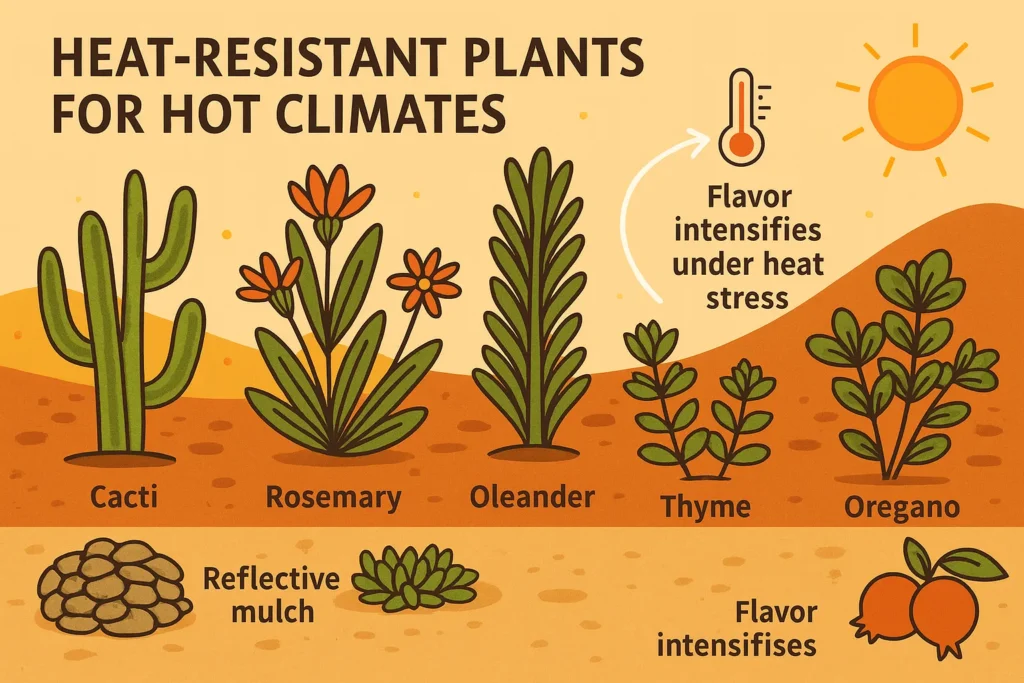
Extreme heat can wilt delicate plants, but heat resistant plants withstand high temperatures and intense sun.
- Cacti: Iconic desert survivors.
- Rosemary: Culinary herb that tolerates heat and poor soil.
- Oleander: Hardy ornamental shrub with colorful flowers.
To plant for extreme weather in hot climates, think beyond ornamentals. Herbs like thyme and oregano not only withstand heat but also provide culinary benefits, making your garden multifunctional. Pairing these with reflective mulches or light‑colored stones can reduce soil temperature and keep roots cooler, a subtle trick that experienced gardeners swear by.
Curiosity often arises when you realize some heat resistant plants thrive better with stress. For example, rosemary’s flavor intensifies under hot, dry conditions. By embracing this paradox, you discover that heat resistant plants don’t just survive—they flourish, offering unexpected rewards when challenged by extreme weather.
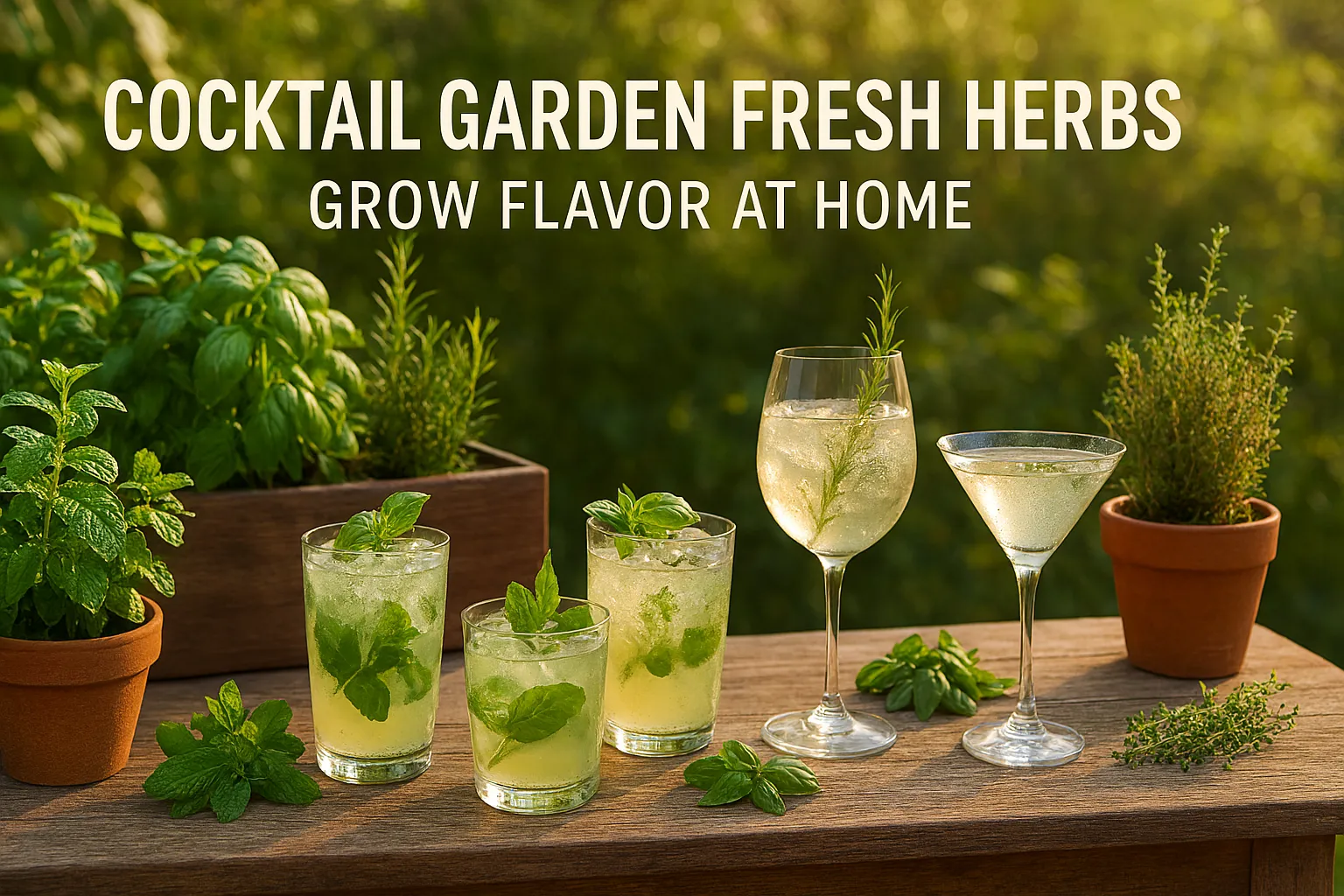
👉 For more herb-focused gardening, explore our cocktail garden fresh herbs guide.
❄️ Frost Hardy Plants: Surviving Cold Snaps
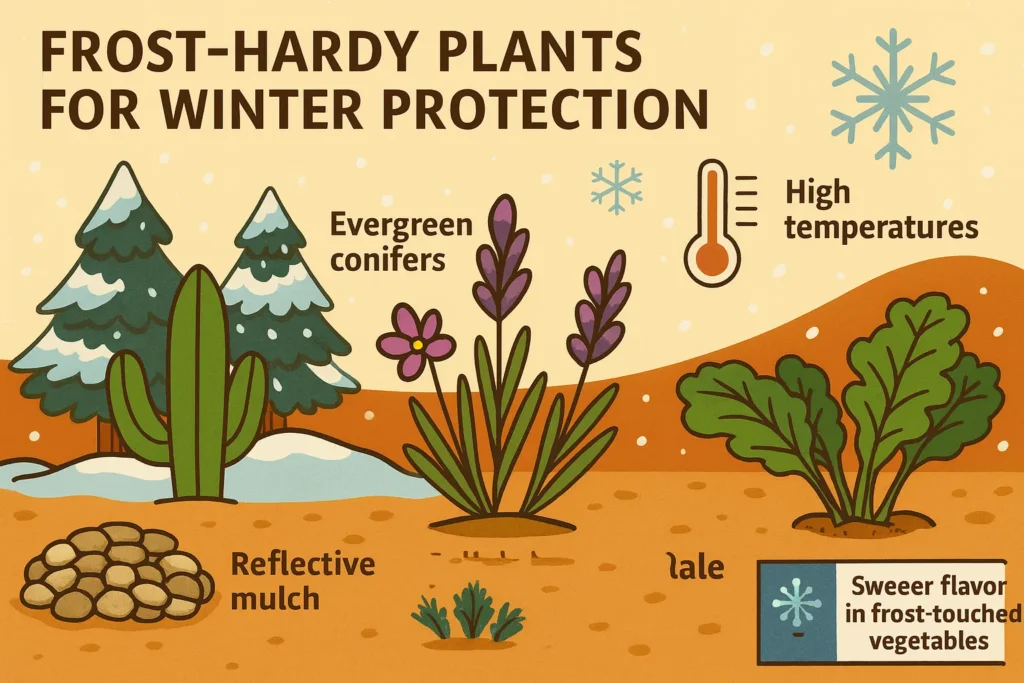
Sudden frosts can devastate tender plants. Choosing frost hardy plants ensures your garden remains green through winter.
- Evergreen conifers (Juniper, Spruce): Provide year‑round structure.
- Hellebores: Winter‑blooming perennials with striking flowers.
- Kale: Edible and ornamental, tolerates frost well.
When you plant for extreme weather, frost hardy species become guardians of winter gardens. Imagine hellebores blooming against a backdrop of snow, or kale standing tall when other vegetables collapse. These plants remind us that resilience can be beautiful, and that cold snaps don’t have to mean barren landscapes.
A fascinating twist is how frost hardy plants often improve in flavor after exposure to cold. Kale and Brussels sprouts, for instance, develop sweeter notes after frost. This natural transformation keeps gardeners curious and excited, proving that frost hardy plants are not just survivors but culinary treasures.
👉 Alt text suggestion: “Frost hardy plants like hellebores blooming in a winter garden.”
🌍 Climate Resilient Gardening: Designing for Sustainability
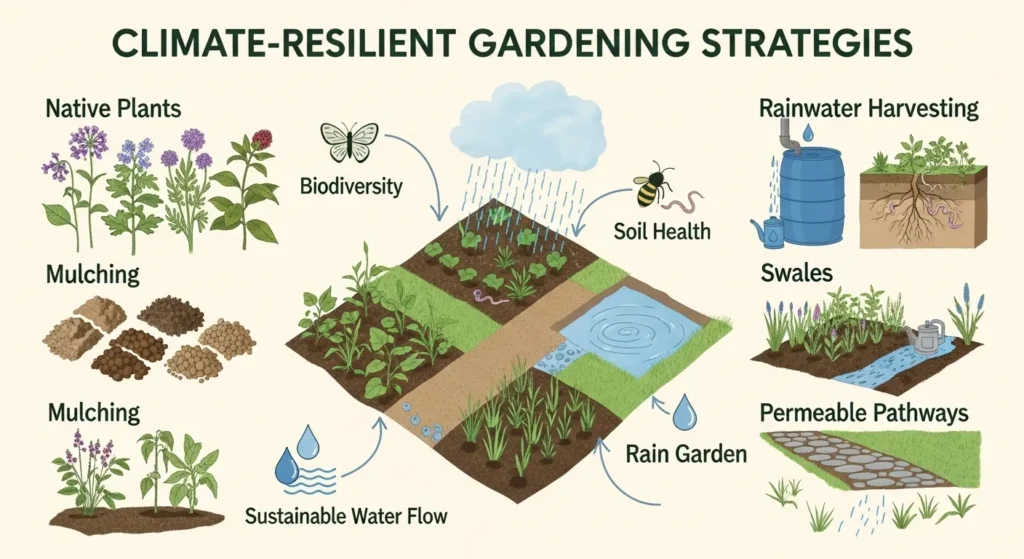
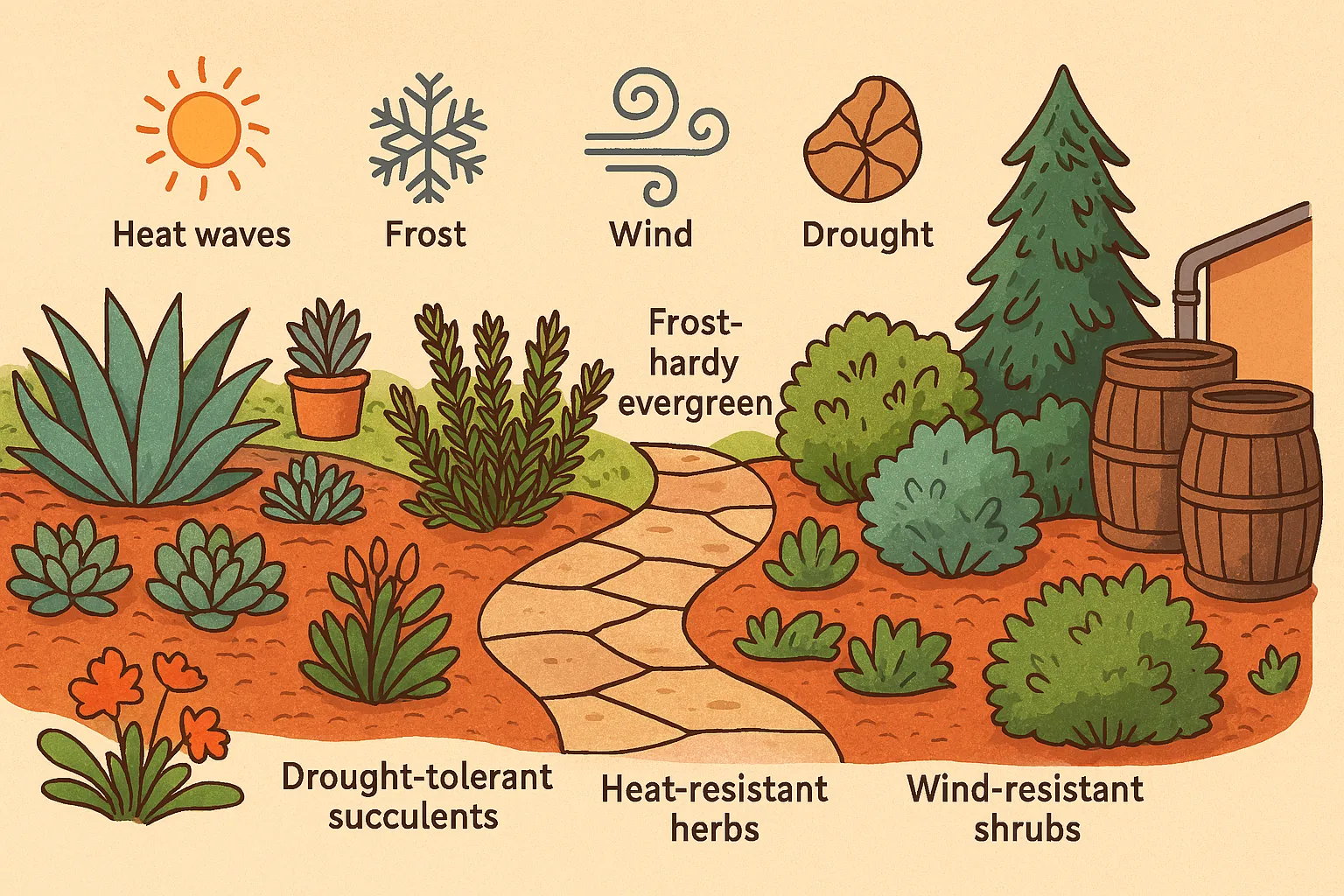
Beyond individual species, climate resilient gardening is about designing landscapes that adapt to extremes.
- Native plants: Already adapted to the local climate, requiring less care.
- Mulching: Conserves soil moisture and regulates temperature.
- Rainwater harvesting: Ensures water supply during droughts.
To truly plant for extreme weather, climate-resilient gardening requires a mindset shift. Instead of fighting against nature, you design with it. Incorporating swales, rain gardens, and permeable pathways allows water to move naturally through your landscape, reducing flood risks while nourishing plants.
The twist here is that resilience often comes from diversity. A garden filled with different species—native shrubs, perennials, and groundcovers—creates a web of support where one plant’s weakness is balanced by another’s strength. This ecological approach makes your garden more than a collection of plants; it becomes a living system prepared for extremes.
👉 For compost-powered resilience, check our ultimate guide to making compost at home.
🌪️ Wind Resistant Shrubs: Protection Against Storms
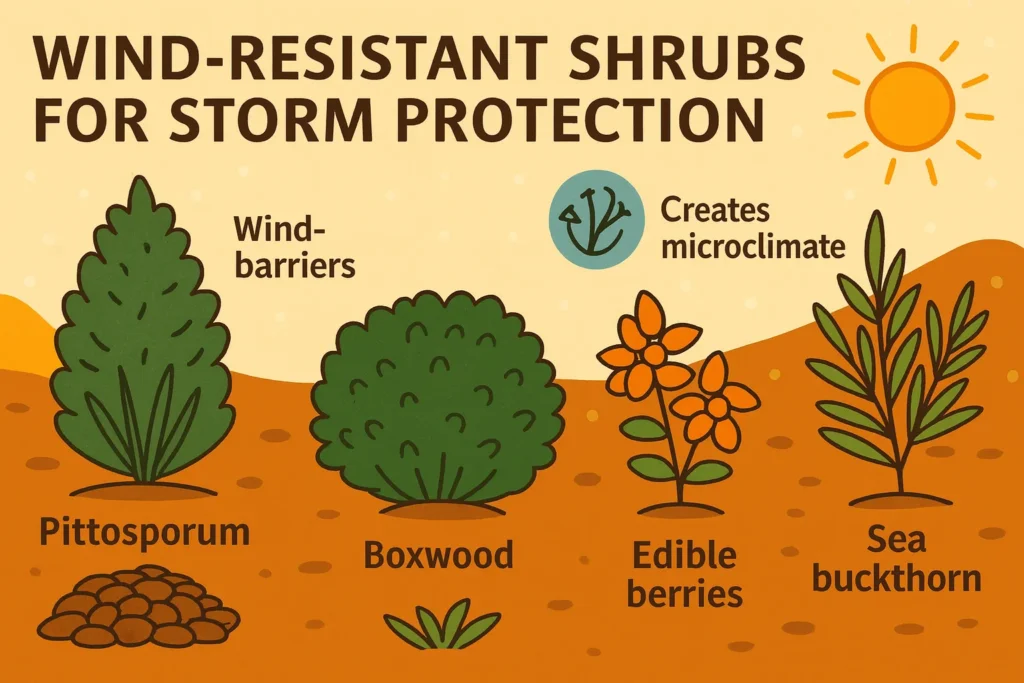
Strong winds damage fragile plants, but wind resistant shrubs act as natural barriers.
- Pittosporum: Dense foliage, ideal for hedges.
- Boxwood: Compact and sturdy, withstands gusts.
- Sea Buckthorn: Thrives in coastal windy areas.
When you plant for extreme weather, wind-resistant shrubs act as natural fortresses. They protect delicate flowers, vegetables, and even your home by reducing wind speed and preventing soil erosion. Strategic placement of hedges can create microclimates, giving tender plants a haven to grow.
A surprising twist is that some wind-resistant shrubs, like sea buckthorn, also provide edible berries rich in vitamin C. This dual role—protection and nutrition—adds depth to your garden design. By choosing wisely, you turn storm barriers into productive allies, making wind-resistant shrubs essential in resilient landscapes.
🌱 Plants for Extreme Climates: All‑Round Survivors
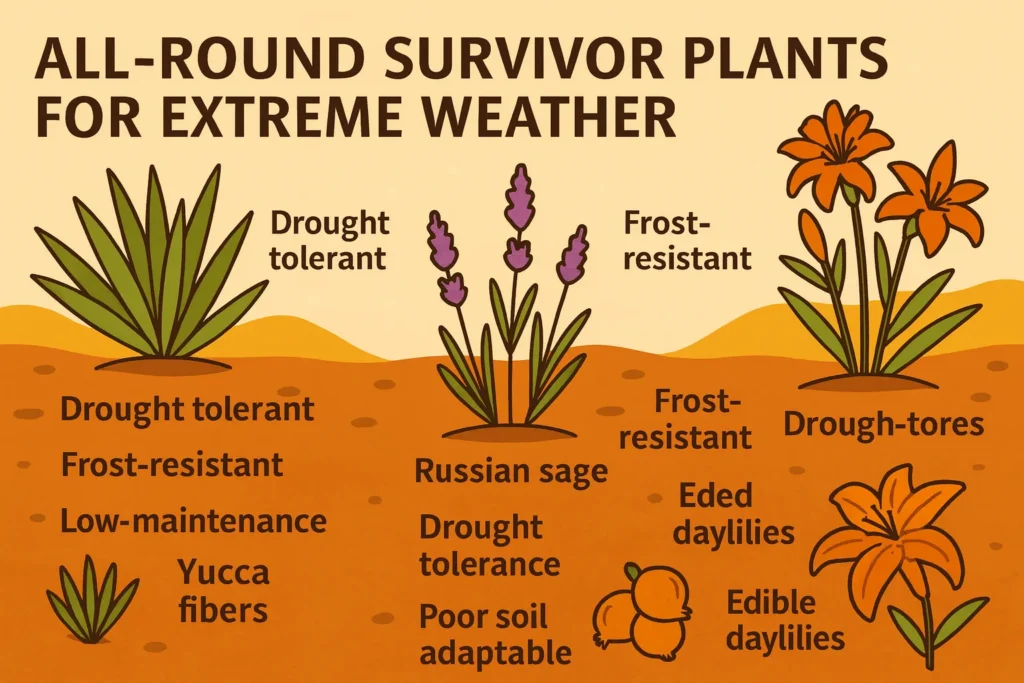
Some species are versatile enough to handle multiple extremes, making them ideal plants for extreme climates.
- Yucca: Tolerates drought, heat, and poor soil.
- Russian Sage: Hardy perennial with drought and frost resistance.
- Daylilies: Adaptable to varied conditions, low maintenance.
To plant for extreme weather, all-around survivors like yucca and Russian sage are invaluable. They thrive in poor soils, withstand drought, and resist pests, making them the backbone of resilient gardens. Their adaptability means you can experiment with bold designs without worrying about failure.
The twist lies in their versatility. Daylilies, for instance, are edible, and yucca’s fibers have been used traditionally for weaving. These hidden uses spark curiosity and remind us that plants for extreme climates are not only ornamental but also culturally significant, connecting gardening to human history.
👉 For resilient planting inspiration, see our edible functional landscapes guide.
🌿 Best Plants for Climate Change: Future‑Proof Choices
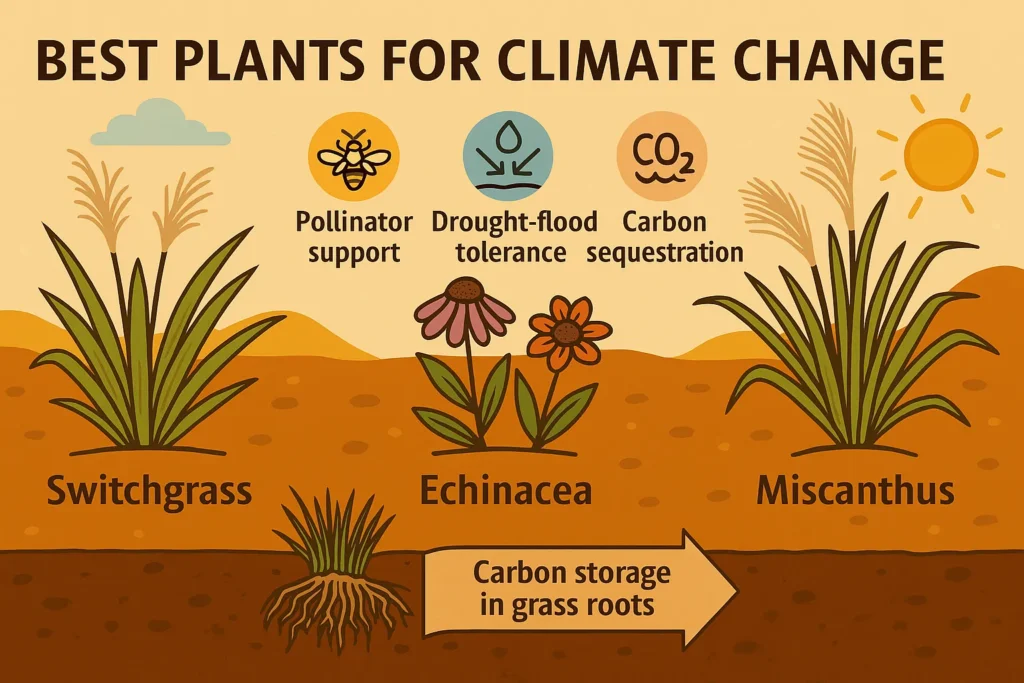
As climate change intensifies, gardeners seek the best plants for climate change that adapt to shifting conditions.
- Switchgrass: Native grass resilient to drought and flooding.
- Echinacea (Coneflower): Pollinator‑friendly and hardy.
- Miscanthus: Ornamental grass tolerant of varied climates.
When you plant for extreme weather, future‑proof choices like switchgrass and coneflowers ensure your garden adapts to shifting climates. These plants tolerate both drought and flooding, making them versatile allies in uncertain times. Their ability to attract pollinators also strengthens ecosystems, adding resilience beyond your backyard.
A twist worth noting is how these plants contribute to carbon sequestration. Grasses like miscanthus store carbon in their roots, subtly turning your garden into a climate solution. By choosing the best plants for climate change, you’re not just gardening—you’re participating in global resilience.
🌸 Low Maintenance Resilient Plants: Beauty Without Effort
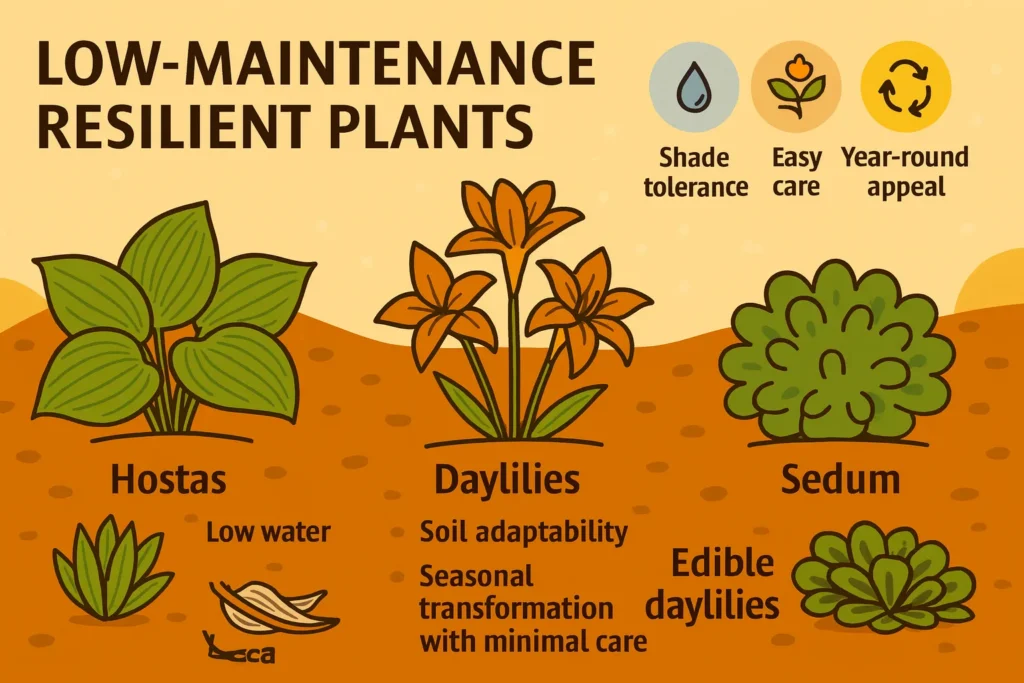
For busy gardeners, low maintenance resilient plants offer beauty with minimal care.
- Hostas: Shade‑loving, tolerant of varied conditions.
- Daylilies: Long‑lasting blooms, adaptable.
- Sedum: Groundcover that thrives in poor soil.
To plant for extreme weather without constant upkeep, low maintenance species are indispensable. Hostas fill shady corners effortlessly, while sedum carpets rocky areas with minimal care. These plants free you from daily watering and pruning, allowing you to enjoy your garden rather than labor over it.
The twist is that low maintenance doesn’t mean boring. Many resilient plants surprise with seasonal changes—hostas unfurling in spring, sedum turning crimson in autumn. This dynamic beauty keeps curiosity alive, proving that low maintenance resilient plants can be both easy and enchanting.
👉 For additional indoor-friendly hacks, explore our low-maintenance indoor gardening guide.
🌱 Practical Tips for Planting for Extreme Weather
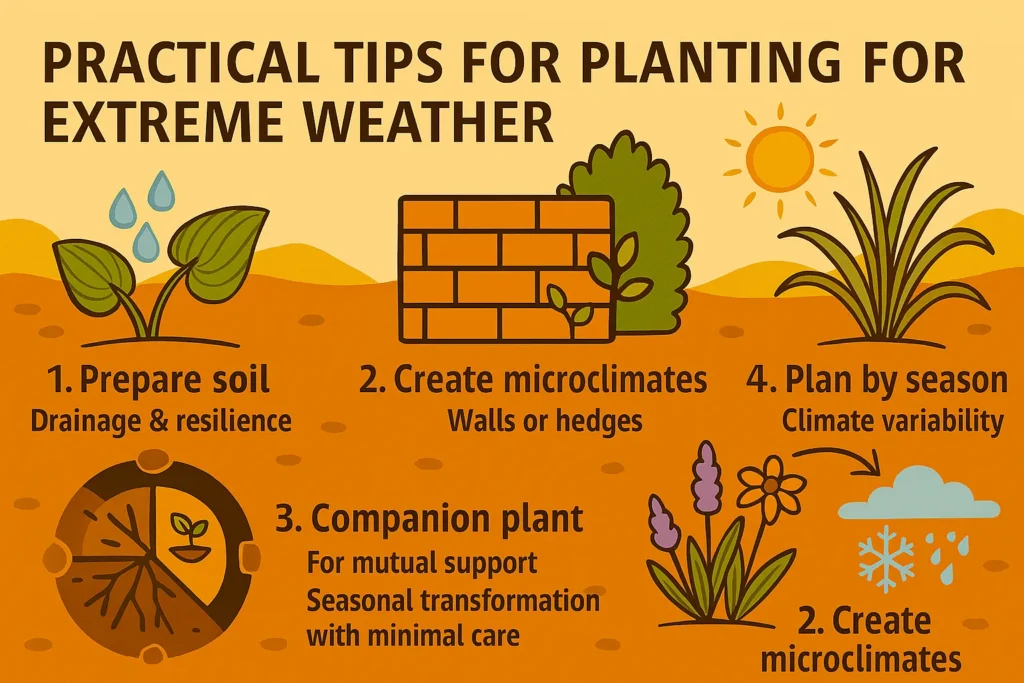
- Soil preparation: Improve drainage for drought resistance, and add organic matter for resilience.
- Microclimates: Use walls, fences, or trees to shield plants.
- Companion planting: Pair resilient species to support each other.
- Seasonal planning: Rotate crops and flowers based on weather patterns.
Conclusion
Gardening in uncertain climates doesn’t have to be daunting. By learning how to plant for extreme weather, you can create landscapes that endure heatwaves, frosts, droughts, and storms. Choosing resilient plants, designing with sustainability in mind, and embracing native species ensures your garden thrives no matter what nature throws at it. This approach not only saves time and resources but also builds a future‑proof garden that remains vibrant and inspiring for years to come.
👉 For more seasonal protection strategies, see our overwintering houseplants checklist.
Frequently Asked Questions about Plant For Extreme Weather
❓ What does it mean to “Plant For Extreme Weather”?
To plant for extreme weather means choosing species that can withstand unpredictable climate conditions such as droughts, heatwaves, frosts, and storms. These resilient plants are adapted to survive stress, ensuring your garden remains productive and beautiful even when the weather is harsh. It’s not just about survival—it’s about designing a sustainable landscape that thrives despite challenges.
❓ Which drought tolerant plants are best for extreme weather gardening?
When you plant for extreme weather, drought tolerant species like lavender, agave, and bougainvillea are excellent choices. They store water efficiently, require minimal irrigation, and add vibrant color to dry landscapes. Pairing them with mulching techniques further enhances their resilience, making them ideal for regions with scarce rainfall.
❓ How can heat resistant plants help in summer gardening?
Heat resistant plants such as rosemary, oleander, and cacti remain strong under scorching sun. By including them when you plant for extreme weather, you reduce the risk of wilting and maintain greenery during peak summer. Interestingly, some herbs like rosemary intensify in flavor under heat stress, offering both beauty and culinary rewards.
❓ What are frost hardy plants, and why are they important?
Frost hardy plants like kale, hellebores, and evergreen conifers protect your garden during cold snaps. When you plant for extreme weather, these species ensure your landscape doesn’t turn barren in winter. Many frost hardy vegetables even taste sweeter after exposure to frost, adding a delightful twist to winter harvests.
❓ How does climate resilient gardening improve sustainability?
Climate resilient gardening is the practice of designing landscapes with native plants, water‑saving techniques, and diverse species. By integrating these strategies when you plant for extreme weather, you reduce maintenance, conserve resources, and create ecosystems that adapt naturally to changing conditions. It’s a proactive way to future‑proof your garden.
❓ Which shrubs are best for wind resistance in storm‑prone areas?
Wind resistant shrubs such as pittosporum, boxwood, and sea buckthorn act as natural barriers. When you plant for extreme weather, these shrubs protect delicate plants, reduce soil erosion, and even provide edible berries in some cases. They transform storm defenses into productive, multifunctional garden features.
❓ Can I grow plants that survive multiple extremes at once?
Yes, versatile species like yucca, Russian sage, and daylilies thrive in drought, heat, and poor soil. Choosing them when you plant for extreme weather ensures your garden has all-around survivors that adapt to varied conditions. Their resilience makes them perfect for gardeners seeking reliability without sacrificing beauty.
❓ What are the best plants for climate change adaptation?
Future‑proof choices include switchgrass, coneflowers, and miscanthus. These species tolerate both drought and flooding, making them essential when you plant for extreme weather. They also attract pollinators and contribute to carbon storage, turning your garden into a small but meaningful climate solution.
❓ Are low maintenance resilient plants suitable for beginners?
Absolutely. Hostas, sedum, and daylilies are easy to grow, requiring little care while offering seasonal beauty. For those learning to plant for extreme weather, these species provide confidence and success without overwhelming effort. Their dynamic changes across seasons keep curiosity alive, even for novice gardeners.


2 Comments on “🌱 Plant For Extreme Weather: Resilient Plants You Can Grow”