Table of Contents
Table of Contents
Introduction
Winter often feels like the end of the gardening season, especially for urban dwellers and small-space gardeners. Cold winds, frost, and shorter days make it difficult to keep plants thriving. Yet, with the right DIY winter greenhouse ideas, you can extend your growing season, protect delicate plants, and even enjoy fresh herbs and vegetables all year round.
Unlike large commercial greenhouses, these projects are designed for affordability, creativity, and adaptability. Whether you live in an apartment with a balcony or have a tiny backyard, there are clever ways to build a greenhouse that fits your space and budget.
A well-designed DIY winter greenhouse is more than just a shelter for plants—it’s a creative expression of resourcefulness. By experimenting with materials like recycled bottles, PVC pipes, or even old furniture, you can transform overlooked items into thriving microclimates. This twist keeps readers curious: what other everyday objects could become part of their greenhouse journey? The beauty of these projects lies in their adaptability; each gardener can tailor their greenhouse to their lifestyle, whether it’s a balcony herb station or a backyard vegetable hub.
In this guide, we’ll explore practical builds like plastic bottle greenhouses, indoor shelf greenhouses, and even a $10 PVC greenhouse, along with smart heating tricks that don’t require electricity. For more inspiration on compact greenhouse setups, see our best small greenhouse ideas guide.
Why DIY Winter Greenhouse Ideas Matter
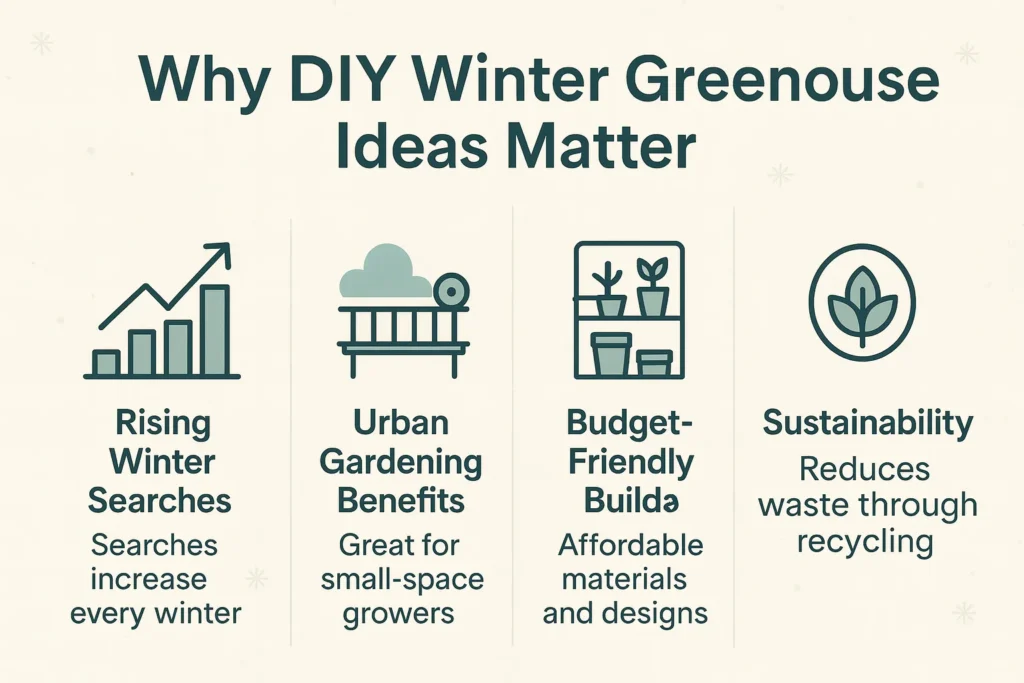
- Seasonal relevance: Every winter, searches for “mini greenhouse” and “indoor winter greenhouse” spike.
- Urban gardening appeal: Small-space solutions empower apartment dwellers and city gardeners.
- Cost-effective builds: With rising costs, budget-friendly projects like PVC frames or recycled bottle structures are more appealing than ever.
- Content gap: Most online guides skim the surface. This article dives deeper with step-by-step builds, material lists, and heating hacks.
Experienced gardeners often add a twist by painting some bottles black to absorb more heat during the day, creating a natural thermal mass effect. This simple hack makes the plastic bottle greenhouse even more efficient in colder climates. Another curiosity-driven idea is combining bottles with wooden pallets to create modular walls, which can be expanded as your garden grows (For soil enrichment tips to pair with winter builds, check our make leaf mold fast guide). For readers who love sustainability, this project doubles as an eco-statement—showing how waste can be repurposed into a thriving urban gardening greenhouse.
Plastic Bottle Greenhouse: Recycling for Growth
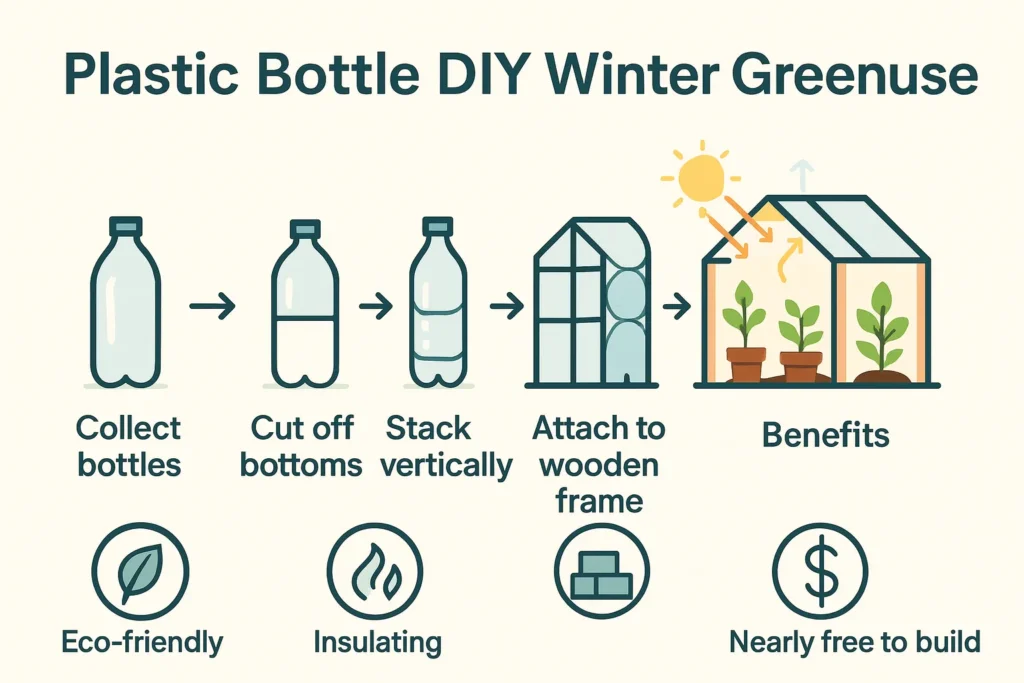
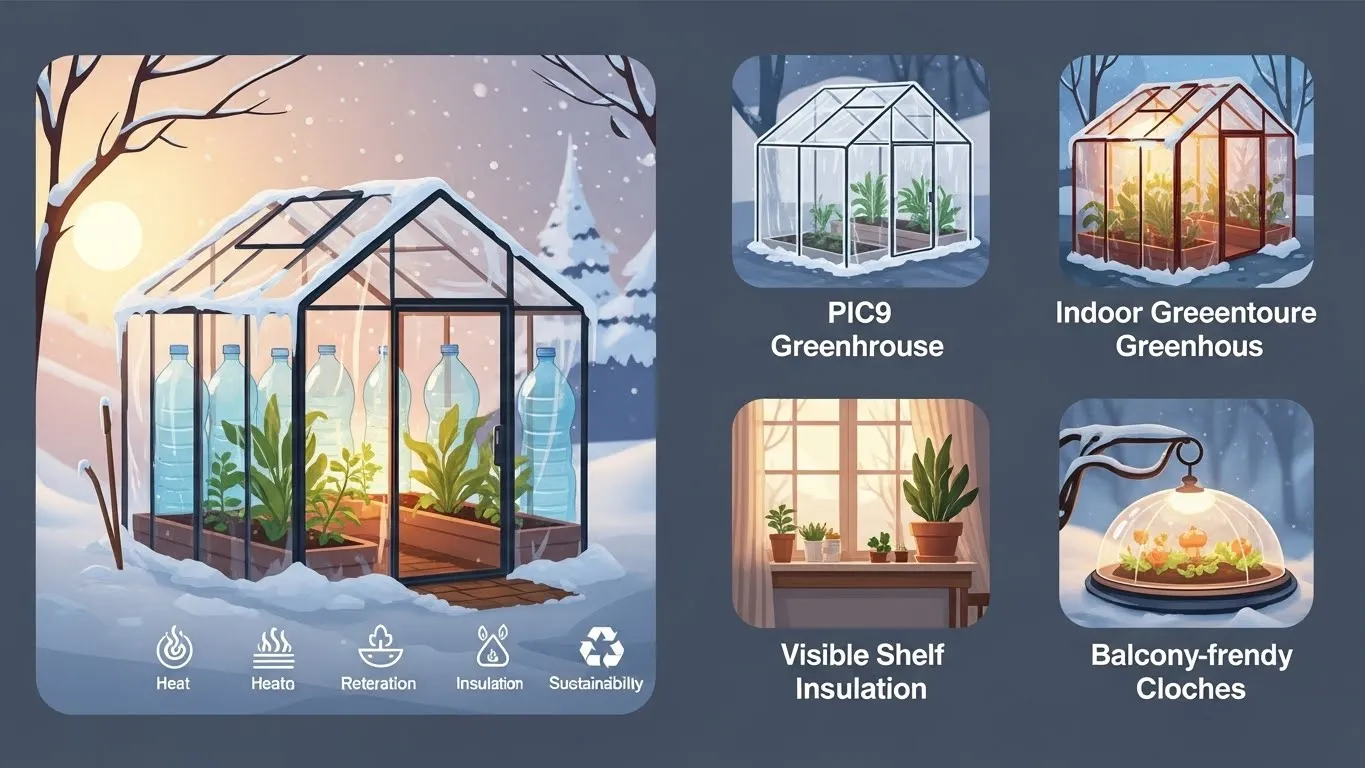
One of the most creative and eco-friendly DIY winter greenhouse ideas is the plastic bottle greenhouse. Instead of sending bottles to the landfill, you can repurpose them into a functional growing space.
How It Works
- Collect 1–2 liter plastic bottles.
- Cut off the bottoms and stack them vertically to form “walls.”
- Secure bottles with bamboo sticks, wire, or a wooden frame.
- The transparent plastic allows sunlight in while trapping heat.
Benefits
- Eco-friendly: Reduces plastic waste.
- Cheap: Materials are often free.
- Insulating: Bottles create air pockets that help retain warmth.
Indoor Shelf Greenhouse: Perfect for Apartments
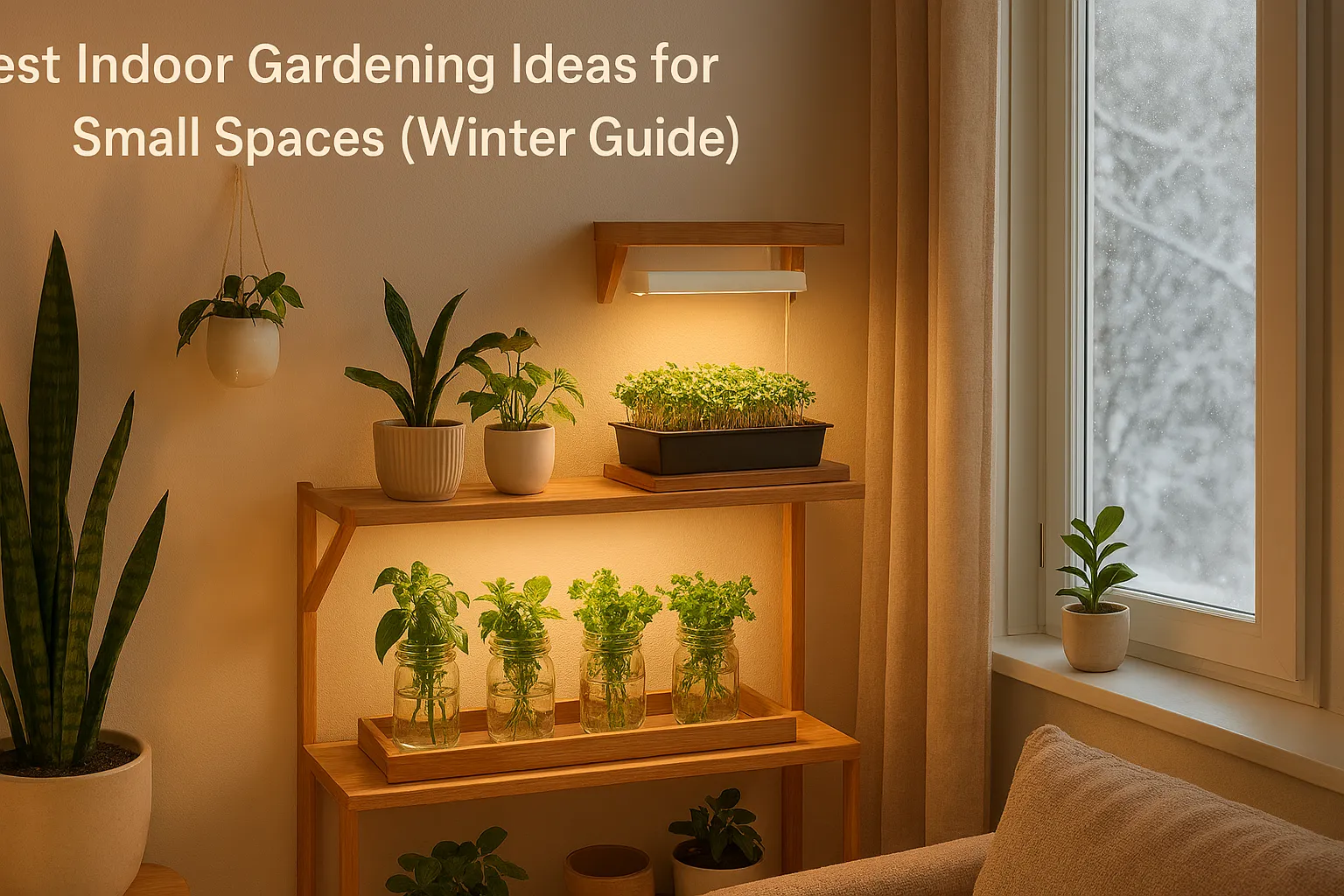
If you don’t have outdoor space, an indoor shelf greenhouse is a compact solution. Think of it as a mini greenhouse that fits right into your living room or kitchen.
How to Build
- Use a metal or wooden shelving unit.
- Cover shelves with clear plastic sheeting or zippered greenhouse covers.
- Add trays for seedlings, herbs, or microgreens.
- Place near a sunny window or supplement with grow lights.
👉 For affordable lighting setups, explore our cheap grow lights for seedlings guide.
Why It Works
- Space-saving: Vertical design maximizes limited space.
- Controlled environment: Easy to regulate humidity and airflow.
- Year-round gardening: Perfect for herbs like basil, mint, and parsley.
To elevate the indoor shelf greenhouse, some gardeners integrate reflective panels behind the shelves to maximize light exposure (For expert indoor plant care, consult Penn State Extension’s houseplant care resources). This trick ensures even growth and adds a futuristic touch to your setup. Another engaging twist is using smart sensors to monitor humidity and temperature, turning your mini greenhouse into a tech-savvy project. Readers will appreciate that even in a small apartment, they can create a controlled ecosystem that rivals larger setups. The curiosity here lies in blending traditional gardening with modern innovation.
$10 PVC Greenhouse: Budget-Friendly Build
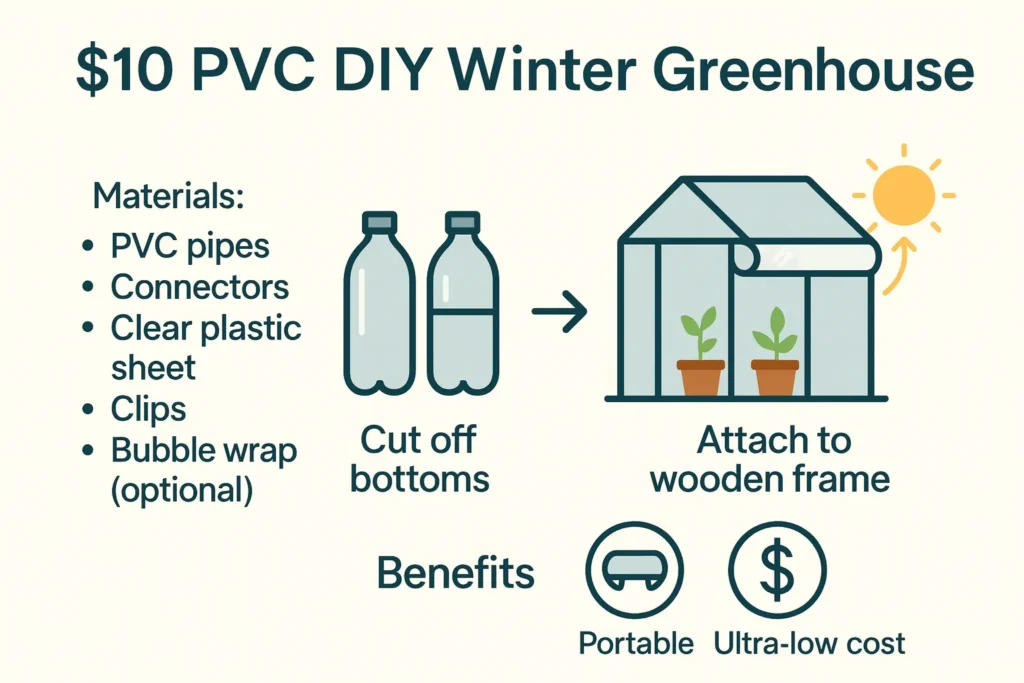
For gardeners with a small backyard or balcony, the $10 PVC greenhouse is a game-changer. PVC pipes are lightweight, affordable, and easy to assemble.
Materials Needed
- PVC pipes (½ inch diameter)
- Connectors and elbows
- Clear plastic sheeting
- Zip ties or clips
Step-by-Step
- Cut PVC pipes to the desired length.
- Assemble into a dome or rectangular frame.
- Cover with a clear plastic sheeting.
- Secure with clips or zip ties.
Advantages
- Affordable: Costs less than $10.
- Portable: Easy to move or dismantle.
- Customizable: Can be scaled up or down depending on space.
One clever variation of the $10 PVC greenhouse is building it in a lean-to style against a wall or fence, which adds stability and reduces material costs. Gardeners often line the frame with bubble wrap for insulation, making it surprisingly effective in frosty conditions (For frost safety methods, see our frost protection for plants DIY guide). The intrigue here is that such a simple structure can rival more expensive kits, proving that a cheap DIY greenhouse doesn’t mean compromising on performance (For greenhouse construction advice, see the Royal Horticultural Society’s greenhouse guide). Readers will be curious to see how far they can push this budget-friendly build.
No-Electricity Heating Tricks
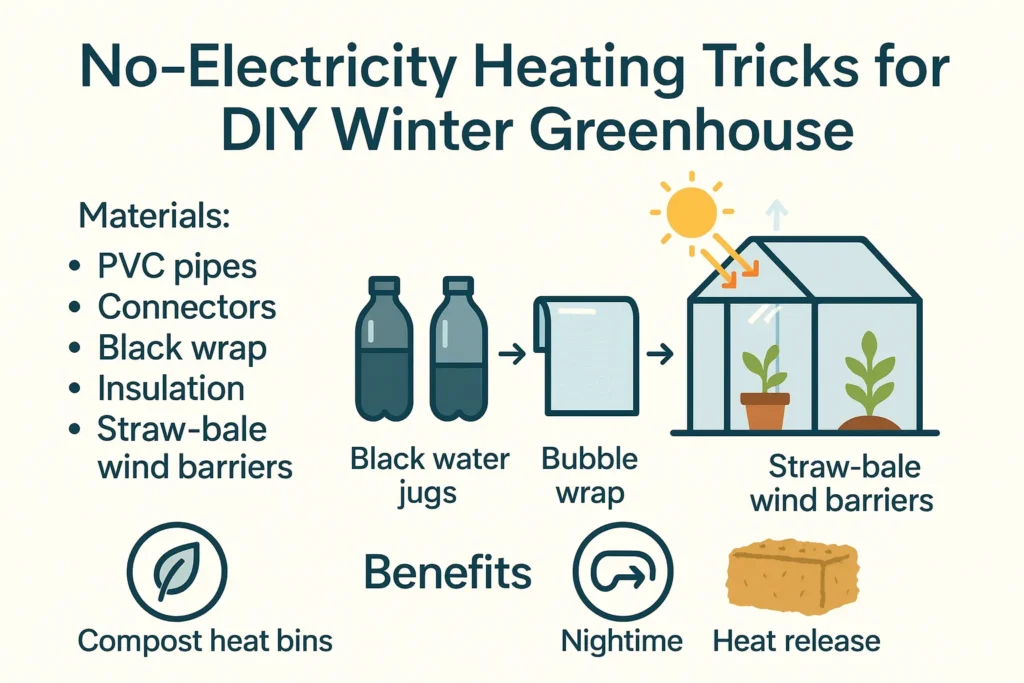
Heating is often the biggest challenge for winter greenhouses. Luckily, there are no-electricity greenhouse heating tricks that keep plants warm without raising your utility bill.
Compost Heat
- Place a compost bin inside or near the greenhouse.
- Decomposition generates natural heat.
Thermal Mass
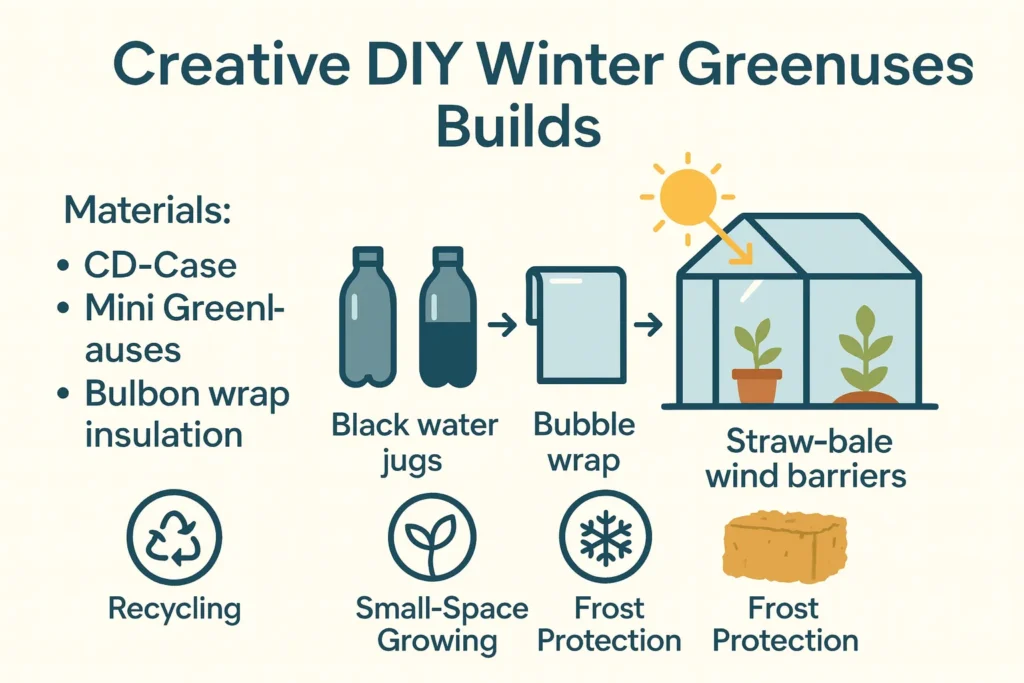
- Fill black water jugs or barrels and place them inside.
- They absorb heat during the day and release it at night.
Insulation Hacks
- Line greenhouse walls with bubble wrap.
- Use straw bales around the base for added insulation.
Another fascinating method is the “hot bed” technique, where fresh manure is layered beneath soil trays inside the greenhouse. As it decomposes, it releases steady warmth, creating a natural heating system. Pairing this with no-electricity greenhouse heating tricks like thermal curtains or double-layered plastic sheeting can make even the smallest DIY winter greenhouse surprisingly resilient (For compost-powered heating inspiration, check our learn how to turn your scraps into soil gold guide). The twist here is realizing that ancient farming methods still hold relevance today, offering eco-friendly solutions for modern gardeners.
Additional Creative Builds
CD Case Greenhouse
Repurpose old CD cases into a quirky mini greenhouse. Glue them together to form a cube, then place seedlings inside.
Repurposed Furniture Greenhouse
Old cabinets or bookshelves can be converted into indoor greenhouses by adding transparent doors or covers.
Balcony-Friendly Cloche Setups
For apartment dwellers, cloches (mini domes made of glass or plastic) protect individual plants from frost.
Curiosity spikes when gardeners discover that even unconventional items—like fish tanks or old picture frames—can be repurposed into functional mini greenhouses (For quirky small-space inspiration, see our best urban garden ideas guide). These quirky builds not only save money but also spark conversations, making your small space greenhouse a centerpiece of creativity. The key is to think beyond traditional structures; every transparent surface has potential. Readers will be inspired to experiment with their own household items, adding a personal twist to their DIY winter greenhouse journey.
Practical Tips for Success
Choosing the Right Location
- Balcony: Great for cloches and PVC frames.
- Windowsill: Ideal for indoor shelf greenhouses.
- Backyard corner: Perfect for larger DIY builds.
Materials Checklist
- Clear plastic sheeting
- PVC pipes or recycled bottles
- Zip ties, clips, or tape
- Shelving units or repurposed furniture
Maintenance and Ventilation
- Open covers during sunny days to prevent overheating.
- Mist plants regularly to maintain humidity.
- Check for mold or pests weekly.
Another insider tip is to rotate crops within your DIY winter greenhouse to prevent soil fatigue and pest buildup (For crop rotation strategies, explore our companion planting month-by-month guide). For example, alternating leafy greens with root vegetables keeps the ecosystem balanced. Readers will also find it useful to create a seasonal checklist—covering insulation upgrades, ventilation adjustments, and seed starting schedules. This transforms the greenhouse from a simple shelter into a dynamic, evolving project. The twist lies in realizing that maintenance isn’t a chore but an ongoing experiment in resilience.
Conclusion
Building a greenhouse doesn’t have to be expensive or complicated. With these DIY winter greenhouse ideas, you can extend your growing season, protect your plants, and enjoy fresh produce even in the coldest months. From plastic bottle greenhouses to $10 PVC frames, each project proves that creativity and resourcefulness can make gardening accessible to everyone.
Whether you’re an urban gardener with limited space or someone looking to save money, these solutions empower you to grow more, waste less, and reconnect with nature year-round. Start small, experiment, and watch your winter garden thrive.
Ultimately, the journey of building a DIY winter greenhouse is as rewarding as the harvest itself (For more resilient planting inspiration, see our plant for extreme weather guide). Each project—whether a plastic bottle greenhouse, an indoor shelf greenhouse, or a $10 PVC greenhouse—teaches resourcefulness, patience, and creativity (For sustainable gardening practices, see the US EPA’s lawn and garden resources). Readers will leave with not just instructions but inspiration, eager to try their own variations. The twist is that these greenhouses aren’t just about plants; they’re about cultivating a mindset of innovation and sustainability that lasts well beyond winter.
❓ FAQ: DIY Winter Greenhouse Ideas
1. What is a DIY Winter Greenhouse?
A DIY winter greenhouse is a small, budget‑friendly structure built with simple materials like PVC pipes, recycled bottles, or shelving units. It protects plants from frost, extends the growing season, and is especially useful for urban and small‑space gardeners.
2. How can I build a DIY Winter Greenhouse in a small space?
You can build a small space greenhouse by using an indoor shelf covered with clear plastic, a balcony cloche setup, or a compact PVC frame. These designs maximize vertical space and are ideal for apartments or urban settings.
3. What materials are best for a cheap DIY Winter Greenhouse?
Affordable materials include plastic bottles, PVC pipes, clear plastic sheeting, bubble wrap for insulation, and repurposed furniture. These items are inexpensive, easy to source, and effective for creating a cheap DIY greenhouse.
4. How do I heat a DIY Winter Greenhouse without electricity?
Use no‑electricity greenhouse heating tricks such as compost bins, thermal mass (black water jugs), straw bales, or hot beds with decomposing manure. These eco‑friendly methods naturally generate and retain warmth inside the greenhouse.
5. Can I build a DIY Winter Greenhouse indoors?
Yes. An indoor winter greenhouse can be made with shelving units, transparent covers, and grow lights. This setup is ideal for growing herbs, microgreens, and small vegetables, enabling year-round gardening inside your home.
6. What plants grow best in a DIY Winter Greenhouse?
Cold‑tolerant crops like spinach, kale, lettuce, parsley, mint, and radishes thrive in a DIY winter greenhouse. With proper insulation and heating tricks, you can also grow strawberries and other tender plants.
7. How much does it cost to build a DIY Winter Greenhouse?
Costs vary depending on the design, but a $10 PVC greenhouse is one of the most affordable options. Using recycled bottles or repurposed furniture can reduce expenses further, making it possible to build a greenhouse for under $20.
8. Is a DIY Winter Greenhouse suitable for urban gardening?
Absolutely. A DIY winter greenhouse is ideal for urban gardeners with limited space. Balcony cloches, indoor shelf setups, and compact PVC frames make it possible to grow fresh produce even in apartments.
9. How do I maintain a DIY Winter Greenhouse?
Regularly ventilate to prevent overheating, mist plants to maintain humidity, and check for mold or pests. Rotating crops and upgrading insulation seasonally will keep your DIY winter greenhouse productive and resilient.
10. Can I use recycled materials for a DIY Winter Greenhouse?
Yes. Recycled bottles, CD cases, old cabinets, and picture frames can all be repurposed into creative DIY winter greenhouse builds. These eco‑friendly designs reduce waste while providing functional plant protection.