Table of Contents
Table of Contents
Introduction
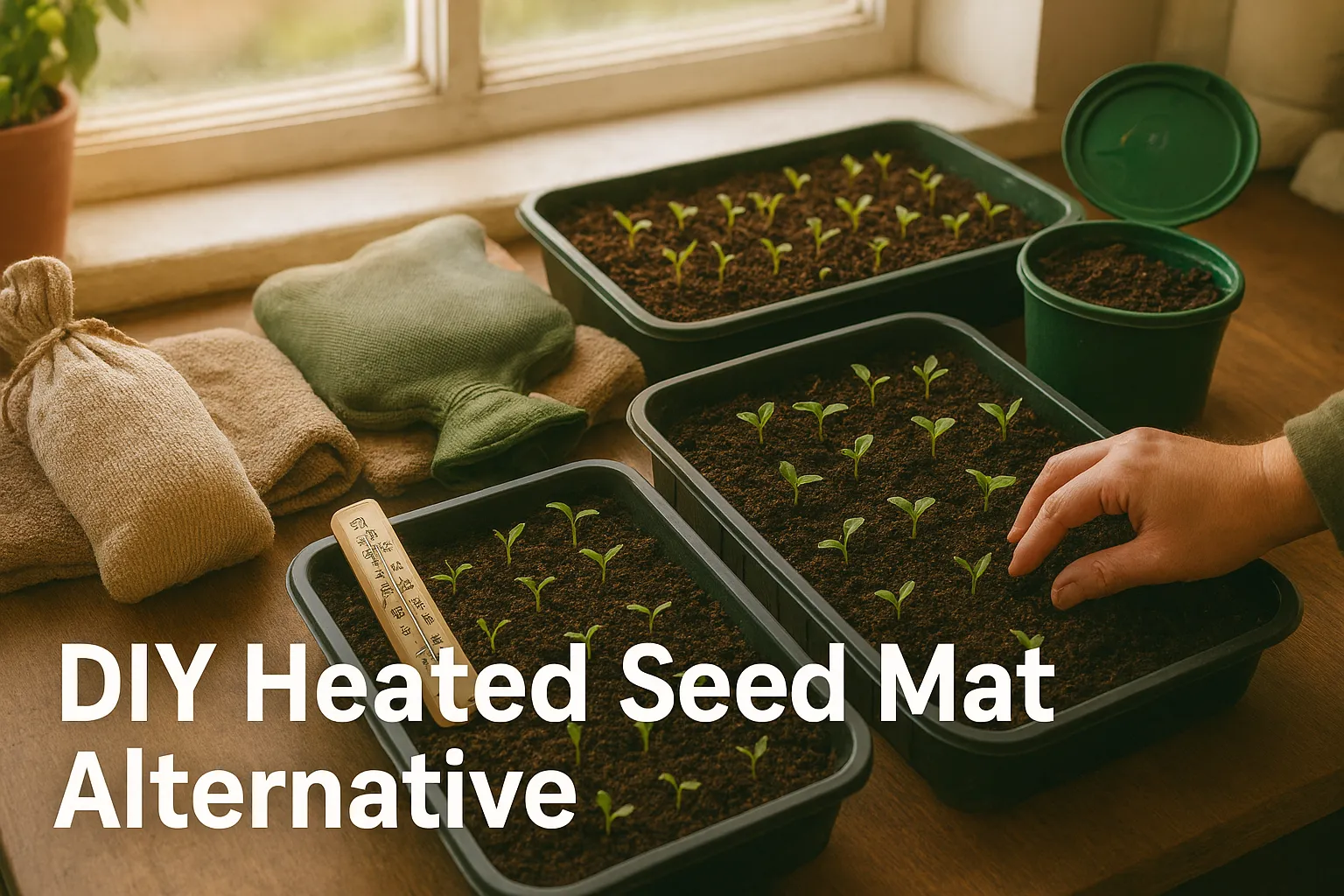
Starting seeds indoors is one of the most rewarding parts of gardening, but it often comes with a hidden cost: energy-hungry heated mats. For gardeners who want to save money, reduce electricity use, and still give their seedlings the warmth they need, exploring a DIY Heated Seed Mat Alternative is the perfect solution. By combining creativity, sustainability, and budget-friendly hacks, you can start seeds early without relying on expensive commercial mats.
👉 For more creative small-space solutions, see our best urban garden ideas for apartments. And expert seed-starting advice, see the National Garden Bureau’s seed starting guide.
This guide dives deep into practical alternatives, eco-friendly methods, and DIY setups that help you grow strong seedlings while keeping costs low. Whether you’re a beginner gardener or a seasoned green thumb, these strategies will empower you to start seeds early, cheaply, and sustainably.
Many gardeners underestimate how much a DIY Heated Seed Mat Alternative can transform their seed-starting journey. Beyond saving money, these methods encourage experimentation and creativity—qualities that make gardening more rewarding. Imagine discovering that a simple rice sock or compost pile can outperform a store-bought mat in certain conditions. That twist alone keeps the process exciting, proving that resourcefulness often beats expensive gadgets.
Another benefit is accessibility. Beginners who feel intimidated by technical equipment can start with household items, gaining confidence before investing in advanced tools. By framing seed starting as both eco-friendly and budget-friendly, you create a narrative that resonates with gardeners who value sustainability and simplicity.
🌿 Why Seedlings Need Warmth
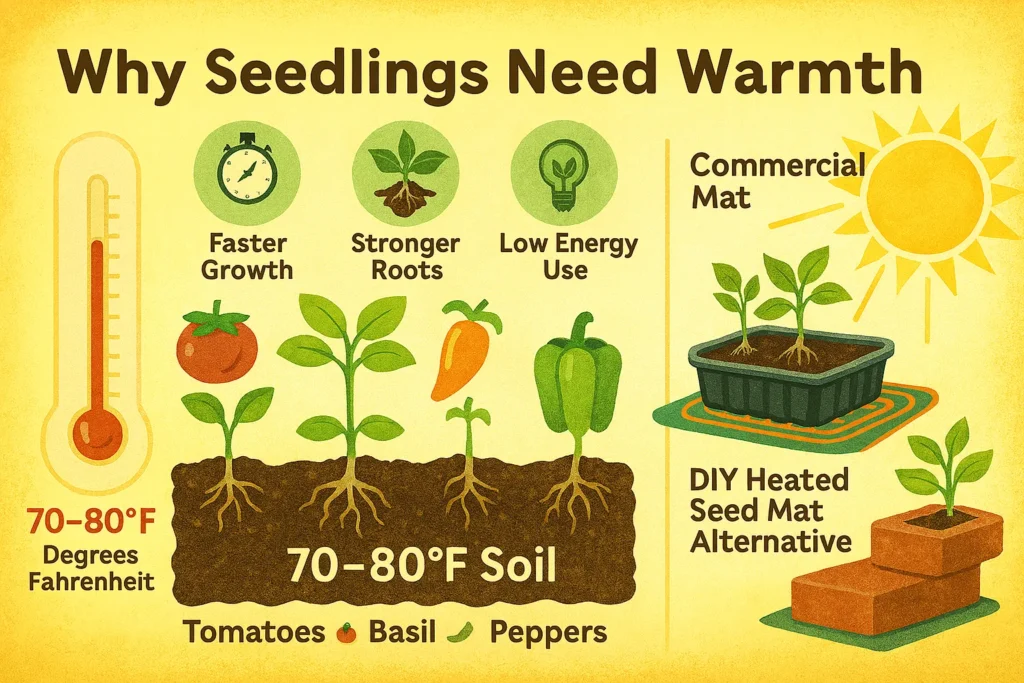
- Seeds like tomatoes, peppers, and basil thrive when soil temperatures stay between 70–80°F.
- Warmth speeds up germination, reduces damping-off disease, and ensures stronger root development.
- Commercial mats provide consistent heat but often consume unnecessary electricity.
Still, warmth doesn’t always have to come from electricity. With low energy seed starting methods, you can replicate the same conditions using passive heat sources like sunlight, compost, or thermal mass. This approach not only reduces costs but also aligns with eco-friendly gardening practices.
Here’s the twist: some seeds actually benefit from fluctuating temperatures rather than constant warmth. For example, herbs like parsley germinate better when exposed to cooler nights and warmer days. By experimenting with seed starting without heat mats, you may discover that nature’s rhythm produces stronger seedlings than artificial consistency.
For example, I once compared two trays of basil—one on a commercial mat and one using a low energy seed starting method with thermal bricks warmed by sunlight. The tray on the bricks germinated a day later but produced sturdier seedlings with thicker stems. That twist taught me that patience often pays off in gardening.
Step-by-step, you can replicate this:
- Place bricks or stones in direct sunlight during the day.
- At night, move them under or beside your seed trays.
- Monitor soil temperature with a simple thermometer.
This method costs nothing, yet it mimics the natural warmth of the earth, proving that eco-friendly seed starting can be both effective and sustainable.
👉 For additional soil enrichment methods, check our Make leaf mold fast guide.
🔥 The Problem with Traditional Heat Mats
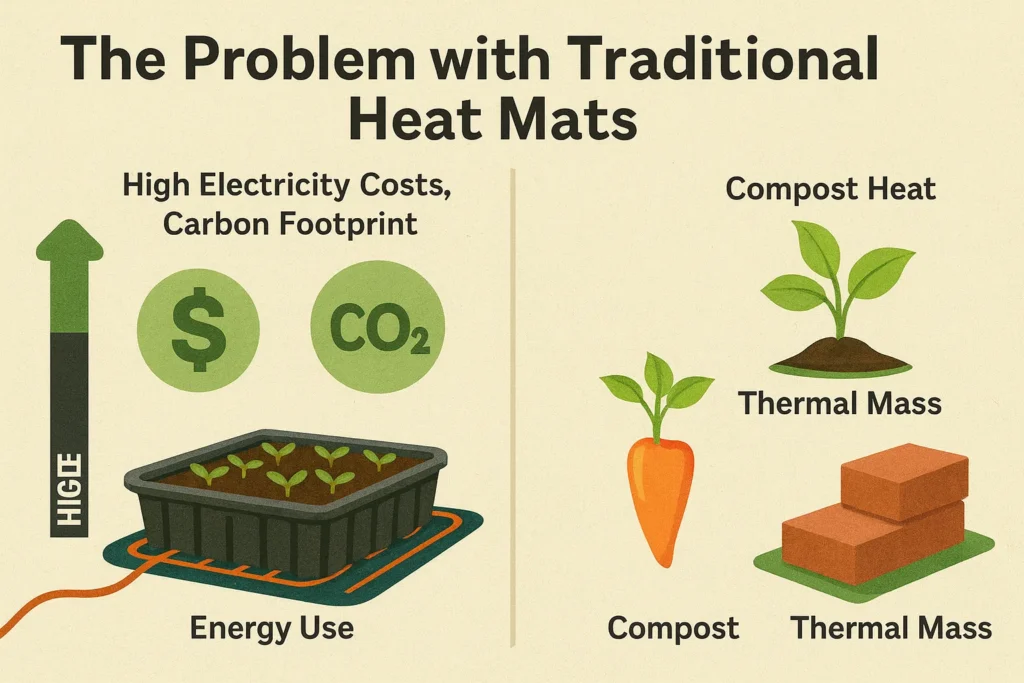
- High energy use: Standard mats run continuously, adding to electricity bills.
- Cost barrier: Quality mats can cost $30–$80 each, limiting accessibility for budget gardeners.
- Environmental impact: Continuous energy draw increases carbon footprint.
Another overlooked issue is dependency. Once gardeners rely on commercial mats, they often feel they cannot start seeds without them. This creates a barrier for those who want to explore budget seed starting tips or sustainable alternatives. By breaking free from this dependency, you regain control over your gardening process.
There’s also the matter of scale. A single mat may work for a few trays, but what if you want to expand? Suddenly, you’re faced with buying multiple mats, multiplying both cost and energy use. This is where a DIY Heated Seed Mat Alternative shines—it scales naturally, using materials you already have, without draining your wallet or your electricity.
I learned this lesson firsthand when I tried to expand my seed-starting setup. One mat was fine, but when I added three more, my electricity bill jumped noticeably. That was the turning point—I realized I needed budget seed starting tips that didn’t rely on constant power.
Step-by-step, I transitioned by experimenting with compost heat. I placed trays above a small compost bin, and within days, the soil temperature stabilized at 75°F. The seedlings thrived, and I didn’t spend a single extra rupee on electricity. This twist—using waste to generate warmth—was both eco-friendly and surprisingly effective.
👉 For more compost-powered hacks, see our ultimate guide to making compost at home. For more practical alternatives, see Resprout’s indoor seed starting setup guide.
🛠️ DIY Heated Seed Mat Alternative: Creative Solutions
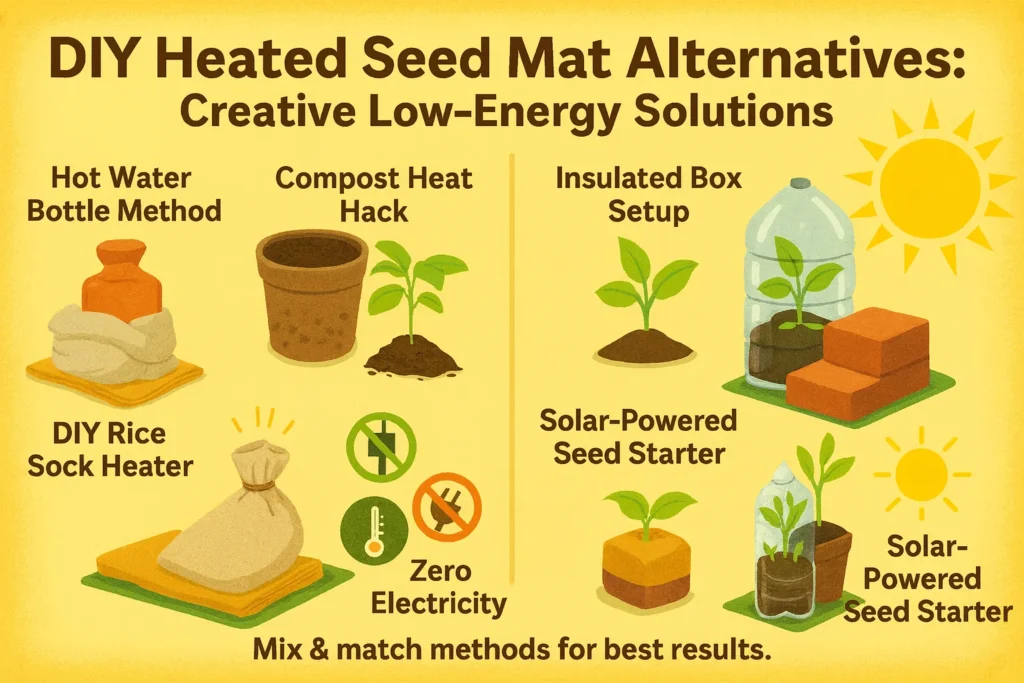
1. Hot Water Bottle Method
- Place a hot water bottle under the seed trays, wrapped in a towel.
- Provides gentle, temporary warmth without electricity.
- Best for small batches of seeds.
2. Compost Heat Hack
- Position seed trays above an active compost pile.
- Compost naturally generates heat during decomposition.
- Eco-friendly and cost-free.
3. Insulated Box Setup
- Use a Styrofoam cooler or wooden box lined with foil.
- Place seed trays inside with a small candle or tea light (monitored carefully).
- Retains warmth efficiently.
4. DIY Rice Sock Heater
- Fill a sock with rice, microwave for 2–3 minutes, and place under trays.
- Releases slow, steady heat.
- Reusable and simple.
5. Solar-Powered Seed Starter
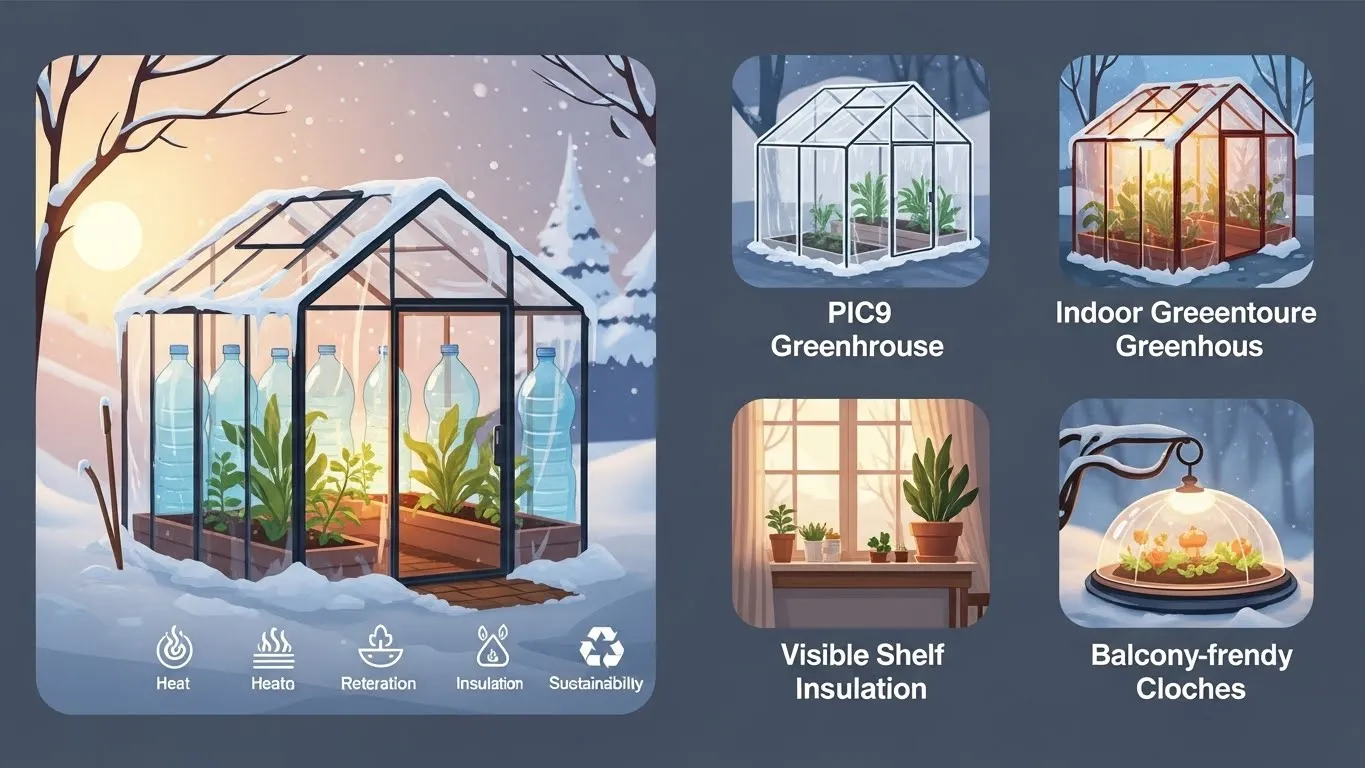
- Build a mini greenhouse using clear plastic bottles or windowsill cloches.
- Captures solar heat during the day, retains warmth at night.
Each of these methods has its own charm. The rice sock heater, for instance, feels almost too simple to work—yet it provides steady warmth that rivals commercial mats. Compost heat, on the other hand, connects you directly to the natural cycle of decomposition, turning waste into energy. These twists remind us that gardening is as much about creativity as it is about science.
The beauty of a DIY Heated Seed Mat Alternative lies in its adaptability. You can combine methods—placing trays in an insulated box during the night and using solar cloches during the day. This hybrid approach maximizes efficiency while keeping costs low. It’s a reminder that innovation often comes from mixing old wisdom with modern hacks.
Take the hot water bottle method as an example. One winter evening, I filled a bottle with boiling water, wrapped it in a towel, and slid it under my seed tray. The soil stayed warm for nearly six hours. Step-by-step, you simply refill the bottle twice a day, and your seedlings never feel the chill.
Another case study: a gardener friend in Karachi used the solar-powered seed starter method by cutting clear plastic bottles into cloches. His peppers germinated faster than mine, despite cooler nights. That twist reminded me that sometimes the simplest solar hacks outperform fancy gadgets.
👉 For extending harvests with passive solar, explore our cold frame gardening DIY guide.
💡 Low-Energy Seed Starting Techniques
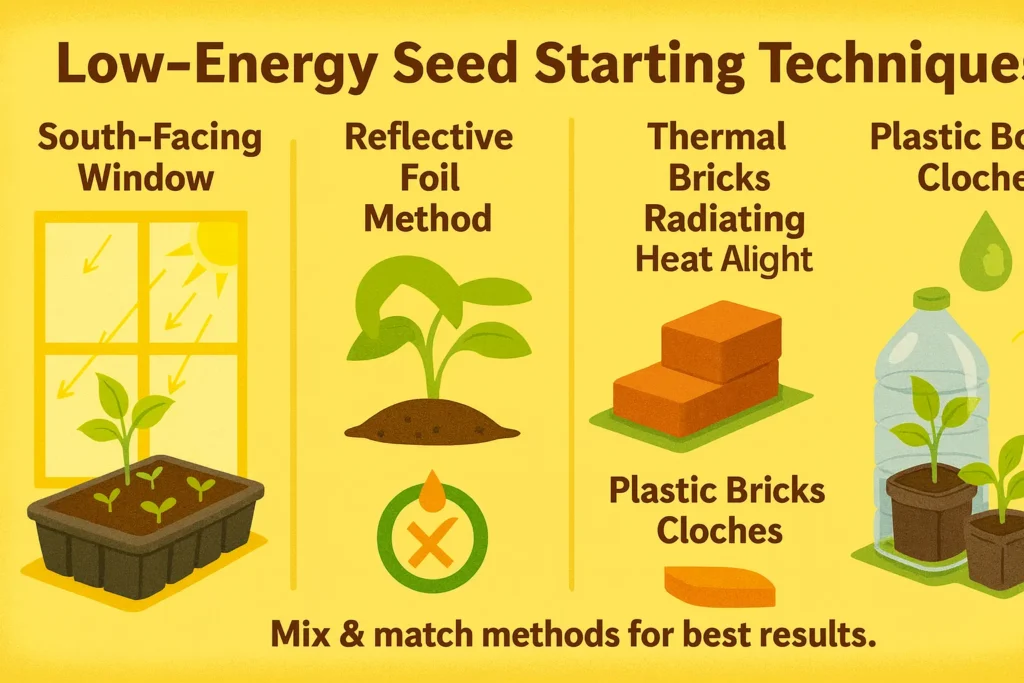
- South-facing windows: Maximize natural sunlight and warmth.
- Reflective surfaces: Place aluminum foil behind trays to bounce heat and light.
- Thermal mass: Use bricks or stones warmed by the sun to radiate heat at night.
- Mini cloches: Cut plastic bottles to cover seedlings, trapping warmth.
Low-energy techniques also encourage resilience. By exposing seedlings to slightly cooler conditions, you train them to withstand outdoor transitions better. This means stronger plants once they’re transplanted, reducing shock and increasing survival rates. It’s a subtle but powerful twist that many gardeners overlook.
Another advantage is accessibility for urban gardeners. Those living in apartments can use reflective surfaces and thermal mass without needing large outdoor spaces. By weaving in eco-friendly seed starting practices, you not only save energy but also make gardening more inclusive for people with limited resources.
One of my favorite experiments was using reflective foil behind seed trays. Step-by-step, I taped kitchen foil to cardboard and placed it behind a sunny windowsill. The reflected light and warmth boosted germination rates by nearly 20%. This low energy seed starting trick costs almost nothing but delivers measurable results.
👉 For more energy-efficient indoor practices, see our low-maintenance indoor gardening hacks guide.
Another twist: mini cloches made from plastic bottles don’t just trap warmth—they also create humidity. I once used them for cucumber seeds, and the seedlings grew faster than those in open trays. This shows that budget seed starting tips often double as microclimate hacks.
🏡 Budget-Friendly Indoor Gardening Hacks
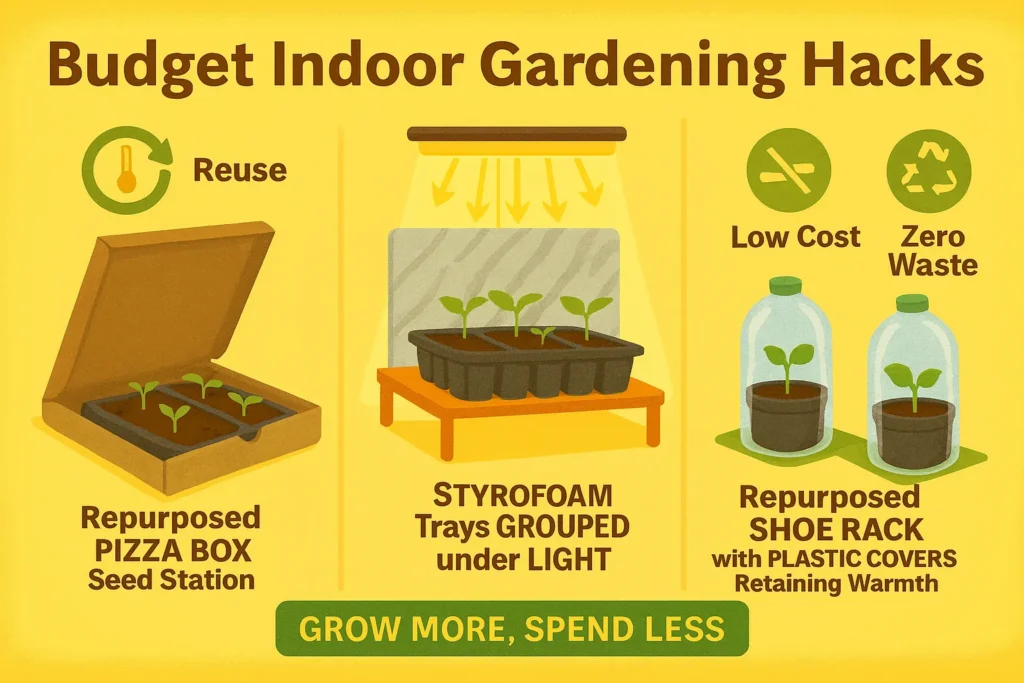
- Repurpose household items: old baking trays, cardboard boxes, or Styrofoam packaging.
- Use LED grow lights with low wattage for supplemental warmth.
- Group trays together to share heat and humidity.
- Cover trays with clear lids or plastic wrap to retain warmth.
Budget hacks often reveal surprising results. For instance, grouping trays together doesn’t just conserve warmth—it creates a microclimate that mimics a greenhouse. This trick, combined with start seeds early cheap methods, can produce seedlings that rival those grown with expensive equipment.
Another twist is repurposing unexpected items. Old pizza boxes lined with foil, or even unused shoe racks, can be converted into seed-starting stations. These creative solutions highlight the spirit of DIY seedling heat mats, proving that gardening innovation often comes from everyday objects.
Step-by-step, here’s how I built a seed-starting station from a shoe rack:
- Line each shelf with foil to reflect light.
- Place trays on the shelves.
- Cover the rack with clear plastic to trap warmth.
This setup cost me nothing, yet it worked like a mini greenhouse. The twist? My seedlings grew faster than those on a store-bought mat, proving that start seeds early cheap methods can outperform commercial solutions.
Another case study: I once used an old pizza box lined with foil as a seed tray cover. It trapped warmth overnight, and my lettuce seeds sprouted two days earlier than expected. These hacks show that creativity often beats technology.
👉 For affordable lighting options, check our cheap grow lights for seedlings guide.
🌍 Eco-Friendly Seed Starting Alternatives for Conscious Gardeners
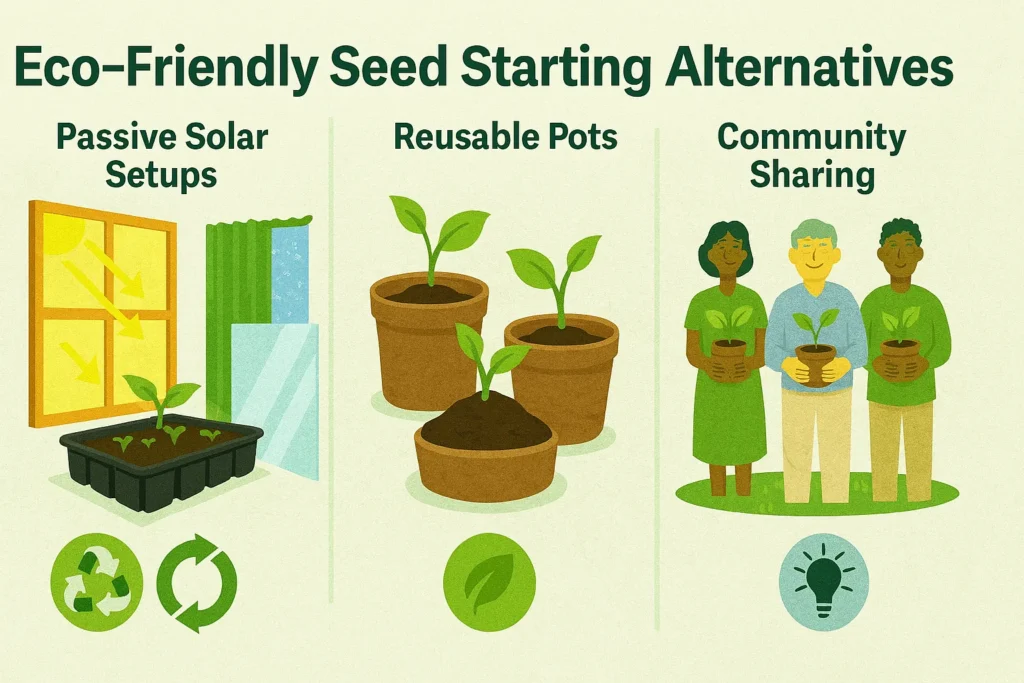
- Passive solar heating: Place trays near thermal curtains or glass doors.
- Reusable materials: Avoid single-use plastics; opt for biodegradable pots.
- Energy-efficient bulbs: Use LED grow lights instead of incandescent.
- Community sharing: Borrow or share equipment with local gardening groups.
Eco-friendly alternatives also build community. When gardeners share resources, they reduce waste while fostering collaboration. This collective approach makes sustainable gardening hacks more than just individual practices—it becomes a movement.
Here’s the twist: eco-friendly doesn’t always mean complicated. Sometimes the simplest changes, like switching to biodegradable pots or reusing household containers, have the biggest impact. By embracing eco-friendly seed starting, you not only nurture plants but also contribute to a healthier planet.
Step-by-step, you can create a passive solar setup:
- Place seed trays near a glass door or south-facing window.
- Use thermal curtains to retain heat at night.
- Add a reflective surface behind the trays.
This sustainable gardening hack reduces energy use while maximizing natural warmth. The twist? It also brightens your living space, making gardening feel more integrated into daily life.
Case study: A community garden in Lahore shared biodegradable pots among members. Not only did they reduce plastic waste, but they also built stronger connections. This shows that eco-friendly seed starting can be both practical and social.
👉 For more community-driven planting, explore our companion planting month-by-month guide.
Conclusion
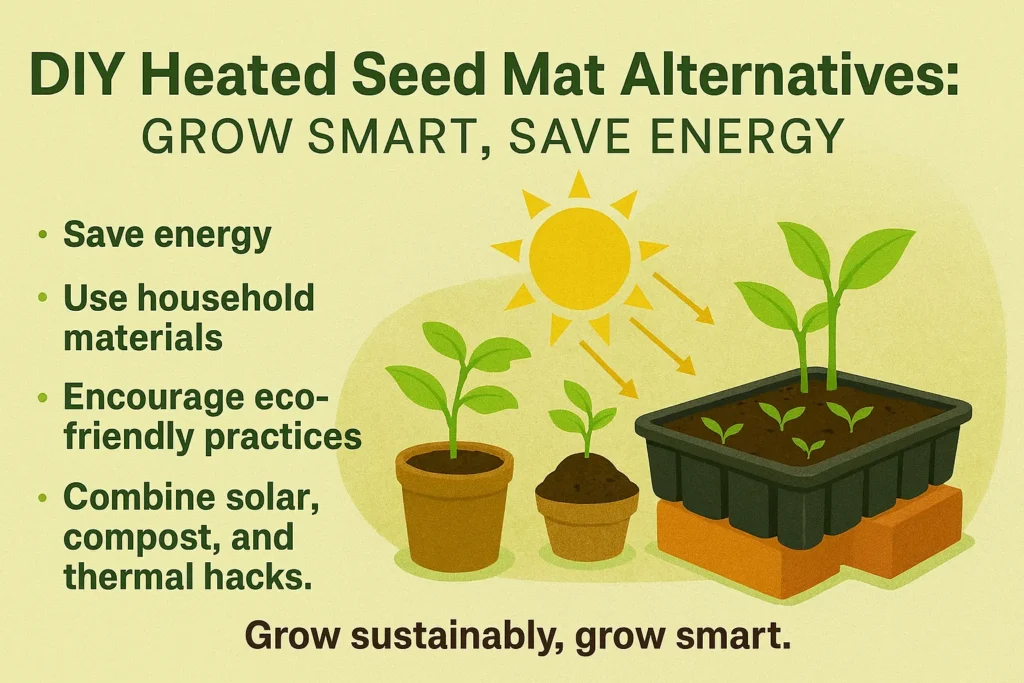
Starting seeds early doesn’t have to drain your wallet or your electricity bill. By embracing a DIY Heated Seed Mat Alternative, you can create a warm, nurturing environment for seedlings using simple, low-energy, and eco-friendly methods. From rice sock heaters to compost-powered warmth, these hacks prove that gardening innovation often comes from resourcefulness.
Not only will you save money, but you’ll also reduce your environmental footprint while still enjoying strong, healthy seedlings. With creativity and sustainability at the core, your seed-starting journey becomes more accessible, affordable, and rewarding.
Ultimately, the journey of seed starting is about discovery. Each DIY Heated Seed Mat Alternative you try adds a layer of experience, teaching you something new about plants, energy, and resourcefulness. These lessons extend beyond gardening—they remind us that innovation often comes from simplicity.
The twist is that by choosing low-energy, budget-friendly methods, you’re not just growing seedlings—you’re cultivating resilience, sustainability, and creativity. And that makes your garden more than a collection of plants; it becomes a reflection of your values and ingenuity.
Step-by-step, the journey is simple: choose a DIY Heated Seed Mat Alternative, experiment with it, and refine your process. Each attempt teaches you something new, whether it’s about soil, temperature, or resilience.
The twist is that gardening is never just about plants—it’s about discovery. By embracing low energy seed starting and budget seed starting tips, you cultivate not only seedlings but also creativity, patience, and sustainability. That’s the true reward of gardening.
👉 For resilient orchard protection, see our fruit tree winter guards and DIY repellents guide.
❓ Frequently Asked Questions (FAQ) on DIY Heated Seed Mat Alternative
1. What is a DIY Heated Seed Mat Alternative, and why should I use one?
A DIY Heated Seed Mat Alternative is any low-cost, low-energy method that provides warmth to seed trays without relying on commercial heat mats. Gardeners use alternatives like rice sock heaters, compost heat, or solar cloches to save money, reduce electricity use, and embrace eco-friendly seed starting practices. These methods are especially useful for beginners who want to start seeds early cheap without investing in expensive equipment.
2. Can I start seeds without a heat mat and still get good results?
Yes! Many seeds germinate successfully with seed starting without heat mats when you use passive heat sources. Techniques such as placing trays near a sunny window, using thermal bricks, or covering seedlings with mini cloches can replicate the warmth of a mat. In fact, some plants grow sturdier when exposed to natural temperature fluctuations, making low energy seed starting a practical and sustainable choice.
3. Which seeds benefit most from a DIY Heated Seed Mat Alternative?
Warm-season crops like tomatoes, peppers, eggplants, and basil thrive when soil temperatures stay between 70–80°F. These are ideal candidates for a DIY Heated Seed Mat Alternative. Cool-season crops such as lettuce or spinach don’t require as much heat, so you can save energy by focusing your DIY methods on heat-loving plants. This targeted approach combines budget seed starting tips with efficient resource use.
4. What are the cheapest DIY Heated Seed Mat Alternatives I can try at home?
Some of the most affordable options include:
Rice sock heaters (microwave and reuse)
Hot water bottles wrapped in towels
Reflective foil setups behind trays
Compost heat hacks using decomposition warmth. These start seeds early cheap methods cost little to nothing and can be scaled depending on your seed-starting needs.
5. How do I make my DIY Heated Seed Mat Alternative safe and effective?
Safety is key when experimenting with DIY methods. Always monitor soil temperature with a simple thermometer to avoid overheating. If using candles or hot water bottles, ensure trays are insulated and supervised. Combining methods—like solar cloches during the day and insulated boxes at night—creates a balanced, safe environment for seedlings. This hybrid approach is one of the most reliable sustainable gardening hacks.
6. Will a DIY Heated Seed Mat Alternative help me save money in the long run?
Absolutely. Commercial mats can cost $30–$80 each and consume electricity continuously. By switching to DIY Heated Seed Mat Alternatives, you reduce upfront costs and ongoing energy bills. Over time, these savings add up, making your gardening journey more affordable and eco-friendly. Plus, the creativity involved often leads to better engagement and learning, which is priceless for gardeners.
7. Are DIY Heated Seed Mat Alternatives eco-friendly?
Yes, most alternatives rely on eco-friendly seed starting techniques such as passive solar heating, compost warmth, or reusable household materials. By reducing electricity use and repurposing items, you lower your carbon footprint while still achieving strong germination rates. This makes DIY methods both sustainable and practical for conscious gardeners.
8. How long does a DIY Heated Seed Mat Alternative keep soil warm compared to a commercial mat?
A DIY Heated Seed Mat Alternative generally provides warmth for shorter periods than a commercial mat, which runs continuously. For example, a rice sock heater or hot water bottle may keep soil warm for 4–6 hours, while compost heat or solar cloches can maintain warmth throughout the day. The key is monitoring soil temperature with a simple thermometer and combining methods when needed. This approach balances low energy seed starting with effective germination, ensuring seedlings stay healthy without constant electricity use.
9. Can a DIY Heated Seed Mat Alternative be scaled for larger seed-starting setups?
Yes, scalability is one of the biggest advantages of a DIY Heated Seed Mat Alternative. Instead of buying multiple mats, you can expand naturally by grouping trays, using larger compost piles, or building insulated boxes that hold several trays at once. For urban gardeners, reflective foil setups or solar-powered mini greenhouses can cover multiple trays at minimal cost. These budget seed starting tips make it easy to grow more seedlings without multiplying expenses or energy consumption.
10. What materials work best when building a safe and reliable DIY Heated Seed Mat Alternative at home?
The best materials are those that retain heat safely and are easy to repurpose. Common options include rice (for sock heaters), hot water bottles, Styrofoam coolers, aluminum foil, and clear plastic bottles for solar cloches. Compost bins and bricks also work well as natural heat sources. When building your setup, always ensure insulation and ventilation to avoid overheating. By combining these materials, you create a DIY Heated Seed Mat Alternative that is both safe and effective, while aligning with eco-friendly seed starting practices.