Table of Contents
Table of Contents
Introduction
When the calendar flips to December, many gardeners assume the growing season is over. Frosty mornings, shorter days, and chilly winds seem to signal a time for rest rather than planting. Yet, winter gardening is far from dormant. In fact, December offers unique opportunities to sow cold-hardy crops, nurture indoor greens, and prepare your soil for spring.
This guide explores what to plant in December, highlighting vegetables, herbs, and flowers that thrive in winter conditions. We’ll also cover indoor planting options, zone-specific recommendations, and common mistakes to avoid. Whether you’re in a mild climate or braving harsher winters, this month can be surprisingly productive for your garden.
Many gardeners underestimate the potential of December, but this is precisely why seasonal guides rank so well. When you know what to plant in December, you’re tapping into a niche that few others cover. Think of it as a hidden season—while most people pack away their tools, experienced gardeners quietly sow crops that will burst into life when spring arrives. This twist in perspective not only keeps your garden active but also builds anticipation for the months ahead.
Cold-Hardy Vegetables for December
Garlic and Onions
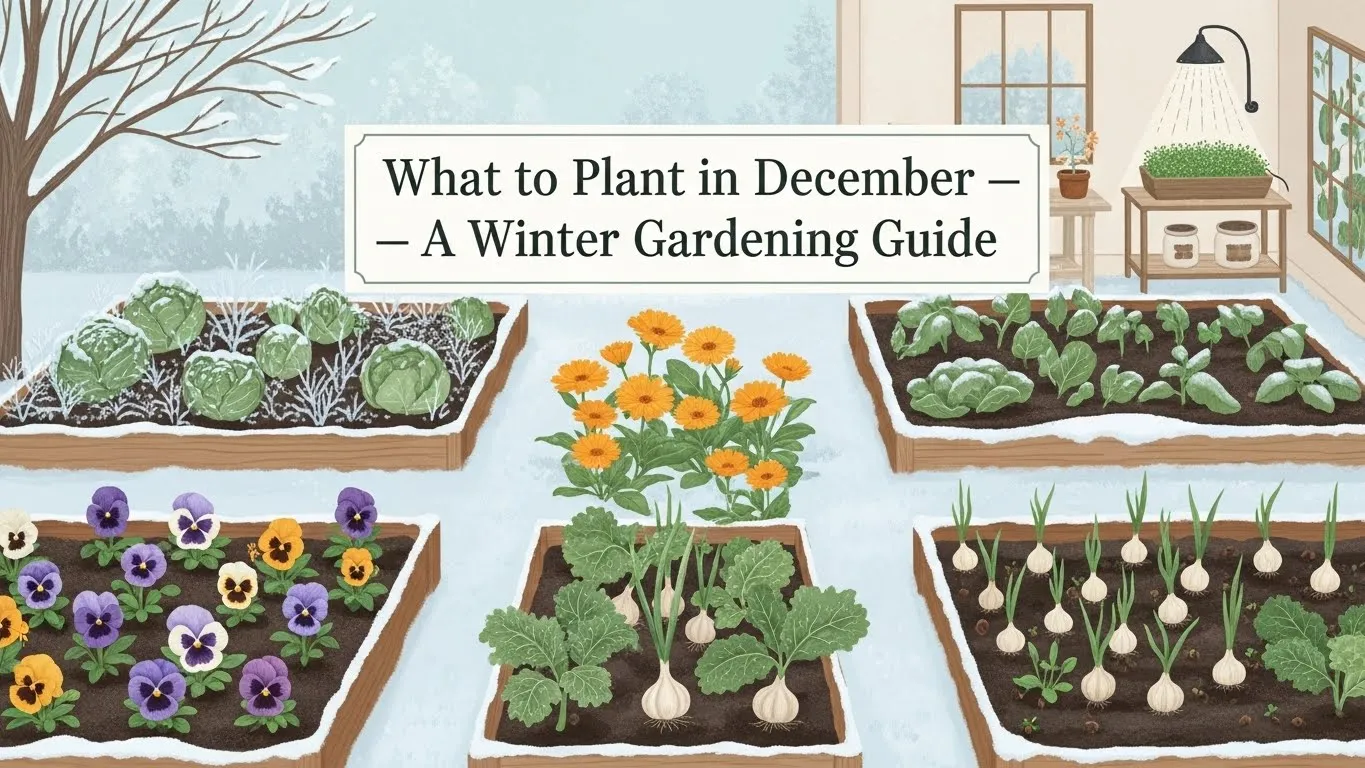
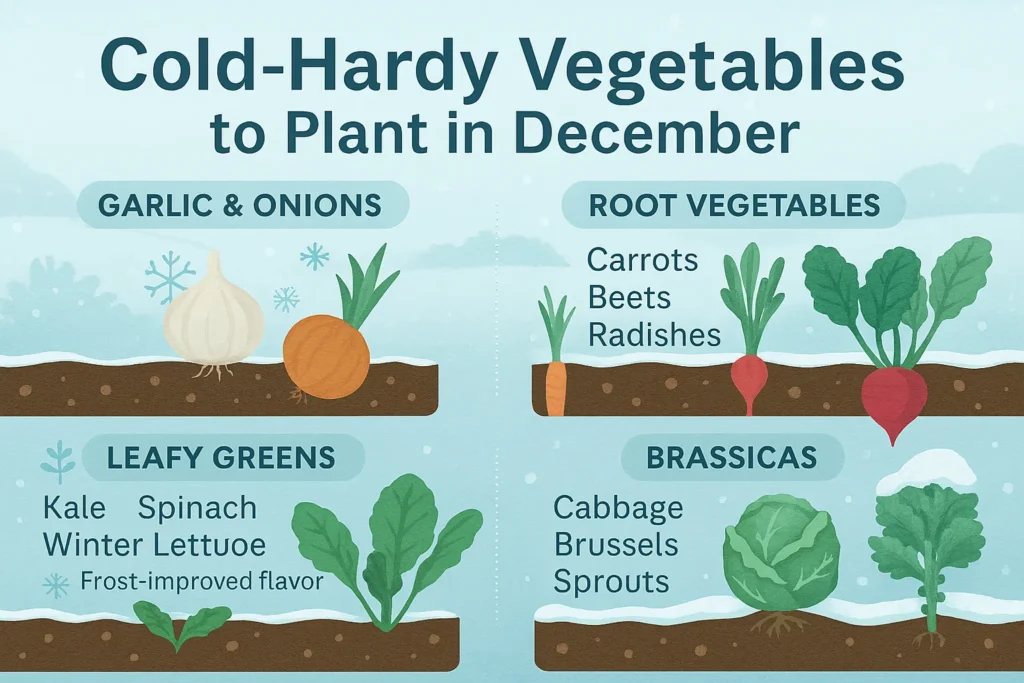
Garlic and onions are classic winter crops (See USDA guidance on Selecting Cover Crops). Planting them in December allows bulbs to establish roots before spring growth (For step‑by‑step protection tips, see Protect Fruit Trees from Rodents: Winter Guards DIY). Garlic cloves tucked into the soil now will reward you with robust heads by early summer. Onions, especially overwintering varieties, benefit from the cool season to develop strong bases.
When considering vegetables to plant in December, garlic and onions are foundational. They require little maintenance once planted, and their resilience makes them ideal for beginners experimenting with winter gardening. A curious twist is that garlic planted in December often produces larger cloves than those sown later, thanks to the extended cold exposure.
Leafy Greens: Lettuce, Kale, and Spinach
Cold-hardy greens, such as kale, spinach, and winter lettuce varieties, thrive in chilly weather. Spinach, in particular, thrives in cold conditions and can survive under light snow. These greens provide fresh harvests when most gardens are bare.
If you’re wondering what to plant in December for quick results, leafy greens are your best bet (You can also explore Fast-Growing Winter Cover Crops for No-Dig Soil Health to enrich soil while harvesting greens). Kale and spinach not only survive frost but actually improve in flavor after exposure to cold (Penn State Extension explains Cool-season vs. Warm-season Vegetables). This resilience makes them a staple in cold-hardy crops lists. For gardeners in moderate zones, a simple cold frame can extend harvests well into January, adding a twist of abundance to the leanest season.
Root Vegetables: Carrots, Beets, and Radishes
Root crops are resilient in winter. Carrots and beets sweeten in flavor after exposure to frost, while radishes mature quickly even in cooler soil (Learn how to improve soil health with Container Cover Crops for Small Spaces). Planting them in December ensures a steady supply of nutrient-rich vegetables through the cold months.
Root vegetables are often overlooked in winter guides, yet they are among the most rewarding choices for December planting guides. Carrots, for instance, develop a sweeter taste after frost, while radishes can be harvested in as little as four weeks. This means that even in the depths of winter, you can enjoy fresh produce. The twist? Some gardeners leave carrots in the ground under mulch, harvesting them gradually like a hidden treasure chest.
Brassicas: Cabbage and Brussels Sprouts
Cabbage and Brussels sprouts are champions of winter gardening. They withstand freezing temperatures and continue to grow slowly, offering hearty harvests in late winter or early spring (Extend your brassica harvests with Cold Frame Gardening: DIY Hoop Houses).
For those exploring winter gardening, brassicas are a powerhouse. Cabbage heads firm up beautifully in cold weather, and Brussels sprouts develop a nutty flavor after frost. Planting them in December ensures you’re not just surviving winter—you’re thriving. The twist here is patience: these crops grow slowly, but the reward is a harvest that feels like a triumph against the odds.
Winter Flowers and Herbs
Hardy Winter Flowers: Pansies, Calendula, and Snapdragons
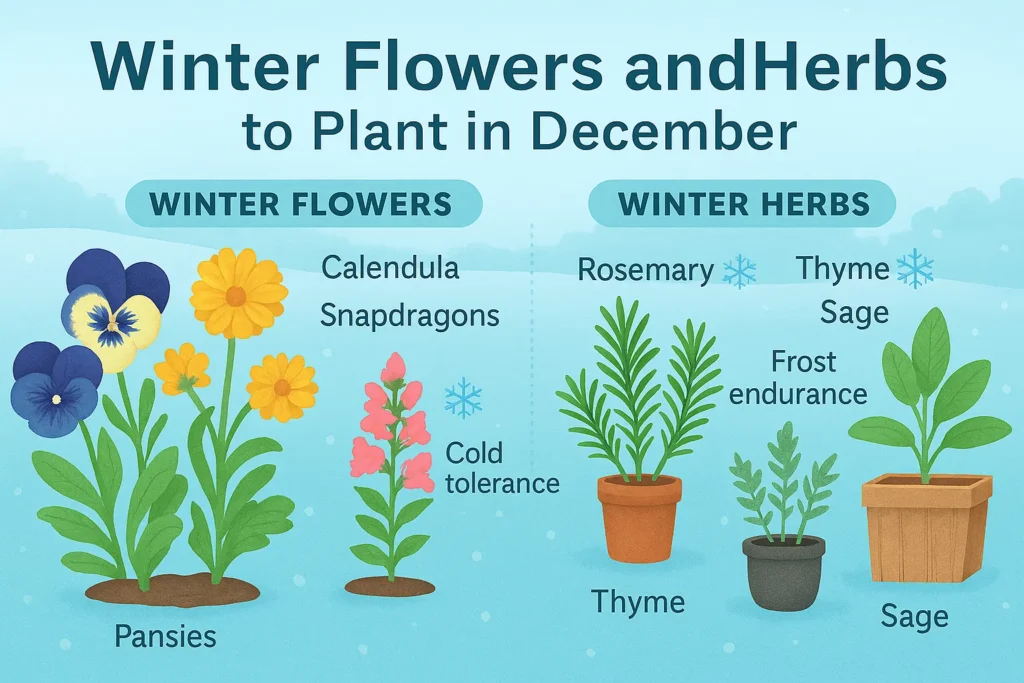
Flowers like pansies and calendula add color to otherwise gray winter gardens. Snapdragons, too, can tolerate cooler temperatures, brightening borders and containers. These blooms not only lift spirits but also attract pollinators during mild spells.
When considering winter flowers, December is the perfect time to plant pansies and calendula (For bulb lovers, check Complete Guide to Plant Bulbs in Warm Climates). Their resilience adds color when most gardens fade. The twist? These flowers often bloom more vibrantly in cooler weather than in spring, surprising gardeners with their intensity. Including them in your December planting guide ensures your garden remains visually alive.
Herbs That Survive the Cold: Rosemary, Thyme, and Sage
Perennial herbs such as rosemary, thyme, and sage are remarkably hardy. They can withstand frosty nights and continue to provide aromatic leaves for cooking. Planting them in December ensures a steady supply of fresh herbs throughout winter.
For those asking what to plant in December indoors or outdoors, hardy herbs are indispensable. Rosemary thrives in pots near sunny windows, thyme creeps along garden beds, and sage adds depth to winter stews. The twist is their dual role: they’re both culinary and ornamental, offering fragrance and greenery when most plants retreat.
Indoor Winter Gardening
Microgreens: Fast and Nutritious
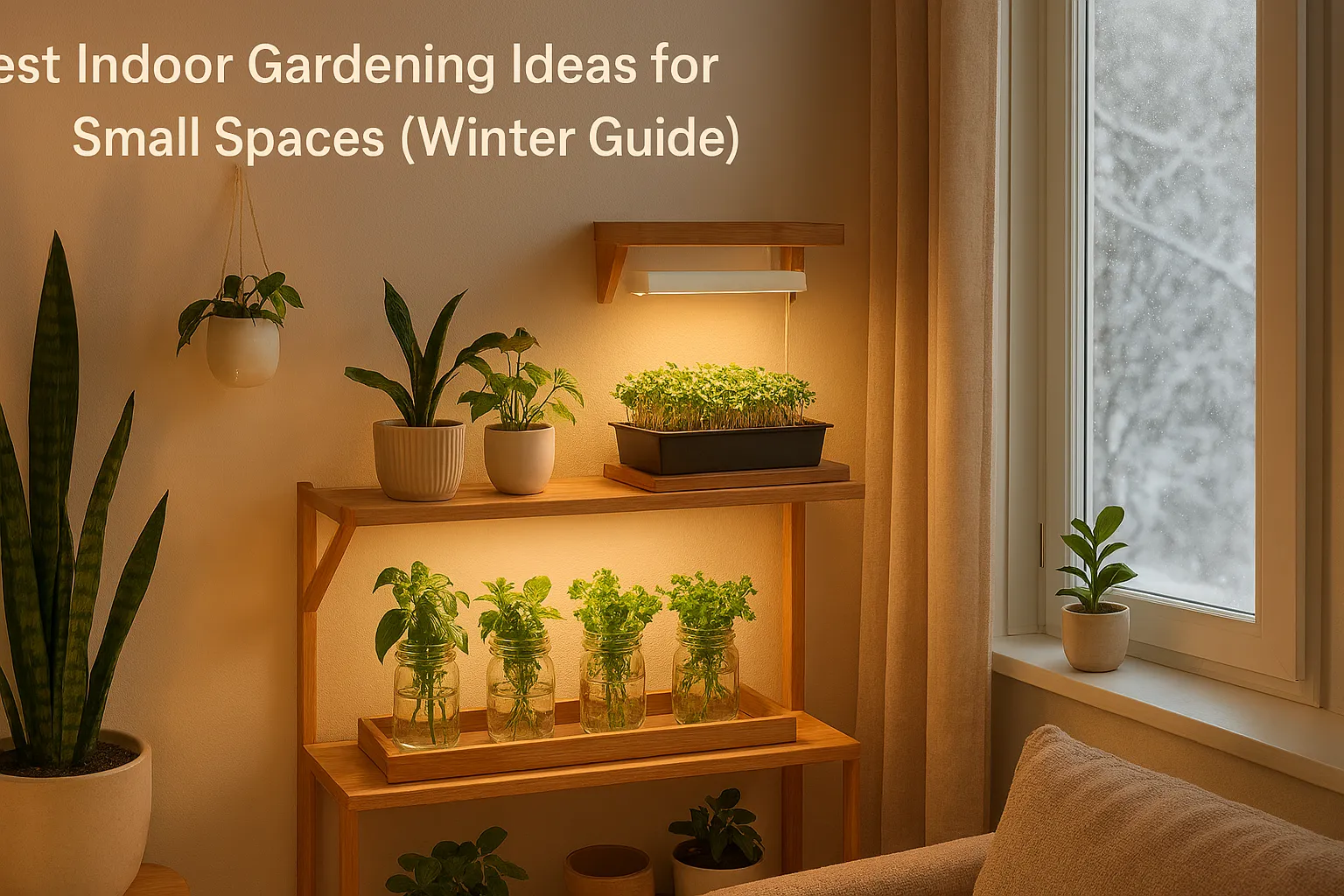
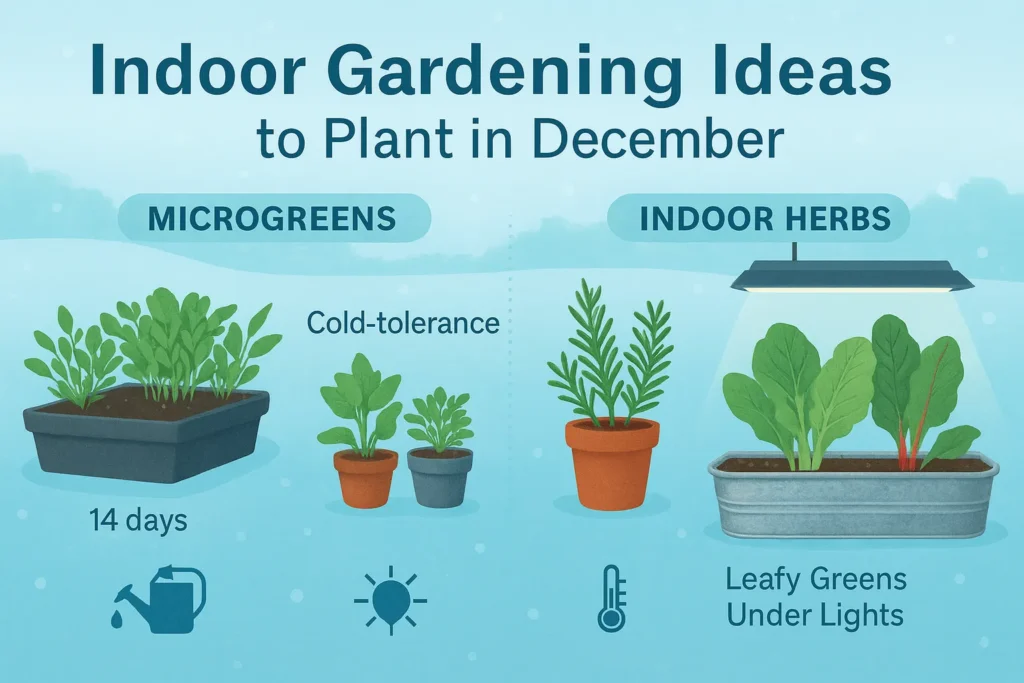
Microgreens are perfect for indoor gardening in December. They grow quickly under minimal light and provide nutrient-dense harvests in just 10–14 days. Varieties like arugula, mustard, and radish microgreens are ideal for beginners.
Microgreens are the ultimate answer to indoor winter gardening. They grow so quickly that you can experiment with multiple varieties in a single month. The twist? Their nutrient density is far higher than mature plants, meaning a handful of microgreens can pack more vitamins than a full salad.
Herbs in Pots: Basil, Parsley, and Mint
Indoor herb gardens thrive in December. Basil, parsley, and mint grow well in containers placed near sunny windows or under grow lights. These herbs add freshness to winter meals and are easy to maintain indoors.
When thinking about what to plant in December indoors, herbs in pots are a natural choice. Basil may need extra warmth, but parsley and mint thrive with minimal care. The twist is their versatility: they can be harvested continuously, making them a living pantry right in your kitchen.
Leafy Greens Under Grow Lights
Lettuce and Swiss chard adapt well to indoor growing conditions. With the help of LED grow lights, you can enjoy crisp salads even in the depths of winter.
Leafy greens under grow lights are a cornerstone of indoor winter gardening. Lettuce, Swiss chard, and even pak choi adapt beautifully to artificial light. The twist? You can stagger plantings every two weeks, ensuring a perpetual harvest that feels like cheating the season.
Zone-Specific Planting Guide
USDA Zones 7–10: Mild Winters
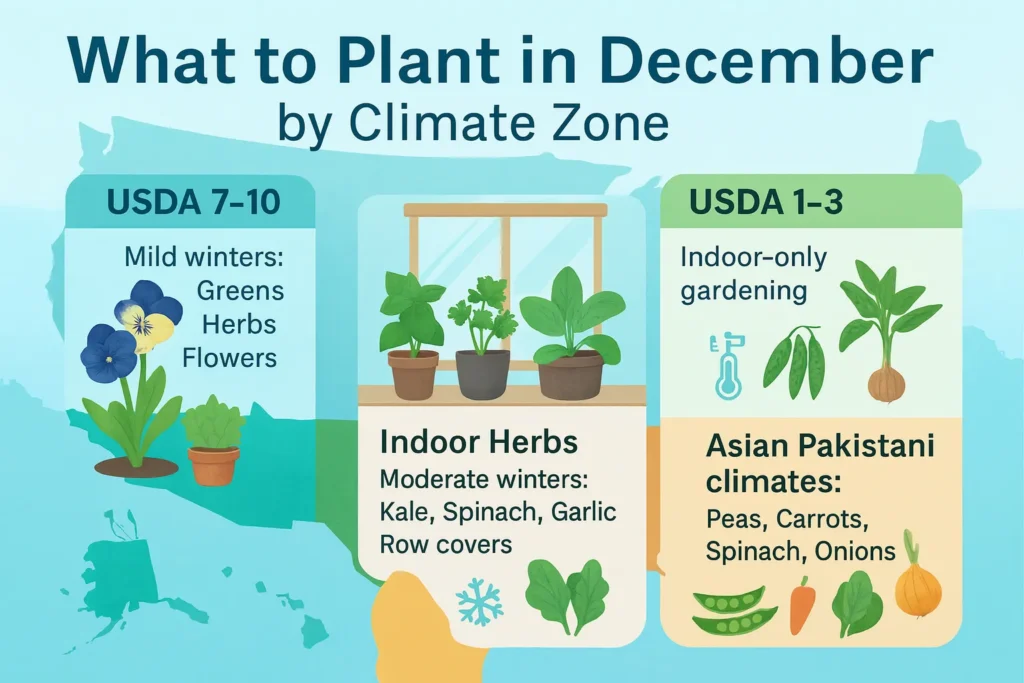
Gardeners in mild climates can plant a wide range of crops outdoors in December. Leafy greens, root vegetables, and hardy herbs thrive in these zones. Flowers like pansies and calendula also flourish.
For gardeners asking what to plant in December in mild zones, the options are abundant. Even tender crops like peas can be sown outdoors. The twist is that mild winters allow experimentation—mixing winter flowers with vegetables creates a vibrant, edible landscape.
USDA Zones 4–6: Moderate Winters
In these zones, focus on cold-hardy vegetables like kale, spinach, and garlic. Use row covers or cold frames to protect crops from frost. Indoor gardening becomes especially valuable here.
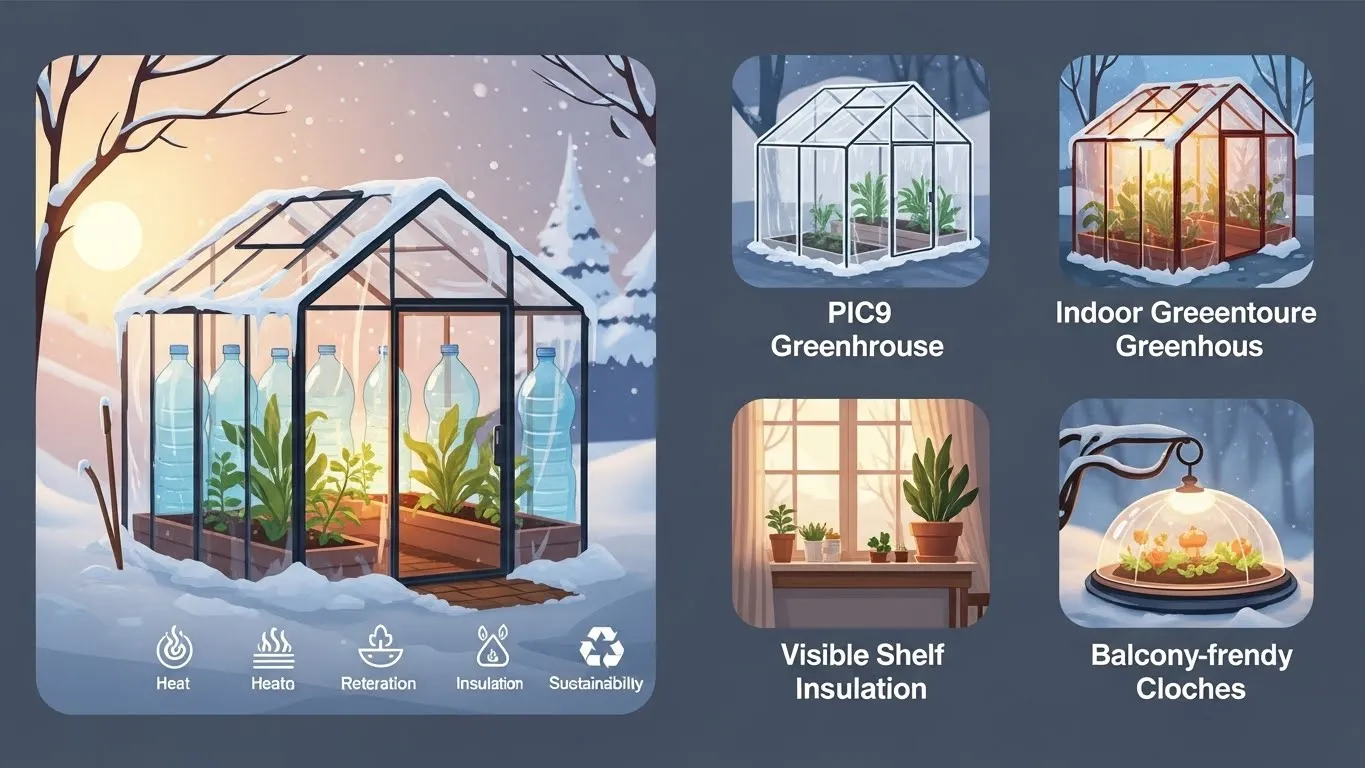
In moderate zones, cold-hardy crops like kale and garlic dominate the December planting guide (Protect them effectively with Frost Protection for Plants: Best Covers DIY Guide). The twist? With protective structures like hoop houses, you can push boundaries and grow crops typically reserved for milder climates.
USDA Zones 1–3: Harsh Winters
For gardeners in colder zones, December is best for indoor planting. Microgreens, herbs, and leafy greens under grow lights are practical options. Outdoor planting is limited, but soil preparation for spring is essential.
For gardeners in harsh climates, indoor winter gardening is the lifeline (Penn State Extension offers a Winter Garden Activity Guide). The twist is strategic planning: while you grow microgreens indoors, you also prepare soil outdoors, setting the stage for an explosive spring.
Asian and Pakistani Climates
In regions like Pakistan, December often brings mild winters. This allows for planting peas, carrots, spinach, and onions outdoors. Flowers such as calendula and pansies also thrive in these conditions.
In Pakistan and similar climates, what to plant in December includes peas, spinach, and carrots outdoors. The twist? These crops often mature faster due to mild winters, giving gardeners a head start compared to colder regions.
Common Mistakes to Avoid in Winter Gardening
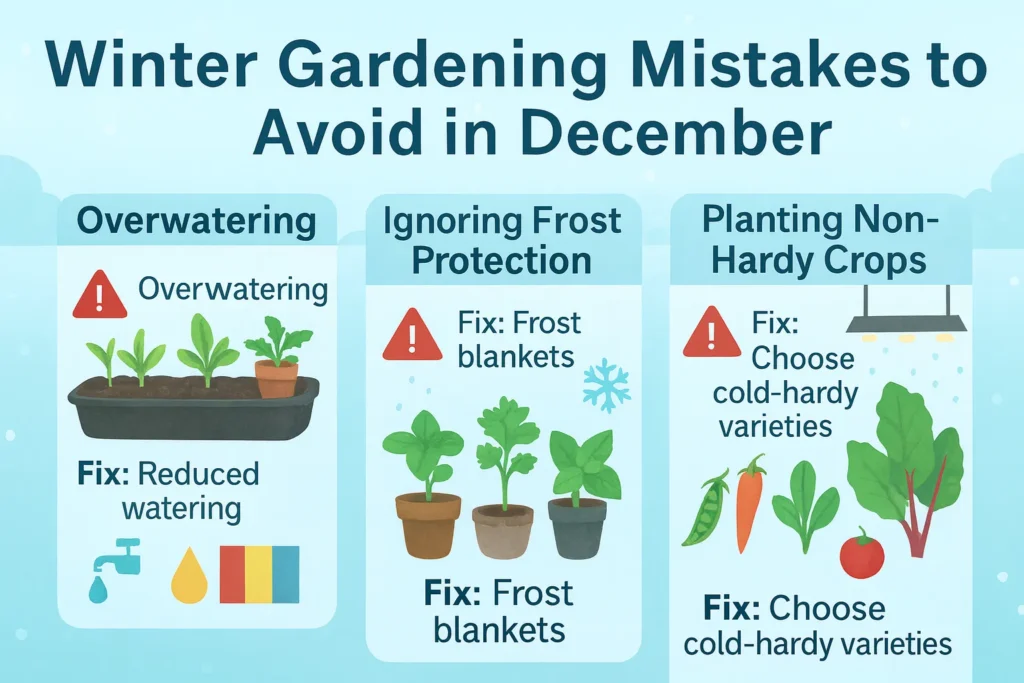
Overwatering in Cold Weather
Cold soil retains moisture longer, so overwatering can lead to root rot. Water sparingly and ensure proper drainage.
Overwatering is one of the most common mistakes in winter gardening (Avoid related issues by reading How to Prevent and Fix Root Rot in Potted Plants). The twist is that plants often need less water than you think—sometimes snowmelt alone is enough.
Ignoring Frost Protection
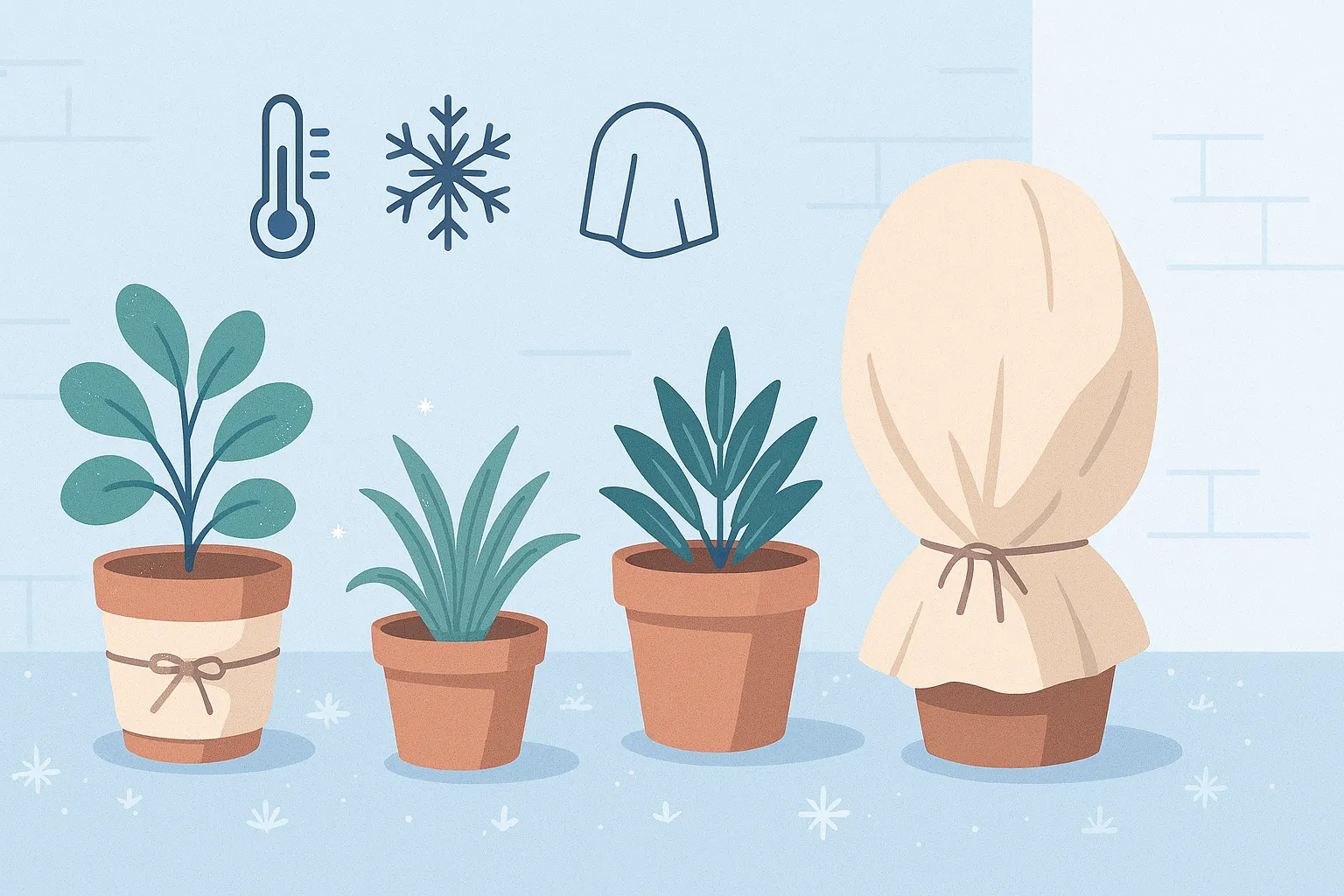
Failing to protect crops from frost can damage tender plants. Use row covers, cloches, or mulch to shield them.
When considering what to plant in December, frost protection is non-negotiable (RHS advice on Vegetables: Growing for Winter). The twist? Simple household items like old sheets or plastic bottles can serve as effective frost shields, proving that creativity is as important as technique.
Planting Non-Hardy Crops
Attempting to grow summer crops like tomatoes or peppers outdoors in December is a common mistake. Focus instead on cold-hardy varieties suited for winter.
Planting non-hardy crops in December is a recipe for disappointment. The twist is that experimenting indoors with summer crops under grow lights can satisfy curiosity without risking outdoor failure.
Conclusion
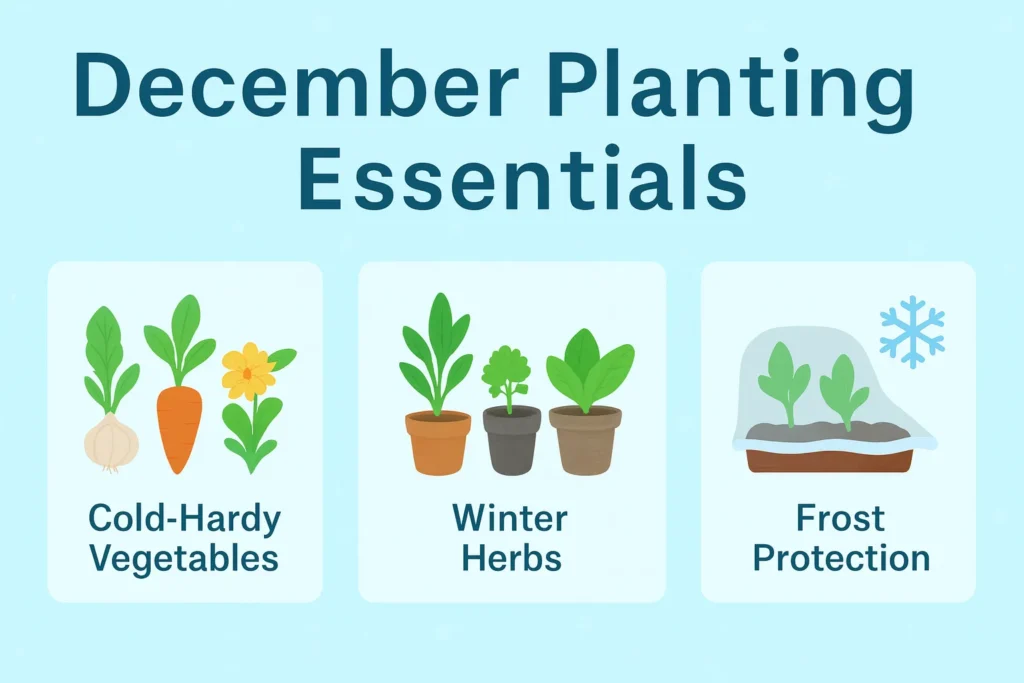
December is not the end of the gardening season—it’s a new chapter (For year‑round raised bed strategies, check Companion Planting for Raised Beds: 12-Month Gardening). By understanding what to plant in December, you can enjoy fresh vegetables, herbs, and flowers even in the coldest months. From garlic and kale outdoors to microgreens and herbs indoors, winter gardening offers resilience, color, and nourishment.
Avoid common mistakes, tailor your planting to your zone, and embrace the unique rhythm of winter. With the right choices, December becomes a month of growth, not dormancy. So, step into your garden, plant with confidence, and let the cold season surprise you with its bounty.
Ultimately, knowing what to plant in December transforms your gardening journey. The twist is psychological: while others see winter as an ending, you’ll see it as a beginning. This mindset not only keeps your garden alive but also keeps your curiosity and creativity thriving.
🌱 FAQ Section: What to Plant in December
1. What vegetables can I plant in December?
December is ideal for cold‑hardy vegetables such as garlic, onions, kale, spinach, carrots, beets, and radishes. These crops thrive in cooler soil and often taste sweeter after frost exposure.
2. Can I grow herbs indoors in December?
Yes. Indoor winter gardening is perfect for herbs like basil, parsley, mint, rosemary, and thyme. With pots near sunny windows or under grow lights, you can enjoy fresh herbs all season.
3. What flowers bloom if planted in December?
Hardy winter flowers such as pansies, calendula, and snapdragons can be planted in December. They add vibrant color to gardens and withstand chilly conditions.
4. How do gardening zones affect what to plant in December?
In mild USDA zones (7–10), you can plant a wide variety of vegetables and flowers outdoors. Moderate zones (4–6) require frost protection, while harsh zones (1–3) favor indoor planting. In Asian climates like Pakistan, peas, spinach, and carrots thrive outdoors in December.
5. What are common mistakes to avoid when planting in December?
Avoid overwatering, neglecting frost protection, and planting non‑hardy summer crops outdoors. Focus instead on cold‑hardy crops suited for winter gardening.
6. What to plant in December for quick harvests?
If you want fast results, radishes and microgreens are excellent choices. Radishes mature in just 3–4 weeks, while microgreens can be harvested in 10–14 days indoors. These options keep your garden productive even in the coldest months.
7. What to plant in December indoors for beginners?
Indoor winter gardening is perfect for beginners. Herbs like parsley, mint, and basil thrive in pots, while leafy greens such as lettuce and Swiss chard grow well under LED lights. These crops are low‑maintenance and provide fresh harvests all winter.
8. What flowers can I plant in December to brighten my garden?
Hardy winter flowers such as pansies, calendula, and snapdragons bloom beautifully when planted in December. They add vibrant color to otherwise gray landscapes and withstand chilly conditions, making them ideal for seasonal decoration.
9. What to plant in December, depending on gardening zones?
In USDA zones 7–10, mild winters allow outdoor planting of leafy greens, root vegetables, and winter flowers. Zones 4–6 require frost protection for crops like kale and garlic. In zones 1–3, focus on indoor planting. In Asian climates like Pakistan, peas, spinach, and carrots thrive outdoors in December.
10. What mistakes should I avoid when deciding what to plant in December?
Common mistakes include overwatering cold soil, neglecting frost protection, and planting non‑hardy summer crops outdoors. Instead, focus on cold‑hardy crops and use row covers or mulch to protect plants from frost damage.