

Table of Contents
Table of Contents
Introduction
For gardeners in cooler regions, planting spring bulbs is almost effortless: tuck tulips, daffodils, or hyacinths into the soil in autumn, let winter’s chill do its work, and wait for the explosion of color in spring. But for those of us living in warm climates, the story is different. Without a natural cold season, bulbs like tulips and hyacinths won’t bloom reliably unless we give them a little help.
That’s where pre-chilling bulbs come in—a simple but transformative technique that allows gardeners in zones 8–11 (and beyond) to enjoy the same dazzling spring displays as their northern counterparts. In this guide, we’ll explore everything you need to know about how to plant bulbs in warm climates, from choosing the right varieties to mastering the art of chilling bulbs before planting.
By the end, you’ll have a step-by-step roadmap to guarantee spring blooms, even if your winters feel more like summer.
When you plant bulbs in warm climates, you’re not just following a set of instructions—you’re adapting centuries-old gardening traditions to fit your own environment. Gardeners in zones 8–11 often discover that what works in colder regions needs a creative twist in warmer ones. That might mean learning how to pre-chill bulbs in the refrigerator, experimenting with DIY bulb chilling setups, or even trying forcing bulbs indoors to enjoy blooms on your windowsill before the outdoor season begins. These techniques may sound unconventional at first, but they open up a world of possibilities for gardeners who refuse to let climate dictate their spring displays.
The real curiosity lies in timing. For example, knowing when to plant bulbs in November can make the difference between a disappointing patch of leaves and a breathtaking carpet of tulips. By weaving together strategies like chilling bulbs before planting and choosing varieties suited to your zone, you’ll not only guarantee success but also gain the freedom to design a blooming schedule that feels almost magical. This is the hidden advantage of gardening in warm climates: once you master the rhythm, you can choreograph your own spring.
👉 For more seasonal protection tips, explore our frost protection for plants guide.
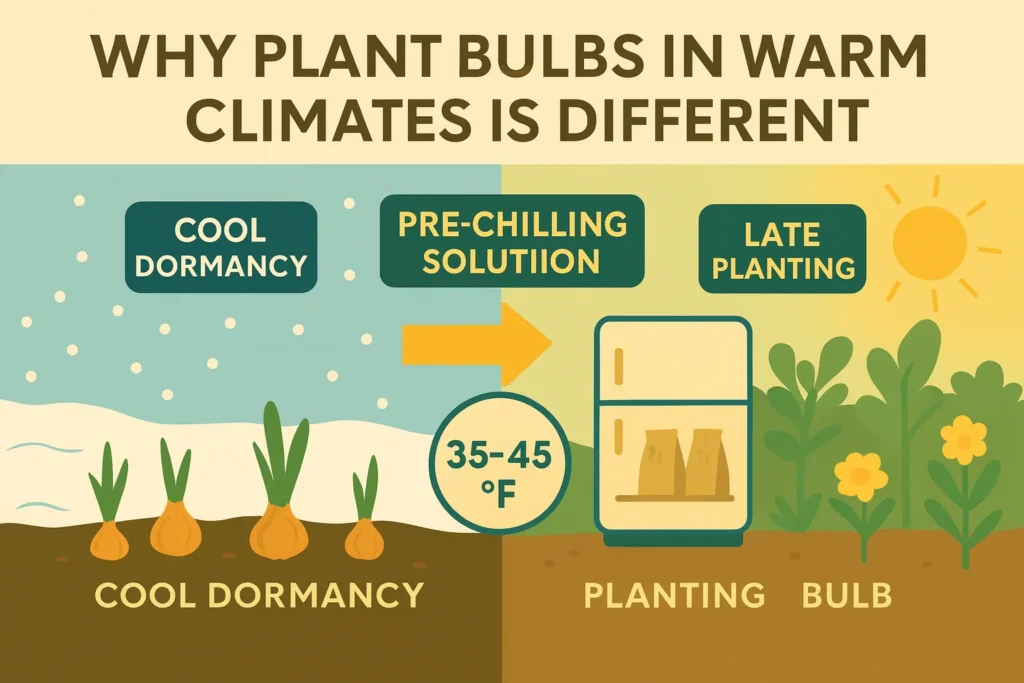
🌱 Why Plant Bulbs in Warm Climates Is Different
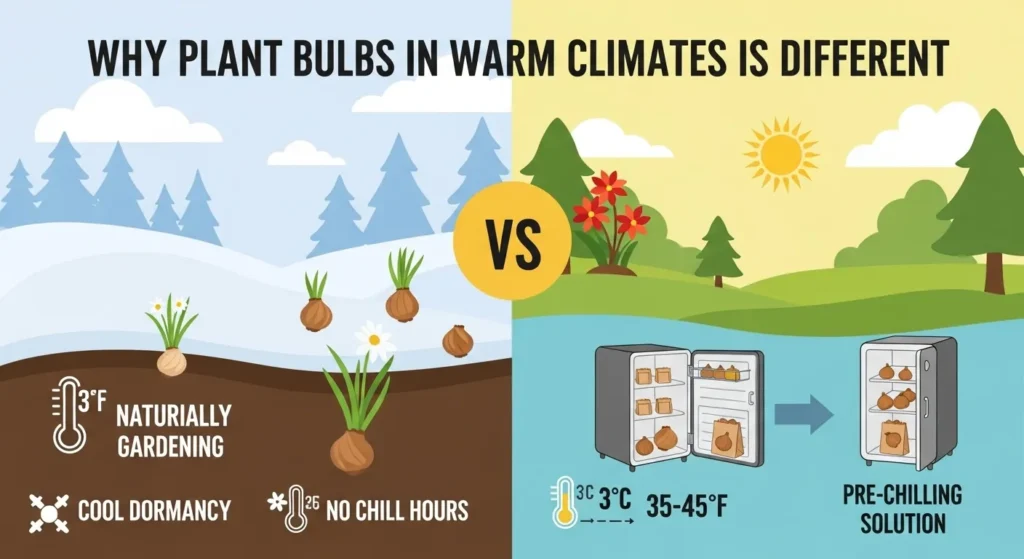
- Cool-climate bulbs need cold dormancy: Tulips, daffodils, crocuses, and hyacinths evolved in regions with cold winters. They require a chilling period (typically 10–14 weeks at 35–45°F) to trigger flowering.
- Warm climates lack natural chill hours: In gardening zones 8–11, winters are too mild to provide this dormancy naturally. Without intervention, bulbs may produce leaves but no flowers.
- Solution: Pre-chilling bulbs: By simulating winter in your refrigerator, you can “trick” bulbs into thinking they’ve gone through a cold season.
This is why the keyword “plant bulbs in warm climates” is so important—it captures the unique challenge and solution that gardeners in these regions face.
When you plant bulbs in warm climates, you’re essentially re-creating a cycle that nature provides automatically in colder regions. This means you have more control, but also more responsibility. The twist is that while northern gardeners rely on winter’s unpredictability, warm-climate gardeners can fine-tune bloom timing by adjusting how long they chill bulbs before planting. For example, chilling bulbs for 12 weeks instead of 10 before planting can delay flowering slightly, allowing you to stage a colorful display right when your garden needs it most. This level of precision is a hidden advantage of gardening in zones 8–11—once you master it, you can outsmart the seasons.
👉 To enrich soil for bulbs, see our Make Leaf Mold Fast Guide.
🌸 Choosing the Right Bulbs for Warm Climates
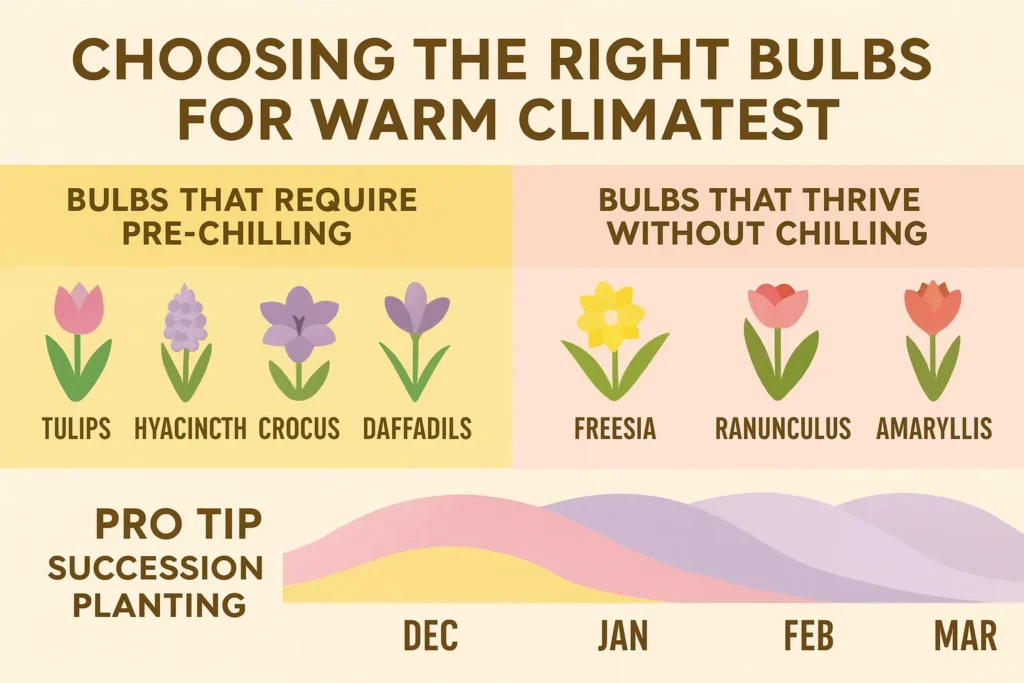
Not all bulbs require chilling. Some thrive naturally in warmer zones, while others absolutely need pre-chilling.
Bulbs That Require Pre-Chilling
- Tulips 🌷
- Hyacinths
- Crocuses
- Daffodils (some varieties)
Bulbs That Do Well Without Pre-Chilling
- Freesia
- Ranunculus
- Anemones
- Amaryllis
- Paperwhites
👉 Pro Tip: If you’re new to bulb gardening in warm climates, start with a mix: plant some bulbs that don’t require chilling for guaranteed success, and experiment with pre-chilled tulips or hyacinths for that classic spring look.
Another layer to consider when you plant bulbs in warm climates is succession planting. By mixing bulbs that require chilling with those that don’t, you can create waves of color that last for months. Imagine paperwhites blooming in December, followed by pre-chilled tulips in February, and then freesias in March. This staggered approach not only guarantees spring blooms in warm climates but also keeps your garden full of surprises. The twist here is that you’re not just planting for one season—you’re designing a rolling performance where each bulb plays its part at the perfect time.
👉 For bulb variety recommendations, see Garden Design’s list of 17 flower bulbs for warm climate gardens.
❄️ How to Pre-Chill Bulbs
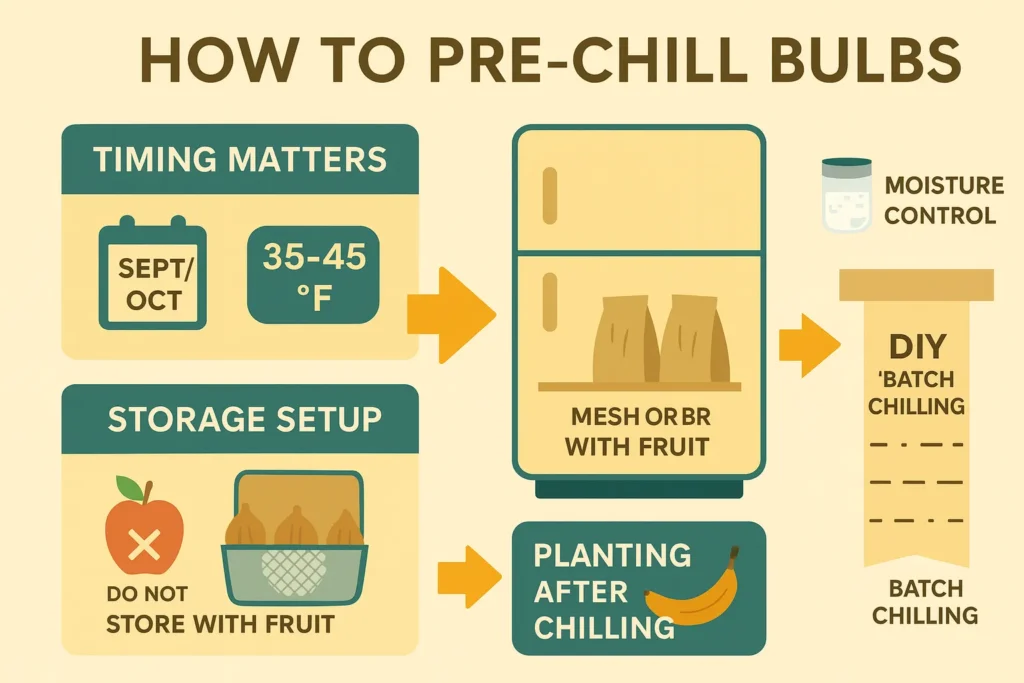
This is where the secondary keyword cluster comes into play: “how to pre-chill bulbs,” “chilling bulbs before planting,” and “DIY bulb chilling.”
Step 1: Timing Matters
- Begin chilling in September or October if you want blooms in late winter or early spring.
- Bulbs need 10–14 weeks of chilling before planting.
Step 2: Storage Setup
- Place bulbs in a breathable paper bag or mesh bag.
- Store in the vegetable crisper drawer of your refrigerator.
- Keep away from fruit like apples or bananas (they release ethylene gas, which can damage bulbs).
Step 3: Planting After Chilling
- Once chilled, plant bulbs immediately in well-draining soil.
- In warm climates, plant in November or December for the best results.
This process is often called “forcing bulbs indoors” when done in pots, but the principle is the same whether you’re planting in containers or garden beds.
When learning how to pre-chill bulbs, many gardeners overlook the importance of moisture control. Bulbs should stay cool but dry—too much humidity in the fridge can cause mold, while too little can dry them out. A clever DIY bulb chilling trick is to place a small open container of baking soda nearby to absorb excess moisture. Another twist is experimenting with staggered chilling: start one batch in September and another in October. This way, when you plant bulbs in warm climates, you’ll enjoy blooms that appear in waves rather than all at once, extending the joy of spring.
👉 For more container care tips, see our What to do with old plant pots guide.
👉 For step‑by‑step chilling instructions, explore Longfield Gardens’ pre‑chilling guide.
📅 When to Plant Bulbs in November (and Beyond)
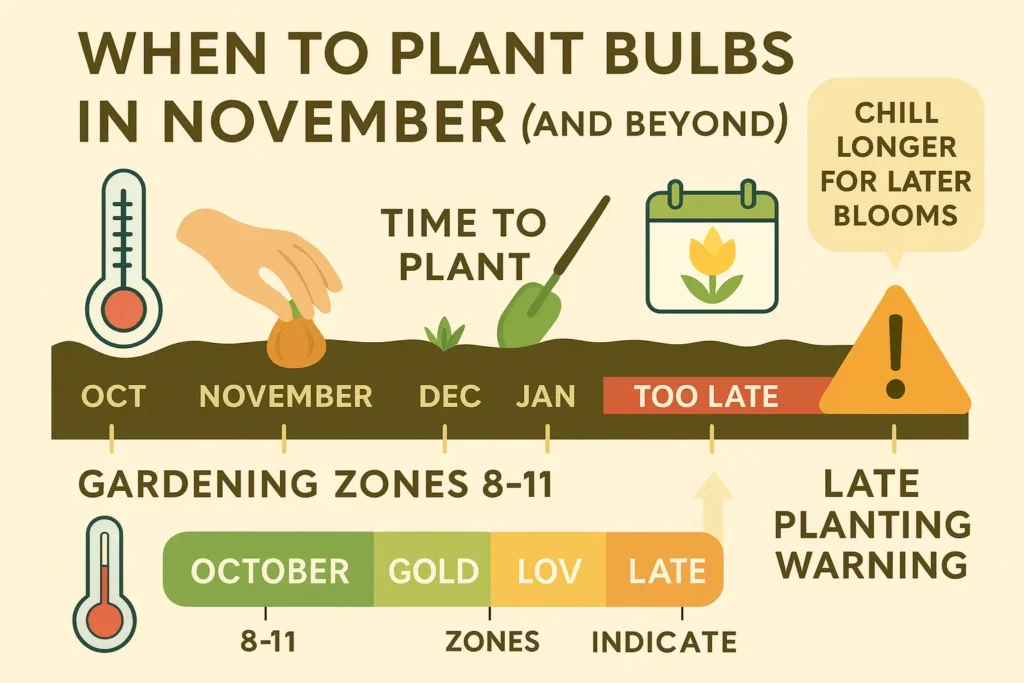
The keyword “when to plant bulbs in November” is highly seasonal and valuable for SEO. Here’s how to frame it:
- November is ideal: Soil temperatures are cooler, and pre-chilled bulbs can transition smoothly from fridge to soil.
- December planting works too: Especially in zones 9–11, where winters are mild.
- Avoid late planting: If you wait until January or February, bulbs may not have enough time to establish roots before spring heat arrives.
For gardeners who plant bulbs in warm climates, November is more than just a date on the calendar—it’s a strategic window. Planting bulbs in November allows roots to establish while soil temperatures are still cool, setting the stage for strong spring growth. But here’s the twist: if you’re late, don’t give up. By chilling bulbs for a little longer before planting, you can still plant in December and coax out blooms, although they may arrive later in the season. This flexibility is one of the hidden perks of gardening in zones 8–11—you can bend the rules of timing as long as you respect the bulbs’ chilling needs.
👉 For more seasonal planting strategies, explore our plants to plant in winter guide.
🌍 Gardening Zones 8–11: A Quick Guide
Your strategy for planting bulbs in warm climates depends heavily on your USDA gardening zone.
- Zone 8: Mild winters, some bulbs may bloom without chilling, but pre-chilling is recommended for tulips.
- Zone 9: Winters are short and warm—pre-chilling is essential for most spring bulbs.
- Zone 10–11: Tropical/subtropical climates—focus on bulbs that thrive without chilling (freesia, amaryllis, paperwhites).
When you plant bulbs in warm climates, it’s also worth experimenting with microclimates in your own garden. For example, a shaded corner near a wall may stay cooler than an exposed bed, giving chilled tulip bulbs or hyacinths a better chance to thrive. Gardeners in zones 8–11 often find success by combining pre-chilled bulbs with naturally heat-tolerant varieties, creating a layered display that blooms in succession. This blending of strategies not only guarantees spring blooms but also keeps your garden visually dynamic, with early paperwhites giving way to tulips and later freesia. The twist here is that you’re not just fighting against the climate—you’re learning to work with it, turning a potential limitation into a creative advantage.
👉 For more microclimate strategies, check our cold frame gardening guide.
🌼 Tulip Bulbs in Warm Climates
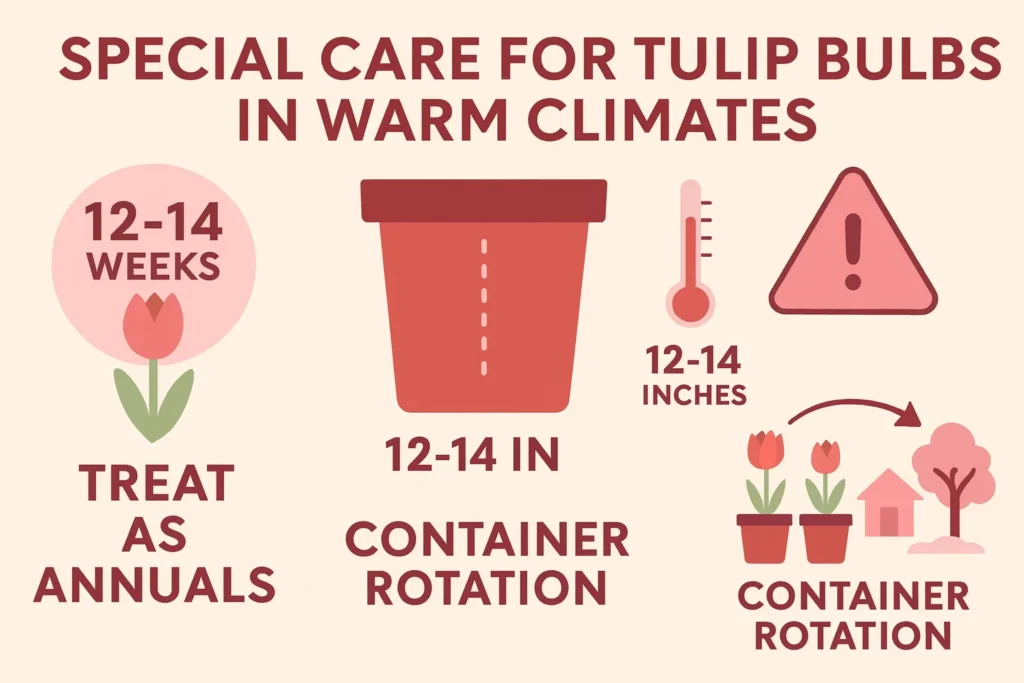
Tulips deserve their own spotlight because they’re the most requested spring bulb, yet the trickiest in warm climates.
- Pre-chill for 12–14 weeks for best results.
- Plant in deep containers (12–14 inches) to protect roots from heat.
- Treat tulips as annuals in warm climates—don’t expect them to naturalize or return year after year.
This is where the keyword “tulip bulbs warm climate” fits perfectly.
Another trick seasoned gardeners use when they plant bulbs in warm climates is container rotation. By planting tulips or hyacinths in pots, you can move them into cooler spots during unexpected warm spells, or even bring them indoors temporarily. This method overlaps with the practice of forcing bulbs indoors, but instead of keeping them inside permanently, you’re giving them a reprieve from outdoor heat. It’s a clever way to extend bloom time and protect your investment in pre-chilled bulbs. Think of it as giving your tulips a “mini-vacation” from the sun—an unexpected twist that can make the difference between a short-lived display and a garden that keeps surprising you week after week.
👉 For more indoor–outdoor care, see our overwintering houseplants checklist.
🌿 Forcing Bulbs Indoors
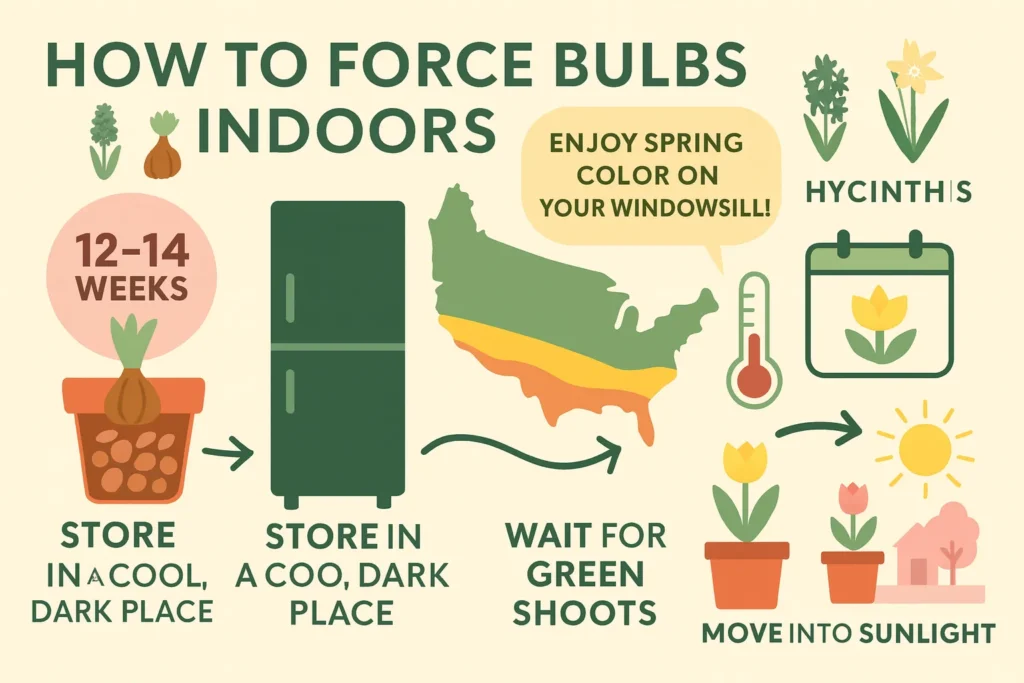
If outdoor planting feels risky, you can always force bulbs indoors.
- Use pots filled with well-draining soil or decorative glass containers with pebbles and water.
- Keep pots in a cool, dark place until shoots appear, then move them into bright light.
- This method works beautifully for hyacinths and paperwhites.
Forcing bulbs indoors isn’t just a backup plan—it’s a creative twist that lets you enjoy spring even if outdoor conditions aren’t cooperating. When you plant bulbs in warm climates, forcing bulbs indoors can act as an insurance policy, ensuring you’ll have blooms no matter what the weather does. It’s also a great way to experiment with bloom timing: by staggering pots in and out of cool storage, you can create a rotating display of color on your windowsill. This technique is especially useful for gardeners in zones 10–11, where outdoor chilling is nearly impossible.
👉 For more indoor gardening setups, explore our cheap grow lights for seedlings guide.
🛠️ DIY Bulb Chilling: A Practical Approach
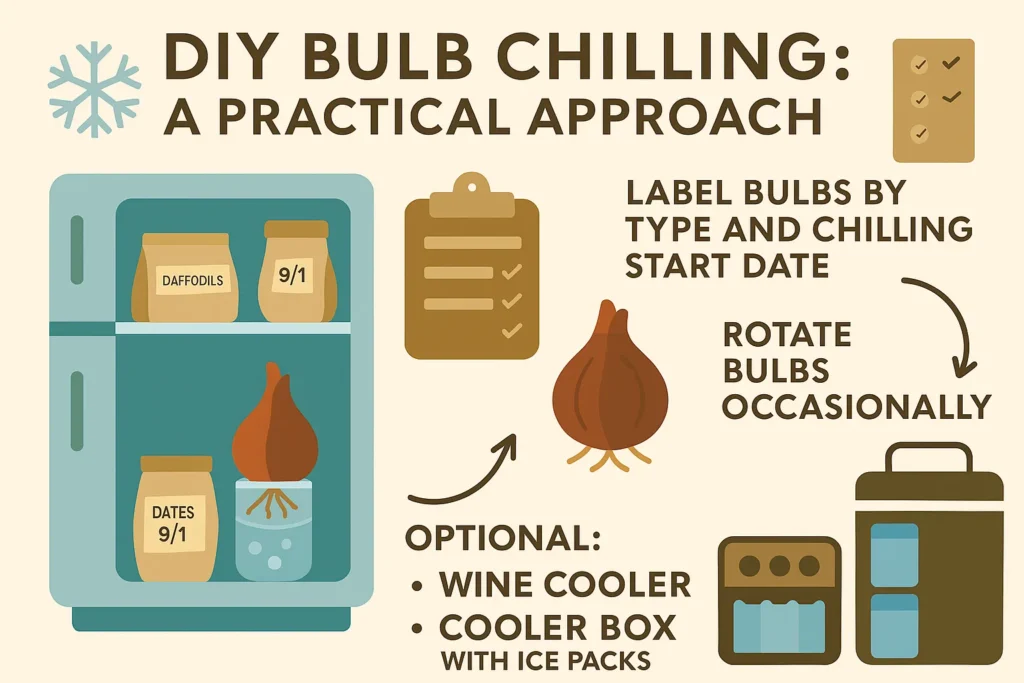
For gardeners who love hands-on solutions, DIY bulb chilling is straightforward:
- Dedicate a small fridge (if possible) just for bulbs.
- Label bags with chilling start dates.
- Rotate bulbs every few weeks to ensure even cooling.
This not only ensures success but also gives you control over bloom timing—perfect for planning displays around holidays or events.
DIY bulb chilling also opens the door to experimentation. Some gardeners in warm climates even use wine coolers or insulated storage boxes with ice packs to simulate winter conditions. While unconventional, these methods prove that when you plant bulbs in warm climates, creativity is just as important as tradition. The twist is that by controlling the chilling environment, you can synchronize blooms with personal milestones—imagine tulips opening right on your birthday or hyacinths perfuming the air during a family gathering. Gardening becomes not just seasonal, but personal.
👉 For more DIY sustainability, see our container cover crops guide.
🌞 Guaranteeing Spring Blooms in Warm Climates
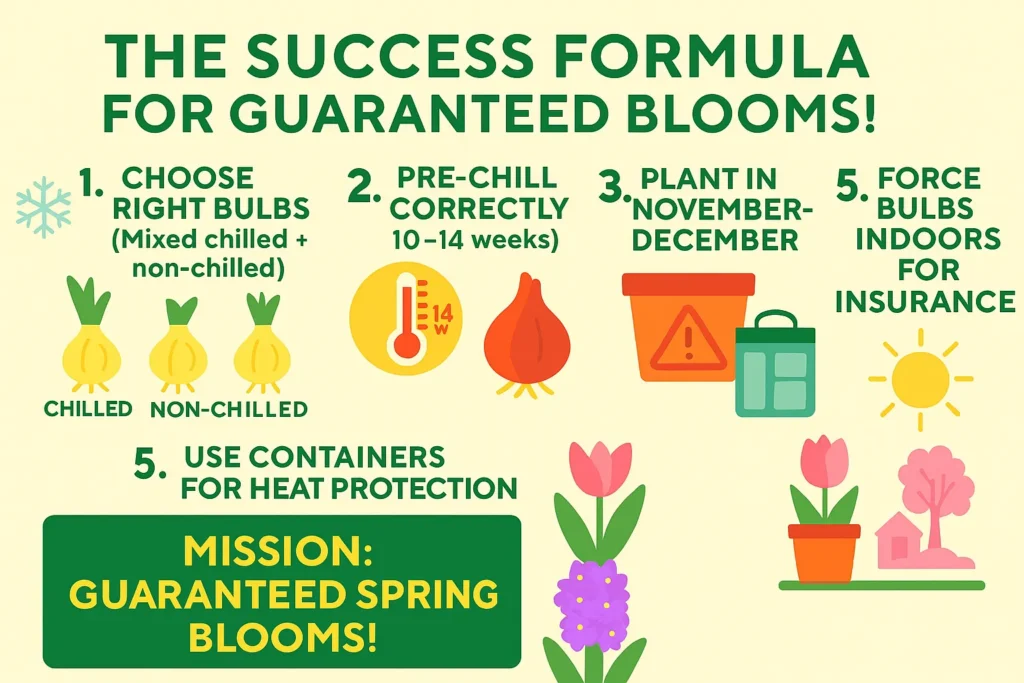
To wrap the practical advice into a clear promise:
- Choose the right bulbs (mix of chill-required and chill-free).
- Pre-chill properly (10–14 weeks, 35–45°F).
- Plant at the right time (November–December).
- Use containers strategically (especially for tulips).
- Experiment with forcing indoors for guaranteed results.
By following these steps, you can truly guarantee spring blooms in warm climates—a phrase that resonates with both readers and search engines.
The real secret to success when you plant bulbs in warm climates is consistency. Each year you’ll refine your timing, chilling methods, and bulb choices, building a rhythm that works for your unique garden. Over time, you’ll discover which bulbs respond best to your microclimate and which ones are worth treating as annuals. The twist is that this process transforms bulb planting from a gamble into a reliable tradition—one that rewards patience with breathtaking results. And once you’ve mastered it, you’ll find yourself eagerly anticipating not just the blooms, but the ritual itself.
👉 For more seasonal design inspiration, discover why faded petal pink is set to dominate gardens.
Conclusion
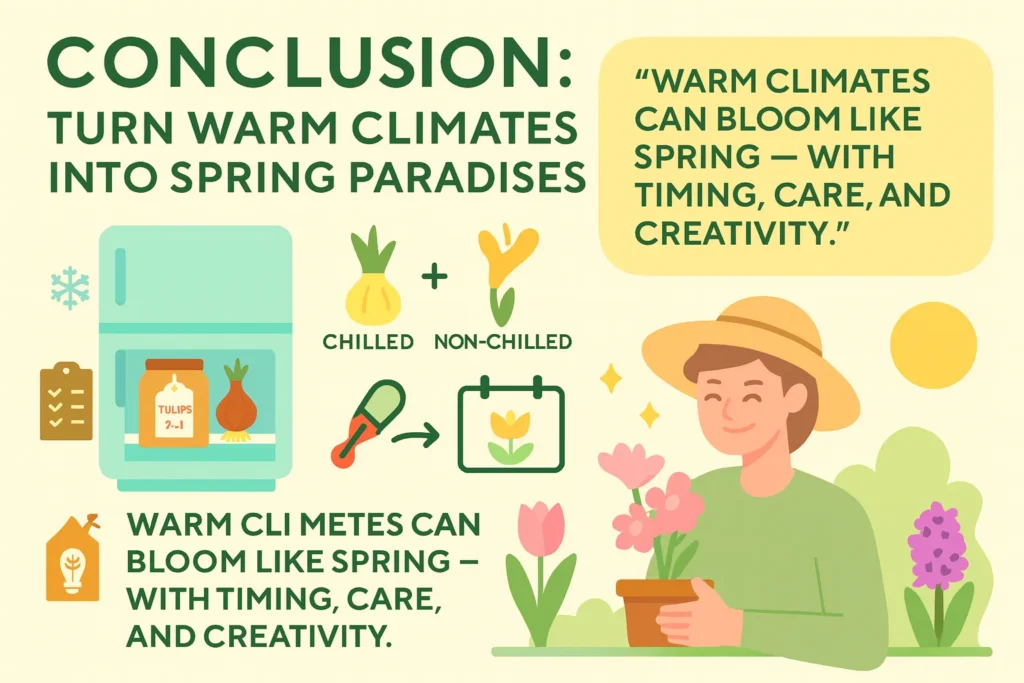
Planting bulbs in warm climates may seem like a challenge, but with the right knowledge and preparation, it becomes a deeply rewarding gardening adventure. By learning how to pre-chill bulbs, understanding the best times to plant (especially in November), and choosing varieties suited to zones 8–11, you can transform your garden into a spring paradise.
The beauty of this process is that it combines science with creativity: you’re not just planting bulbs, you’re orchestrating a seasonal performance. Each tulip, hyacinth, or freesia becomes part of a larger story—one that proves that even in the warmest climates, spring can still burst forth in color and fragrance.
So, gather your bulbs, clear a little space in the fridge, and start planning. Your future self will thank you when the first blooms appear, defying the odds and brightening your garden with the promise of spring.
Ultimately, to plant bulbs in warm climates is to embrace both science and artistry. The science lies in understanding the mechanics of chilling bulbs before planting, the precise timing of when to plant bulbs in November, and the quirks of gardening zones 8–11. The artistry comes from how you combine these elements—layering tulips with freesias, experimenting with DIY bulb chilling, or even surprising yourself by forcing bulbs indoors for an early burst of fragrance. Each decision adds a brushstroke to the canvas of your garden, and the result is a living masterpiece that reflects both your climate and your creativity.
The twist is that what seems like a limitation—gardening without a true winter—can actually become your greatest strength. By learning to plant bulbs in warm climates, you gain control over bloom timing, variety selection, and display design in ways that colder-climate gardeners often can’t. Instead of waiting passively for spring, you’re actively shaping it. And when those first blossoms appear, you’ll know they’re not just flowers—they’re proof that with knowledge, patience, and a little ingenuity, you can bend the seasons to your will.
🌼 FAQ: Plant Bulbs in Warm Climates
1. Can you really plant bulbs in warm climates and still get spring blooms?
Yes, you absolutely can. While many bulbs like tulips and hyacinths naturally rely on cold winters, gardeners in zones 8–11 can still enjoy them by learning how to plant bulbs in warm climates with the help of pre-chilling. By simulating winter in your refrigerator, you give bulbs the dormancy they need to bloom. Pairing this with bulbs that don’t require chilling—like freesias, ranunculus, or paperwhites—guarantees a colorful display of spring blooms in warm climates.
2. How do you pre chill bulbs before planting?
To succeed when you plant bulbs in warm climates, you’ll need to master how to pre chill bulbs. Place bulbs in a breathable paper or mesh bag and store them in the refrigerator (not the freezer) at 35–45°F for 10–14 weeks. Keep them away from fruit like apples, which release ethylene gas that can damage bulbs. This process of chilling bulbs before planting tricks them into thinking they’ve gone through winter, ensuring they flower beautifully once planted.
3. When is the best time to plant bulbs in November?
For warm-climate gardeners, when to plant bulbs in November is a common question. November is ideal because soil temperatures are cooler, allowing pre-chilled bulbs to establish roots before spring. If you miss November, December can still work, but planting too late (January or February) risks poor flowering. Think of November as your sweet spot for transitioning bulbs from fridge to soil.
4. Do tulip bulbs grow well in warm climates?
Tulips are the most requested spring bulb, but they’re also the trickiest in warm regions. To grow tulip bulbs in warm climates, you must pre-chill them for 12–14 weeks. Plant them in deep containers (12–14 inches) to protect roots from heat, and treat them as annuals rather than perennials. While they may not naturalize in zones 8–11, with proper chilling and timing, you can still enjoy a spectacular tulip display each spring.
5. What is DIY bulb chilling, and why is it useful?
DIY bulb chilling is simply creating your own cold-storage setup for bulbs. Most gardeners use a refrigerator, but some get creative with wine coolers, insulated boxes, or even ice-pack systems. This flexibility is especially valuable when you plant bulbs in warm climates, because it allows you to control bloom timing. For example, you can stagger chilling batches to enjoy waves of flowers across the season.
6. Can I force bulbs indoors instead of planting outside?
Yes. Forcing bulbs indoors is a great option if outdoor conditions are too warm or unpredictable. By chilling bulbs in pots and then moving them into bright indoor spaces, you can enjoy hyacinths, paperwhites, or tulips blooming right on your windowsill. This method is especially handy for gardeners in zones 10–11, where outdoor chilling is nearly impossible. It’s also a fun way to bring the fragrance and beauty of spring inside your home.
7. Which bulbs don’t need chilling in warm climates?
Not all bulbs require cold treatment. If you want low-maintenance success when you plant bulbs in warm climates, choose varieties like amaryllis, paperwhites, freesia, ranunculus, and anemones. These thrive naturally in warmer zones and can be planted directly in the soil without pre-chilling. Mixing these with chilled bulbs ensures a longer, more reliable bloom season.
8. How long should I chill bulbs before planting in warm climates?
When you plant bulbs in warm climates, the length of chilling is critical. Most spring bulbs like tulips and hyacinths need 10–14 weeks of cold treatment at 35–45°F. This period of chilling bulbs before planting mimics winter dormancy and ensures strong flowering. If you shorten the chilling time, bulbs may sprout leaves but fail to bloom. A good rule of thumb is: the warmer your zone (especially zones 9–11), the longer the chilling period should be.
9. Can I reuse bulbs after planting them in warm climates?
Reusing bulbs is tricky when you plant bulbs in warm climates. Tulips, for example, rarely naturalize in zones 8–11 because they don’t get enough natural chill to recharge for the next season. However, bulbs like daffodils, freesias, and paperwhites often return if planted in the right conditions. The twist is that you can treat tulips as annuals—enjoy them for one season, then replace them—while relying on perennial bulbs to provide continuity. Mixing both strategies guarantees spring blooms in warm climates year after year.
10. What are some common mistakes to avoid when planting bulbs in warm climates?
The most common mistake when you plant bulbs in warm climates is skipping the chilling step. Without proper DIY bulb chilling, many bulbs simply won’t flower. Another error is planting too late—waiting until January or February leaves bulbs with little time to establish roots. Gardeners also sometimes plant bulbs too shallow, exposing them to heat stress. To avoid disappointment, always pre-chill, plant at the right depth, and aim for the sweet spot of when to plant bulbs in November or December. By sidestepping these pitfalls, you’ll set yourself up for a vibrant, reliable display.


One comment on “Plant Bulbs in Warm Climates: How to Pre-Chill Bulbs & Guarantee Spring Blooms”