Table of Contents
Table of Contents
Introduction
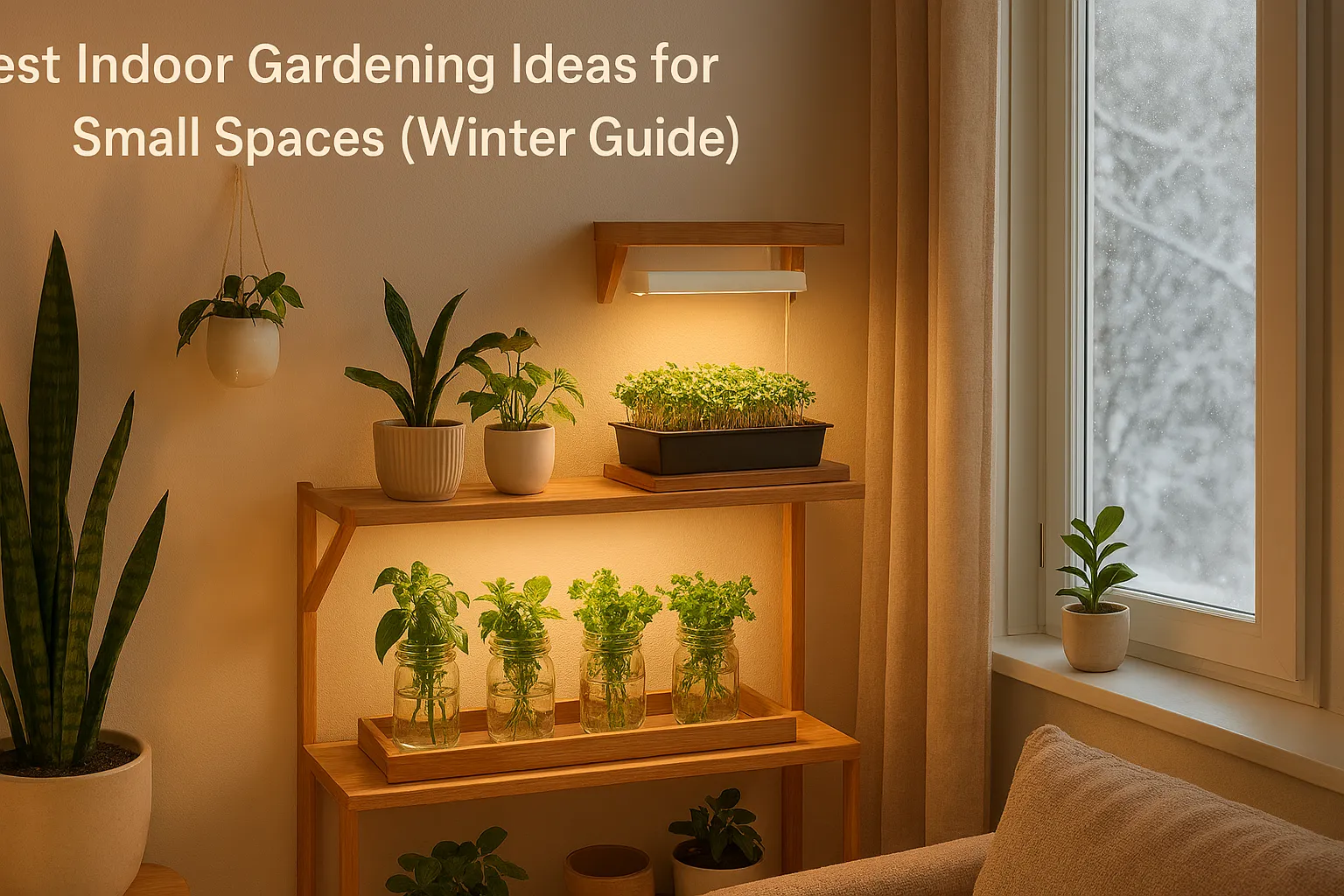
When the cold winds of winter push us indoors, many people assume gardening has to pause until spring. But the truth is, you can cultivate a thriving indoor oasis even in the smallest apartments or homes. With the right plants, tools, and strategies, indoor gardening transforms limited spaces into lush, green sanctuaries that not only brighten your environment but also improve air quality and mental well-being.
This guide explores the best indoor gardening ideas for small spaces, tailored for winter conditions. From low-light plants to DIY window herb gardens, microgreens indoors, and beginner-friendly grow lights, we’ll cover practical solutions that make indoor gardening accessible, affordable, and rewarding.
Indoor gardening is not just about filling your home with plants—it’s about creating a lifestyle that thrives even when outdoor conditions are harsh. By exploring indoor gardening ideas for small spaces, you’ll discover how even a single shelf, a sunny windowsill, or a corner table can be transformed into a productive green zone. The beauty of this approach lies in its adaptability: whether you’re a beginner experimenting with DIY window herb gardens or a seasoned gardener trying microgreens indoors, the possibilities are endless.
Another twist worth noting is the emotional impact. Studies show that tending to plants during winter reduces stress and boosts mood. Imagine sipping tea beside your thriving low-light plants while snow falls outside—it’s a sensory experience that connects you to nature even in the smallest apartment.
🌱 Low-Light Plants for Winter
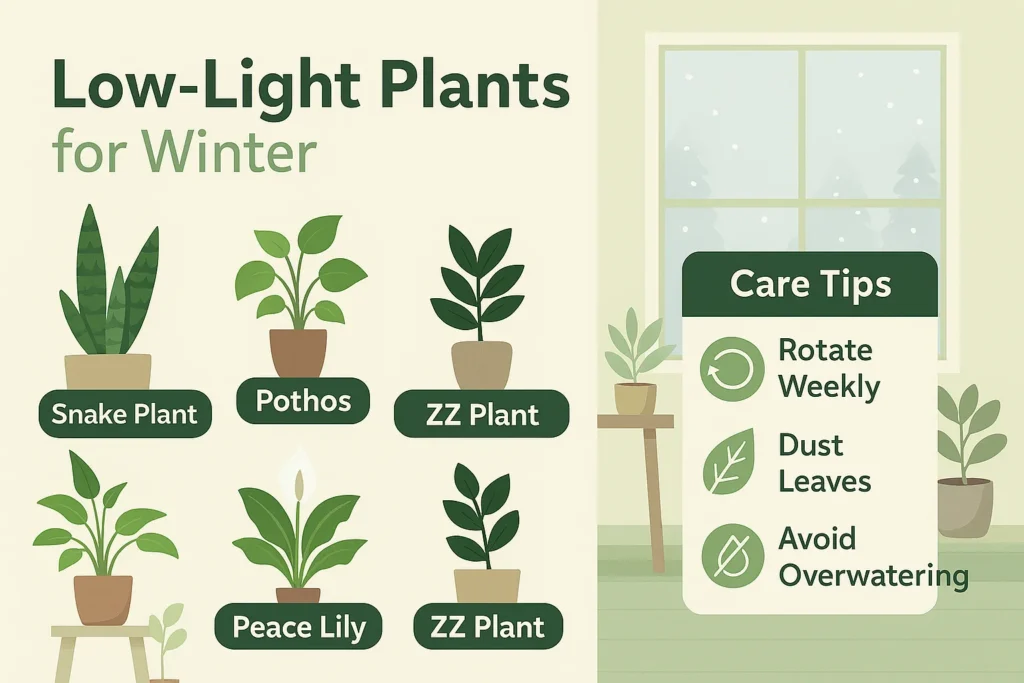
One of the biggest challenges in winter indoor gardening is the lack of natural sunlight. Fortunately, many plants thrive in low-light conditions, making them perfect for small apartments or rooms with limited windows.
Best Options for Low-Light Plants
- Snake Plant (Sansevieria) – Known for its resilience, it tolerates neglect and purifies air.
- Pothos (Epipremnum aureum) – A trailing vine that grows quickly even in dim corners.
- Peace Lily (Spathiphyllum) – Adds elegance with white blooms and thrives in indirect light.
- ZZ Plant (Zamioculcas zamiifolia) – Almost indestructible, perfect for beginners.
Care Tips for Limited Sunlight
- Rotate plants weekly to ensure even growth.
- Dust leaves regularly to maximize light absorption.
- Avoid overwatering—low-light plants need less moisture.
When considering indoor gardening ideas for small spaces, low-light plants are the backbone of your winter setup. They don’t demand much but reward you with resilience and beauty. For instance, pairing a ZZ plant with a peace lily creates a striking contrast of glossy green leaves and delicate white blooms, perfect for brightening up a dim hallway.
👉 For more inspiration, check out our guide on low-maintenance indoor gardening hacks that are perfect for small apartments. For further detailed plant care, see the RHS Houseplant Growing Guide, which offers expert advice on thriving with low-light species indoors.
A curious twist is that some low-light plants, like pothos, can be trained to climb walls or trellises indoors. This means you can turn vertical space into living décor, making your small apartment feel like a lush jungle. By experimenting with creative arrangements, you’ll realize that limited sunlight doesn’t limit your creativity.
When caring for low-light plants in winter, consistency matters more than intensity. Water sparingly, as most of these species prefer slightly dry soil—overwatering is the most common mistake. Use well-draining pots with a mix of peat and perlite to prevent root rot. Place plants near east- or north-facing windows, or supplement with a small LED grow light if natural light is minimal. Regularly rotate pots so each side of the plant receives equal exposure, which prevents uneven growth.
For those exploring indoor gardening ideas for small spaces, it’s also smart to create micro-environments. Grouping plants helps maintain humidity, while placing a shallow pebble tray beneath pots adds gentle moisture to the air. Dusting leaves every two weeks ensures they can absorb the limited light available. With these simple adjustments, even beginners can keep their low-light plants thriving through the coldest months.
🌿 DIY Window Herb Gardens
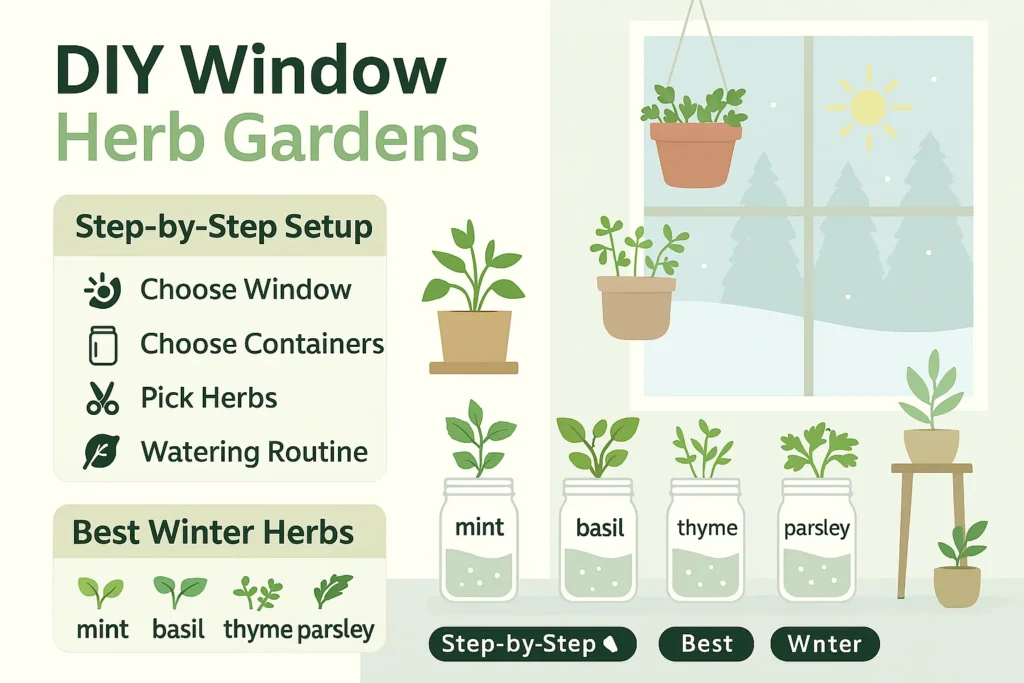
For small-space dwellers, a DIY window herb garden is both practical and aesthetic. Herbs grow well indoors, require minimal space, and add fresh flavors to winter meals.
Step-by-Step Setup
- Choose the right window: South-facing windows provide the most light.
- Select containers: Mason jars, recycled cans, or hanging planters work well.
- Pick herbs: Basil, mint, thyme, parsley, and chives are winter-friendly.
- Watering routine: Keep soil moist but not soggy.
Herbs are the ultimate multitaskers in indoor gardening ideas for small spaces. Not only do they add greenery, but they also provide fresh flavors for cooking (You can also explore creative herb setups in our article on how to plant a cocktail garden, which blends gardening with mixology fun.). A DIY window herb garden can double as a decorative feature—imagine a row of mason jars filled with basil and mint, catching the winter sunlight and perfuming your kitchen. The USDA Indoor Gardening Inspiration resource provides practical tips for growing herbs indoors, even in small apartments.
Here’s a twist: you can grow herbs hydroponically without soil. Using water-based systems or even recycled bottles, you can cultivate parsley or chives with minimal mess. This approach is especially appealing for small apartments where soil spills might be inconvenient.
To keep herbs thriving indoors, water them lightly but consistently, as most herbs dislike soggy soil. Use a lightweight potting mix with good drainage, and prune regularly to encourage bushy growth. Fertilize every 4–6 weeks with a diluted organic solution to replenish nutrients. For those exploring indoor gardening ideas for small spaces, consider vertical herb racks or hanging planters to maximize limited windowsill space. This not only saves room but also creates a living wall of flavor right in your kitchen.
Best Herbs for Winter
- Mint: Hardy and refreshing, perfect for teas.
- Basil: Adds flavor to soups and pasta.
- Thyme: Thrives in cooler temperatures.
- Parsley: Easy to grow and nutrient-rich.
🌱 Microgreens Indoors
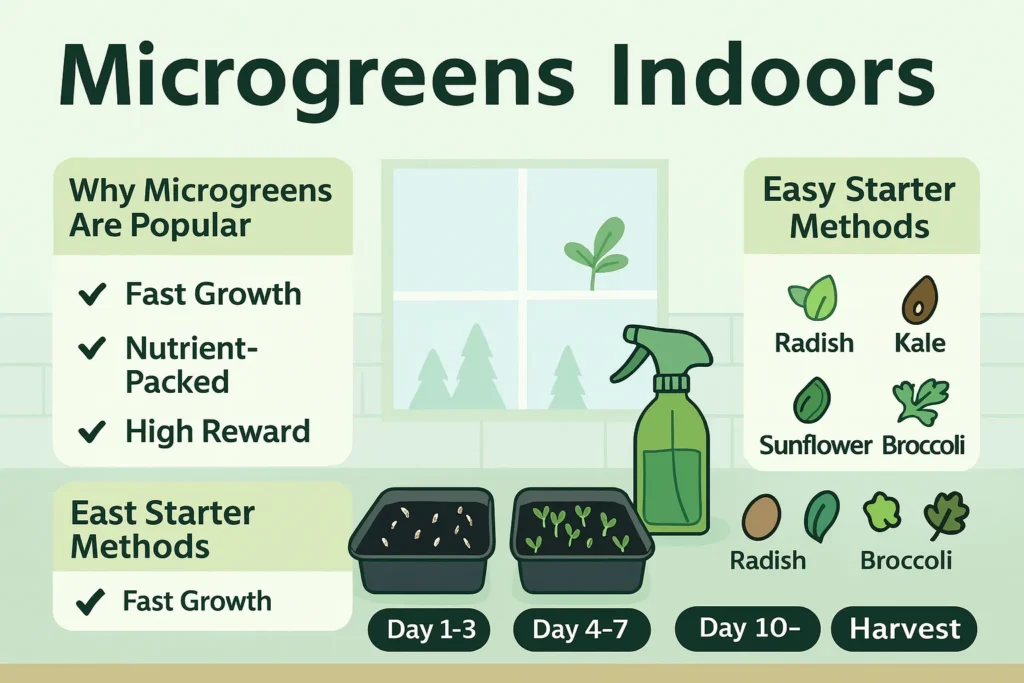
Microgreens are one of the hottest trends in indoor gardening. These tiny greens pack a nutritional punch and grow quickly, making them ideal for winter.
Why Microgreens Are Popular
- Ready to harvest in 7–14 days.
- Require minimal space—just trays or shallow containers.
- Rich in vitamins, minerals, and antioxidants.
Easy Starter Kits and Methods
- Purchase microgreen kits with trays and seeds.
- Use coconut coir or potting soil as a base.
- Mist daily with a spray bottle.
- Harvest when seedlings reach 2–3 inches.
Popular microgreens include radish, broccoli, kale, and sunflower shoots.
Microgreens are the secret weapon of indoor gardening ideas for small spaces because they grow fast and require almost no equipment (For outdoor alternatives, see our guide on fast-growing winter cover crops to balance soil health during colder months). A single tray on your countertop can yield nutrient-rich greens that elevate your winter meals. Their vibrant colors also add a decorative touch, making them both functional and aesthetic.
The twist here is experimentation. Try mixing seeds—radish with kale, or broccoli with sunflower—to create unique flavor blends. This not only diversifies your diet but also keeps the gardening process exciting. With microgreens, you’re not just growing food; you’re cultivating curiosity.
To ensure success, keep trays in a warm spot with indirect light or under a small LED grow lamp. Mist daily to maintain moisture, but avoid overwatering to prevent mold. Harvest with clean scissors when seedlings reach 2–3 inches, and enjoy them fresh in salads, sandwiches, or smoothies. For those exploring indoor gardening ideas for small spaces, microgreens are ideal because they require minimal footprint yet deliver maximum nutrition. Rotate seed varieties weekly to keep your meals exciting and your gardening journey dynamic.
🌱 Grow Lights for Beginners
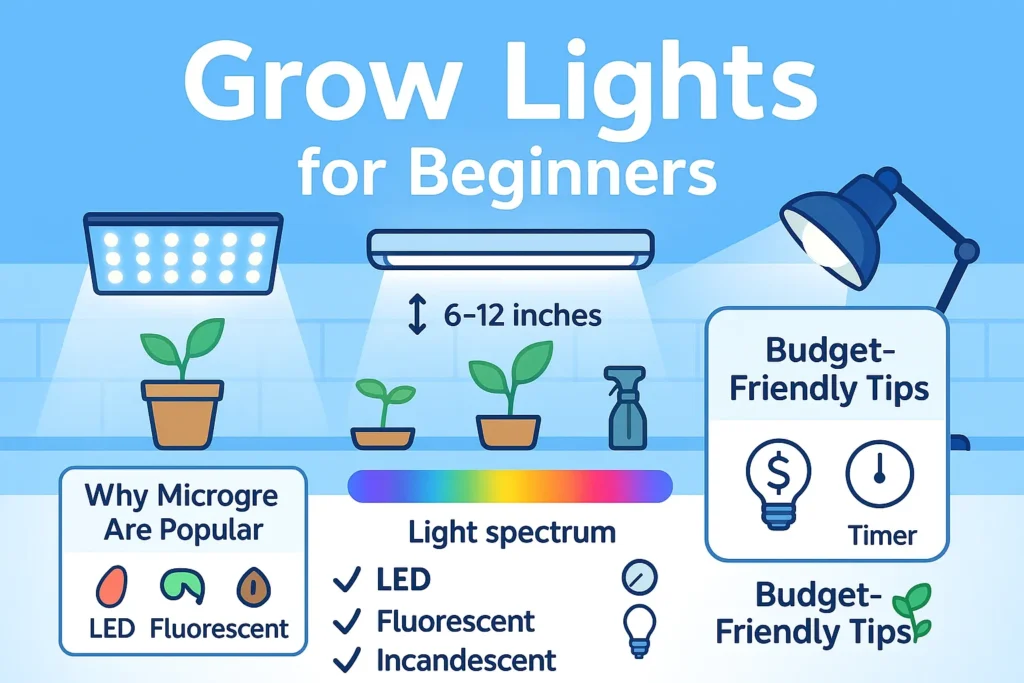
When daylight fades or windows don’t provide enough exposure, artificial grow lights step in as the lifeline for indoor plants. These lights replicate the energy of the sun, giving your greenery the fuel it needs to photosynthesize and thrive indoors.
Types of Grow Lights
- LED Grow Lights: Energy‑efficient, long‑lasting, and suitable for most plants.
- Fluorescent Lights (T5): Affordable and effective for herbs and microgreens.
- Incandescent Lights: Less efficient, but useful for decorative plants.
Budget-Friendly Recommendations
- Start with small clip‑on LED grow lights for herbs.
- Use full‑spectrum bulbs for balanced growth.
- Position lights 6–12 inches above plants.
For anyone exploring indoor gardening ideas for small spaces, grow lights are a game‑changer (If you’re on a budget, check out our step-by-step guide to cheap grow lights for seedlings). They allow you to grow herbs, succulents, and even flowering plants in rooms without natural sunlight. Beginners often start with compact LED panels that fit neatly on desks or shelves, making them ideal for apartments.
Here’s a twist: grow lights can also be used to extend daylight hours artificially. By setting timers, you can mimic longer summer days, encouraging plants to grow faster even in the depths of winter. This small investment transforms your indoor garden into a year‑round sanctuary.
When using grow lights, consistency is key. Keep lights on for 12–16 hours daily, depending on plant type, and adjust distance to avoid leaf burn. Full-spectrum LEDs are best for balanced growth, while fluorescent lights suit herbs and microgreens. For those exploring indoor gardening ideas for small spaces, clip-on grow lights or under-shelf panels maximize efficiency without cluttering your home. Pairing grow lights with reflective surfaces like foil or white walls further enhances light distribution, ensuring every plant gets its share.
💧 Managing Winter Humidity Issues
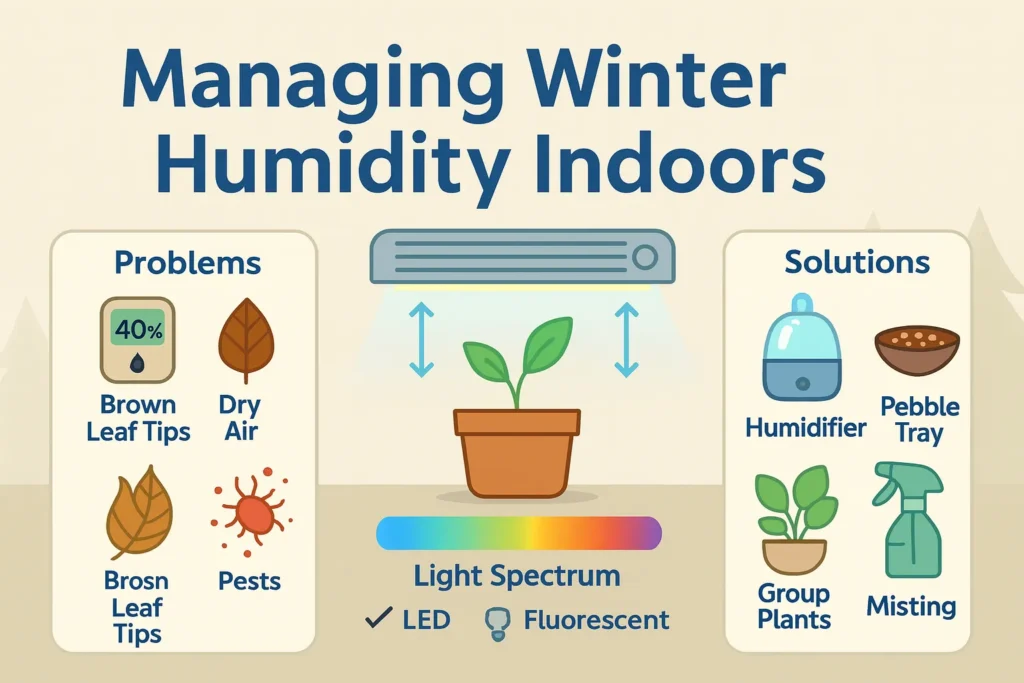
Indoor heating systems often dry out the air, creating humidity problems for plants. Leaves may curl, brown, or drop prematurely.
Common Problems
- Dry air causes leaf tips to brown.
- Low humidity leads to pest infestations (spider mites).
- Soil dries out faster than expected.
Solutions for Winter Humidity
- Humidifiers: Maintain 40–60% humidity indoors.
- Pebble Trays: Arrange a shallow dish with stones and water, then rest your plant pots on top. As the water evaporates, it gently raises the humidity around the plants without soaking the roots.
- Grouping Plants: Plants release moisture, so clustering them increases humidity.
- Regular Misting: Lightly mist leaves to prevent dryness.
Humidity management is often overlooked in indoor gardening ideas for small spaces, yet it’s critical for plant health (Learn more about seasonal plant care in our checklist for overwintering houseplants). Dry air can stunt growth, but simple solutions like pebble trays or grouping plants together create microclimates that mimic natural conditions.
A surprising twist is that certain plants, like ferns, thrive specifically because of higher humidity. By intentionally cultivating humidity-loving species alongside succulents, you create a diverse ecosystem indoors. This contrast keeps your garden visually engaging and biologically balanced.
Monitor humidity levels with a simple hygrometer and aim for 40–60%. Place humidifiers near plant clusters or use decorative water features to add moisture naturally. For those exploring indoor gardening ideas for small spaces, grouping plants not only raises humidity but also creates a lush, jungle-like aesthetic. Regular misting helps, but avoid wetting leaves excessively to prevent fungal issues. By balancing humidity, you ensure your indoor garden thrives even against the drying effects of winter heating.
⚠️ Mistakes Beginners Make Indoors
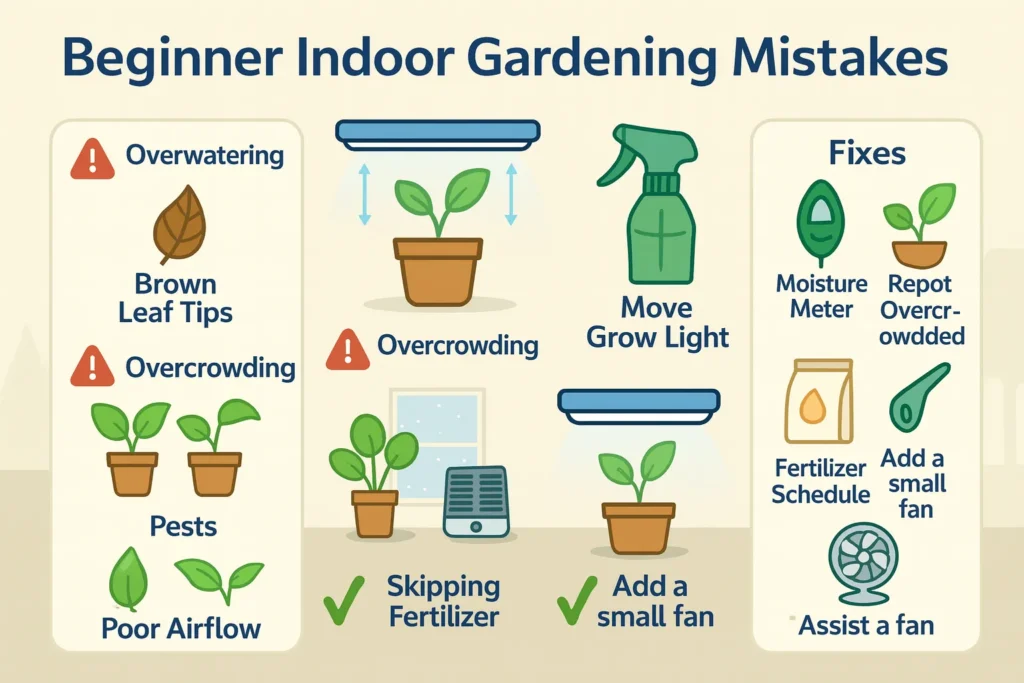
Many beginners unknowingly sabotage their indoor gardens. Addressing these mistakes not only helps readers but also boosts SEO visibility.
Common Beginner Mistakes
- Overwatering: Roots rot when the soil stays soggy.
- Wrong Light Placement: Plants stretch or weaken without proper light.
- Overcrowding: Too many plants in one pot compete for nutrients.
- Ignoring Humidity: Dry air damages delicate plants.
- Skipping Fertilizer: Indoor plants need nutrients even in winter.
Quick Fixes and Prevention Tips
- Use moisture meters to avoid overwatering.
- Place plants closer to windows or under grow lights.
- Repot overcrowded plants into separate containers.
- Add liquid fertilizer monthly during winter.
Mistakes are part of the learning curve, but recognizing them early makes your journey with indoor gardening ideas for small spaces smoother. For example, many beginners underestimate the importance of airflow. Without proper circulation, plants can develop mold or mildew, especially in winter. A small desk fan can make a huge difference.
👉 We also cover common pitfalls outdoors in our article on 7 companion planting mistakes. Penn State Extension’s Home Gardening Resources provide research-based solutions to common indoor gardening mistakes.
Another twist is psychological: beginners often expect instant results. Indoor gardening requires patience, and plants may take weeks to adjust to new conditions. By embracing the slow rhythm of growth, you’ll find that the process itself—watering, pruning, observing—is just as rewarding as the outcome.
To avoid common pitfalls, create a checklist: water only when the soil feels dry, ensure pots have drainage holes, and place plants where they receive consistent light. Fertilize monthly with a balanced solution, and don’t overcrowd containers. For those exploring indoor gardening ideas for small spaces, keeping a simple journal of watering and growth observations helps track progress and spot issues early. This habit transforms mistakes into learning opportunities, making your indoor garden more resilient over time.
🌿 Conclusion
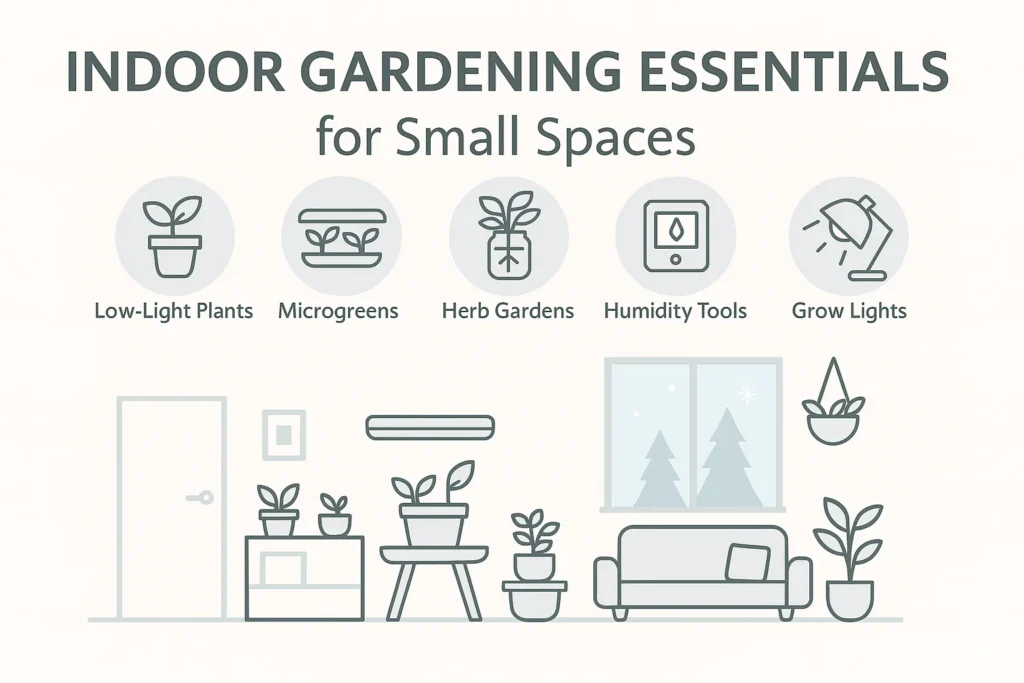
Indoor gardening is more than a hobby—it’s a lifestyle that brings joy, health, and greenery into your home, even during the coldest months. By focusing on low-light plants, DIY window herb gardens, microgreens indoors, and grow lights for beginners, you can transform small spaces into thriving ecosystems. Managing winter humidity issues and avoiding common indoor gardening mistakes ensures your plants stay healthy all season long.
Indoor gardening is more than a hobby—it’s a lifestyle that brings joy, health, and greenery into your home, even during the coldest months. By focusing on low-light plants, DIY window herb gardens, microgreens indoors, and grow lights for beginners, you can transform small spaces into thriving ecosystems. Managing winter humidity issues and avoiding common indoor gardening mistakes ensures your plants stay healthy all season long.
The beauty of indoor gardening lies in its adaptability. Whether you live in a studio apartment or a family home, these best indoor gardening ideas for small spaces prove that anyone can cultivate a winter-friendly garden. Begin with a few plants, test different setups, and let your indoor garden gradually evolve into a flourishing sanctuary.
👉 For small-space gardeners, our guide on the best small greenhouse ideas offers more ways to extend growing seasons.
Ultimately, the best indoor gardening ideas for small spaces are those that blend practicality with creativity. Whether you’re nurturing low-light plants, experimenting with microgreens indoors, or setting up a DIY window herb garden, each step brings you closer to a greener, healthier lifestyle.
The twist is that indoor gardening isn’t just about plants—it’s about resilience. In winter, when nature seems dormant, your indoor garden becomes a symbol of growth and renewal. It reminds you that even in the smallest spaces, life finds a way to flourish.
🌿 FAQ Section: Indoor Gardening Ideas for Small Spaces
❓ What are the best indoor gardening ideas for small spaces in winter?
The best indoor gardening ideas for small spaces during winter include growing low‑light plants like snake plants and pothos, setting up DIY window herb gardens, experimenting with microgreens indoors, and using grow lights for beginners to supplement limited sunlight. These approaches maximize greenery even in compact apartments.
❓ Which plants thrive in low‑light conditions for indoor gardening?
Popular low‑light plants for small spaces include ZZ plants, peace lilies, snake plants, and pothos. These species adapt well to limited sunlight and are easy to maintain, making them ideal for winter indoor gardening.
❓ How can I start a DIY window herb garden in a small apartment?
To start a DIY window herb garden, choose a sunny windowsill, use containers like mason jars or hanging planters, and grow herbs such as basil, mint, thyme, and parsley. These herbs thrive indoors, require minimal care, and add fresh flavors to winter meals.
❓ Are microgreens a good option for indoor gardening in small spaces?
Yes, microgreens are one of the most efficient indoor gardening ideas for small spaces. They grow quickly in trays, require little light, and are ready to harvest in 7–14 days. Microgreens like radish, broccoli, and sunflower shoots are nutrient‑dense and perfect for winter diets.
❓ Do I need grow lights for indoor gardening in winter?
Grow lights are highly recommended for winter indoor gardening, especially in small spaces with limited natural light. LED grow lights and fluorescent lights help plants photosynthesize, ensuring healthy growth for herbs, succulents, and even flowering plants.
❓ How can I manage humidity for indoor plants during winter?
Winter heating often dries indoor air, so humidity management is crucial. Use humidifiers, pebble trays, or group plants together to create microclimates. Regular misting also helps maintain healthy moisture levels for indoor plants.
❓ What mistakes should beginners avoid in indoor gardening?
Common mistakes include overwatering, wrong light placement, overcrowding plants, ignoring humidity, and skipping fertilizer. Avoiding these pitfalls ensures success with indoor gardening ideas for small spaces, even during winter.